


Spring brings renewed creative energy—longer days, warmer temperatures, and that promise of fresh inspiration. Yet for artists, illustrators, craftspeople, and content creators working indoors, spring presents an unexpected challenge: daylight's correlated color temperature varies dramatically throughout the day, ranging between approximately 6000K and above 20000K, making it one of the most inconsistent lighting periods of the year.
While you might assume spring sunshine provides ideal working conditions, the reality is quite different. Variable cloud cover, frequent weather transitions, and dramatic shifts in natural light quality can quietly undermine your color accuracy and detail work—exactly when your creative momentum is building.
Why Spring Daylight Is Unpredictable for Creators
Spring weather patterns create uniquely challenging lighting conditions for indoor creative work. The atmosphere drives large variations in sunlight at the surface on scales as small as seconds or meters, mostly through clouds, meaning the light streaming through your studio window can shift dramatically within minutes.
The problem intensifies during spring's characteristic broken cloud cover. Ambient light level depends on the presence of clouds and haze, and may vary minute-to-minute due to cloud cover and atmospheric turbidity. One moment you're working in bright, cool-toned light at approximately 7000K; minutes later, clouds roll in and your workspace shifts to a completely different color temperature. These aren't subtle adjustments—they're significant enough to alter how you perceive every color on your palette or screen.
Morning and late afternoon spring light adds another layer of complexity. Early morning spring sunlight can register at 8500K or higher under clear skies, creating an intensely blue-toned environment. By midday, if cloud cover increases, you might find yourself working under light that appears warmer but is actually spectrally different from consistent daylight—not just dimmer, but fundamentally changed in its color composition.
This variability matters more than most creators realize. When your reference light source constantly shifts, your eyes continuously adapt, making it nearly impossible to maintain consistent color judgment throughout a single work session. You might mix a color that looks perfect at 10 AM, only to discover it appears completely different when you return to your work at 2 PM under altered spring light conditions.
How Lighting Inconsistency Affects Color and Detail Work
Color perception relies on both the light source and your visual system's adaptation to it. Researchers use daylight as the benchmark to which to compare color rendering of electric lights, with daylight displaying a great variety of colors, making it easy to distinguish slight shades of color. However, natural daylight that keeps changing isn't a reliable benchmark at all.
For painters working with physical media, lighting inconsistency creates particular challenges. When your studio light shifts from 6500K to 10000K within an hour—an entirely plausible spring scenario—warm tones in your painting will appear increasingly dull while cool tones become more vibrant. You might unconsciously compensate by adding more warm pigment, only to discover when the light changes again that you've oversaturated those areas.
Digital artists and photographers face similar issues. Color-critical work requires stable reference conditions. Professional color evaluation standards specify controlled lighting for exactly this reason: light sources with a high CRI are used widely in color-critical applications such as printing and paint shops, film and photography areas, art studios, jewelry appraisal center detects and art restoration. Working under constantly shifting natural light means abandoning the color accuracy these standards are designed to protect.
Detail work suffers equally. Shadow definition, texture visibility, and subtle value transitions all depend on consistent illumination intensity and angle. Spring's variable cloud cover means both the quantity and quality of light hitting your work surface fluctuate unpredictably. This makes it remarkably difficult to evaluate whether that fine detail you're adding actually reads correctly, or whether it's merely an artifact of the current lighting moment.
Hand-crafters working with textiles, leather, or other materials with directional texture face particular challenges. Spring window light might beautifully reveal the weave of your fabric one hour, then completely flatten it the next when cloud density increases. Without consistent lighting, you're essentially working blind to how your finished piece will actually appear under stable conditions.
The Role of Natural-Like Light in Creative Consistency
High-quality artificial lighting designed to replicate natural daylight solves spring's inconsistency problem not by replacing natural light, but by providing a stable, predictable alternative when natural light becomes unreliable. This is where Color Rendering Index (CRI) becomes crucial for creative work.
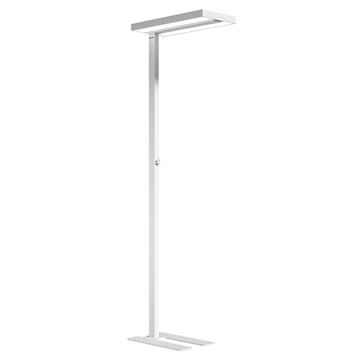
For an art studio, the CRI value of an indoor light source can be seen as a measure of how closely an object's color appears to natural daylight outside, with CRI having a maximum score of 100. The Honeywell SmartLighting 05D01 Artist Daylight Floor Lamp achieves a CRI greater than Ra97, placing it at the high end of color accuracy for artificial lighting. This means colors appear nearly identical to how they would under perfect noon daylight, but with the critical advantage of consistency.
The 05D01 offers two dedicated color temperature modes specifically designed for creative work: 4000K for reading and writing tasks, and 5000K for painting and detailed visual work. For art studios, a color temperature of 5000K is usually the best option for most people, as it closely approximates midday daylight while providing the neutral white balance that allows accurate color judgment.
Professional-grade lighting for creative spaces requires more than just high CRI, however. The 05D01 includes RG0-rated blue light safety, ensuring the light spectrum won't cause visual fatigue during extended work sessions. The seamless dimming capability from 5% to 100% brightness means you can precisely match your task lighting needs without introducing flicker—a common problem with lower-quality LED lights that can cause eye strain and headaches during long creative sessions.
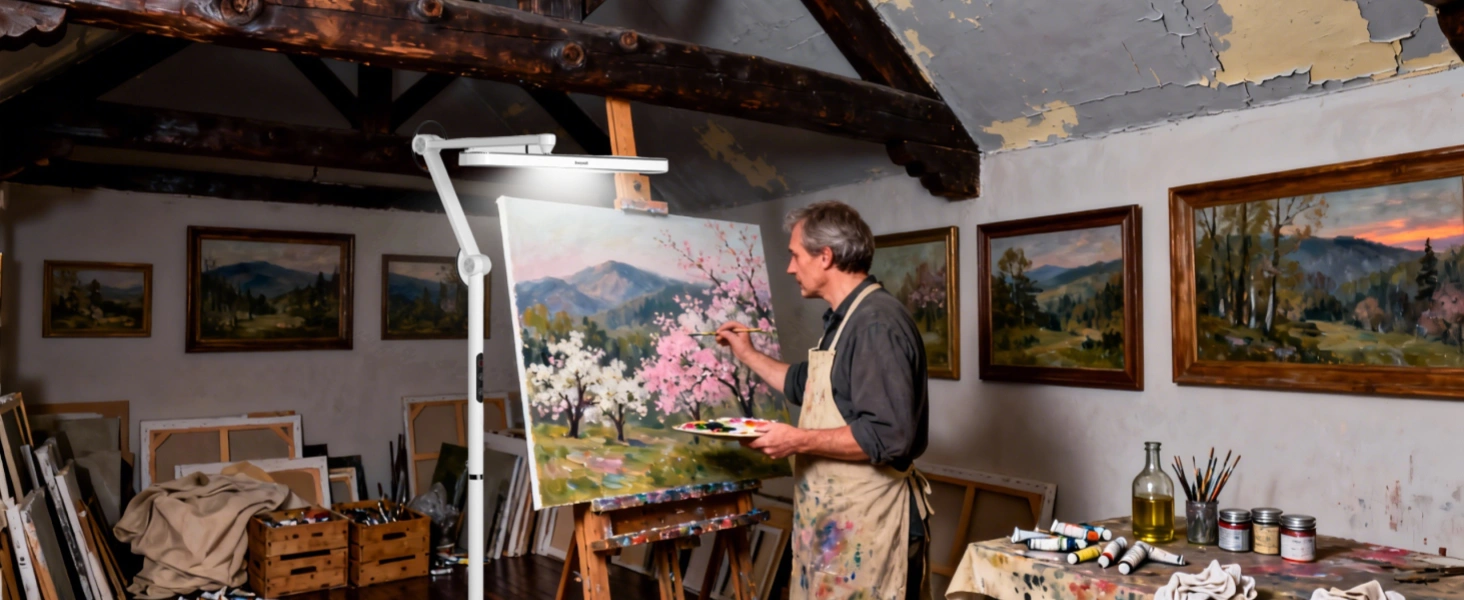
Physical adjustability matters equally for real-world creative work. The 05D01's dual metal arm joints and ball joint construction allow precise positioning for various tasks—overhead for canvas work, angled for detailed illustration, or positioned to minimize shadows on your workspace. This flexibility means you're not fighting with your lighting setup; instead, it adapts to your creative process.
Ideal Lighting Routines for Artists Across Changing Seasons
Establishing a consistent lighting routine becomes especially important during spring's transitional weather. Rather than relying solely on window light—which might be excellent on some days and inadequate on others—consider developing a hybrid approach that uses artificial lighting as your primary reference and natural light as supplementary environmental illumination.
Start your work session by setting up your dedicated art lamp before you even look at your project. Position the light to illuminate your work surface from a consistent angle, ideally at approximately 30-45 degrees from directly overhead. This creates subtle shadows that help reveal texture and form without casting harsh, distracting shadows across your work.
For painters and mixed media artists, position your natural light lamp to illuminate both your work surface and your reference materials or color palette. This ensures you're comparing colors under identical lighting conditions—critical for maintaining accuracy. If you're working from photographs or screens, position your lamp so it provides general illumination without creating glare on reflective surfaces.
Digital artists working with tablets or monitors should use their natural light lamp to illuminate the surrounding workspace and any physical reference materials. While your screen provides its own illumination, ambient lighting significantly affects how you perceive screen colors. Working in darkness makes your screen appear brighter and shifts color perception; consistent ambient lighting from a high-CRI source helps maintain accurate color judgment.
As seasons transition into longer daylight hours, you'll discover your artificial lighting setup provides consistency that window light cannot match. Morning sessions benefit from stable, controlled lighting when natural light is still cool and angular. Afternoon work continues seamlessly without the color temperature shifts that would occur as spring daylight transitions toward evening's warmer tones.
Consider your lighting a professional tool—like quality brushes or cameras—that deserves thoughtful integration into your creative routine. The 05D01's 30-second delayed shutdown feature exemplifies this tool-focused design, giving you time to step away from your workspace without leaving lights unnecessarily running, yet ensuring light is still available if you return quickly for reference checks.
From Daylight Dependency to Controlled Creative Environments
Many artists instinctively believe natural window light provides the most "authentic" working conditions. While natural north-facing window light has historically been preferred for studios—providing relatively stable, indirect illumination—this preference emerged before high-quality, high-CRI LED lighting became available. Modern lighting technology enables you to recreate the best characteristics of daylight while eliminating its inconsistencies.
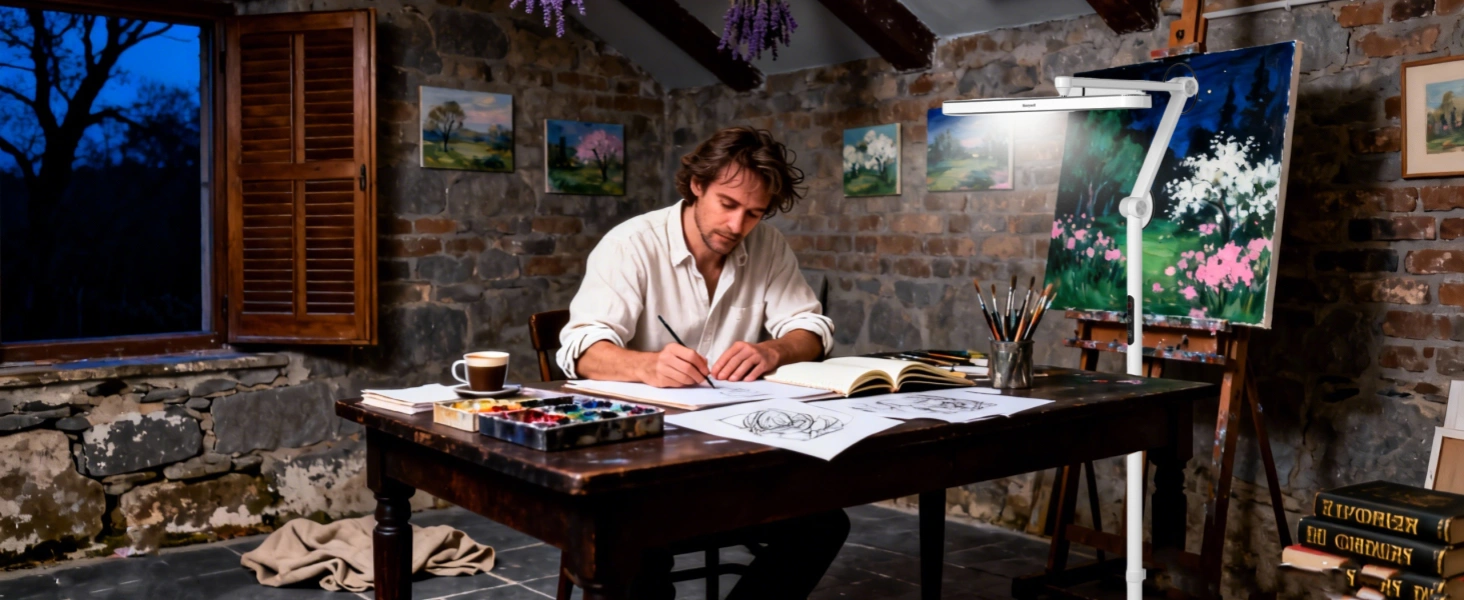
The transition from daylight dependency to controlled lighting environments represents a shift in creative practice. Rather than scheduling work sessions around weather conditions or time of day, you gain the freedom to work whenever inspiration strikes. Evening sessions become as viable as morning work. Overcast days no longer force you to stop work or accept compromised lighting conditions.
This controlled environment particularly benefits creators working to deadlines or managing client work. Color consistency becomes guaranteed rather than weather-dependent. When you tell a client their project will maintain specific color values, you can deliver that promise because your evaluation conditions remain constant. This reliability translates directly to professional credibility.
For hobbyists and amateur creators, controlled lighting removes a significant barrier to creative development. Learning to see and mix colors accurately requires consistent conditions. When your lighting varies unpredictably, you're inadvertently adding difficulty to an already challenging skill. Stable, high-quality lighting accelerates your color education by providing reliable feedback about your color choices.
The 1500-lumen output of the 05D01 provides sufficient illumination for professional work without overwhelming smaller spaces. At 28 watts power consumption, it delivers this output efficiently—roughly equivalent to a traditional 150-watt incandescent bulb but with dramatically better color rendering and lifespan. The floor lamp design means it occupies minimal workspace real estate while providing flexible positioning that adapts as your creative needs change.
Spring as a Reset Moment for Creative Spaces
Spring traditionally represents renewal—an ideal time to evaluate and upgrade your creative environment. As you're feeling renewed creative energy and planning new projects, investing in lighting that supports rather than undermines your creative vision makes practical sense.
Consider what consistent, high-quality lighting enables: working productively regardless of weather or time of day, maintaining color accuracy across projects, reducing eye strain during extended sessions, and creating a professional environment that supports serious creative work. These aren't luxury features—they're practical tools that directly impact your creative output quality.
The Honeywell SmartLighting 05D01 Artist Daylight Floor Lamp addresses the specific needs of creators working in varied conditions. Whether you're a watercolorist watching spring weather shift unpredictably, a digital illustrator working evening sessions after day-job hours, a crafter preparing work for spring markets, or a content creator building consistent visual assets, reliable lighting forms the foundation of consistent, quality creative output.
Spring's unreliable natural light doesn't have to limit your creative productivity. By establishing a controlled lighting environment now, you set yourself up for consistent work throughout the entire year—through summer's harsh overhead light, autumn's shorter days, and winter's limited daylight hours. Your lighting becomes one less variable to manage, one less excuse to postpone creative work.
Professional creators understand that tools matter. Just as quality canvas, paper, or cameras affect final results, lighting quality directly impacts your ability to see, judge, and create work that meets your standards. Spring represents the perfect moment to upgrade this fundamental tool—giving yourself the gift of consistent, reliable illumination that supports your creative vision regardless of what's happening outside your window.


