


Spring's New Opportunities and Challenges for Remote Workers
Spring brings longer daylight hours and renewed energy, making it an ideal time to reassess your home office setup. As remote work continues to define how millions of professionals operate, the transition from winter's shorter days to spring's extended sunlight presents both opportunities and challenges. Many remote workers experience what researchers call "spring fatigue"—a paradoxical tiredness despite increased daylight—often caused by disrupted circadian rhythms as our bodies adjust to changing light patterns.
Your home office lighting setup plays a more critical role than you might realize. Unlike traditional office environments with standardized overhead lighting, home workspaces vary dramatically in natural light access, room size, and artificial lighting quality. A poorly lit workspace doesn't just strain your eyes; it can fundamentally undermine your productivity, mood regulation, and long-term health.
How Light Influences Attention, Sleep, and Mood
Light serves as the primary external cue that synchronizes our internal biological clock. When photoreceptors in our eyes detect specific wavelengths of light—particularly blue-enriched light in the 460-480 nanometer range—they signal the suprachiasmatic nucleus in our brain to suppress melatonin production and increase cortisol levels, promoting alertness and focus.
Studies from leading sleep research institutions have demonstrated that exposure to appropriate lighting can improve cognitive performance by up to 25% while reducing afternoon fatigue. Conversely, inadequate or poorly timed light exposure contributes to attention deficits, disrupted sleep patterns, and even seasonal mood variations that persist beyond winter months.
The relationship between light and productivity isn't simply about brightness levels measured in lumens. Color temperature, measured in Kelvin, proves equally important. Cooler light temperatures (5000-6500K) mimic midday sunlight and enhance alertness, while warmer temperatures (2700-3000K) signal the body to wind down, preparing for rest.
Morning to Evening: Strategic Lighting for Different Work Periods
Morning Activation (7:00 AM - 10:00 AM)
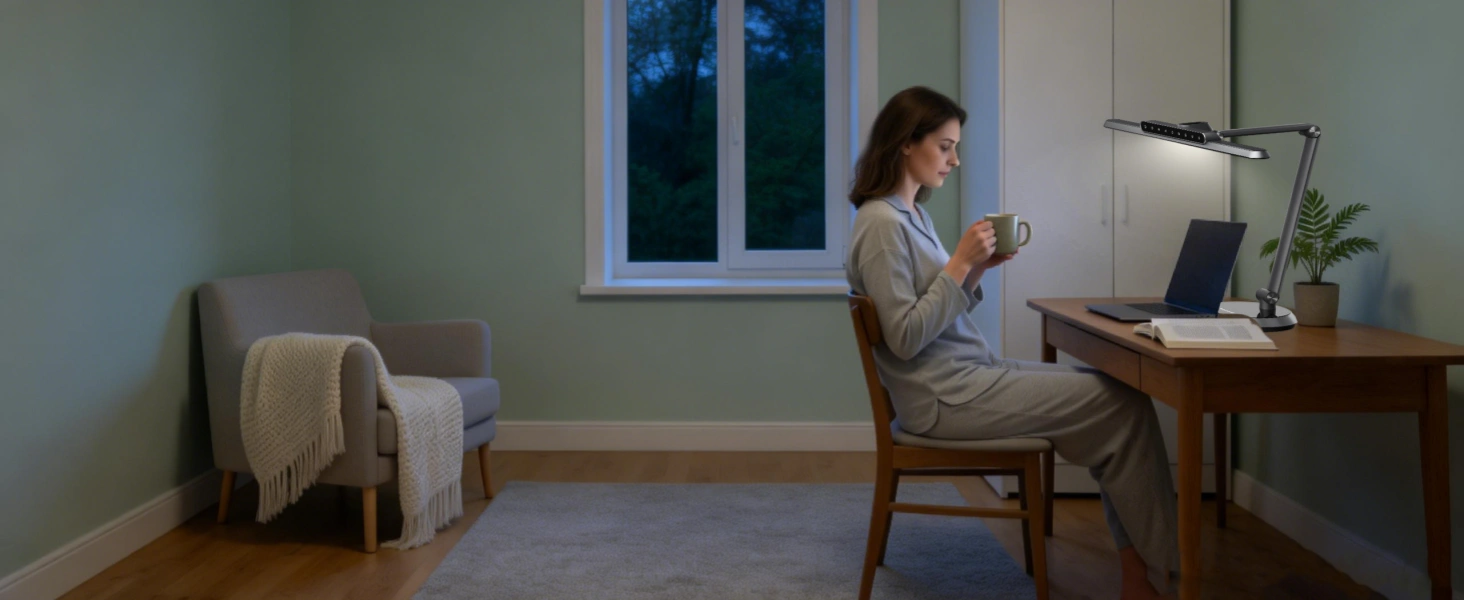
Your morning lighting strategy should jump-start circadian alertness. Position yourself near windows when possible, as natural morning light provides the strongest circadian signal. Supplement with desk lighting that delivers 300-500 lux of illumination at your work surface—roughly equivalent to a well-lit office environment. The Honeywell H4 Desktop Lamp (https://honeywellsmartlighting.com/zh-hans/products/h4) offers adjustable brightness and color temperature settings, allowing you to replicate energizing daylight conditions even in spaces with limited natural light.
Midday Maintenance (10:00 AM - 3:00 PM)
As natural light peaks, your focus shifts to maintaining consistent illumination without creating glare or shadows. This period requires balanced lighting that prevents eye strain during extended screen time. Avoid positioning monitors directly in front of windows, which creates exhausting contrast between your bright screen and even brighter background. Instead, arrange your desk perpendicular to windows, using natural light as ambient fill while task lighting handles close work.
Evening Transition (3:00 PM - 7:00 PM)
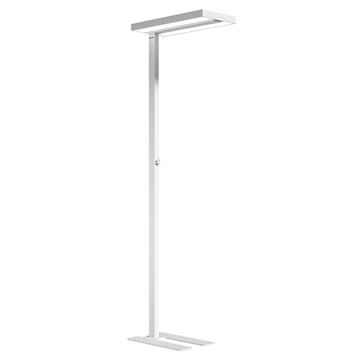
As daylight wanes, gradually shift toward warmer color temperatures to support your body's natural transition toward evening. This doesn't mean working in dim conditions—maintain adequate task lighting while reducing blue light exposure. Adjustable floor lamps positioned 6-8 feet from your workspace provide excellent ambient lighting without overwhelming your workspace. The Honeywell F01 Floor Lamp (https://honeywellsmartlighting.com/zh-hans/products/f01) features multiple brightness levels and color temperature adjustments, enabling you to maintain productivity while respecting your circadian rhythm's evening requirements.
Maximizing Benefits: Coordinating Natural and Artificial Light
The most effective home office lighting systems integrate natural daylight with strategic artificial lighting rather than relying solely on one source. Start by mapping your workspace's natural light patterns throughout the day. Note when direct sunlight enters, where shadows form, and how cloud cover affects ambient brightness.
Layer your lighting approach using three distinct types: ambient lighting (overall room illumination), task lighting (focused work area brightness), and accent lighting (visual interest and reduced contrast). This layered strategy ensures consistent illumination regardless of external conditions while minimizing harsh shadows and glare that cause eye fatigue.
Consider that windows facing south receive the most consistent sunlight throughout the day in the Northern Hemisphere, while north-facing windows provide steadier, indirect light. East-facing spaces capture energizing morning sun but may become dim by afternoon, requiring stronger artificial supplementation. West-facing offices might need glare control in late afternoon but benefit from extended natural light.
Fixture Placement and Work Zone Definition
Effective lighting placement begins with understanding the inverse square law: light intensity decreases proportionally to the square of the distance from the source. A lamp positioned 2 feet away provides four times the illumination of the same lamp at 4 feet. This principle explains why task lighting must be positioned close to work surfaces—typically 15-24 inches from documents or keyboard areas.
Position floor lamps slightly behind and to the side of your primary work position, directing light over your shoulder onto your desk surface. This arrangement minimizes screen glare while adequately illuminating keyboards, documents, and writing surfaces. Desktop task lamps should sit on the opposite side of your dominant hand to prevent shadows when writing or using tools.
For video conferencing, consider placing an additional light source at eye level, approximately 12-18 inches behind your monitor. This creates even facial illumination without the harsh shadows produced by overhead lighting alone. Ring lights or panel lights positioned at 45-degree angles work excellently, but adjustable desk lamps can serve the same purpose when properly positioned.
Practical Accessories and Lighting Selection Guide
When selecting lighting fixtures for home office productivity, prioritize adjustability over fixed settings. Look for lamps offering:
- Color temperature adjustment range from 2700K to 6500K, enabling circadian-appropriate lighting throughout the day
- Dimming capability with at least 10% to 100% range for different tasks and times
- Flicker-free operation to reduce eye strain during extended use
- Color Rendering Index (CRI) above 90 for accurate color perception
- Directed beam control to illuminate work surfaces without creating screen glare
Both the Honeywell F01 Floor Lamp and H4 Desktop Lamp incorporate these essential features, providing the flexibility remote workers need to optimize their lighting environment throughout changing seasons and varying work demands.
Consider supplementary accessories like desk organizers with integrated USB charging ports for positioning devices without creating cable clutter, and monitor arms that enable precise screen positioning relative to light sources. Anti-glare screen filters can further reduce eye strain when window positioning cannot be optimized.
Action Steps: Creating Your Spring Productivity Light Environment
Begin your lighting optimization with a simple audit. Spend one full workday noting times when you experience eye strain, difficulty concentrating, or energy dips. Correlate these experiences with your current lighting conditions—you'll likely discover patterns connecting inadequate or inappropriate illumination with reduced performance.
Implement changes gradually, starting with your primary work area. Position an adjustable task lamp like the H4 at your desk, setting it to cooler temperatures (5000K+) during morning and midday hours. Add ambient lighting through a floor lamp positioned to eliminate workspace shadows while providing comfortable overall room brightness.
Establish a lighting routine that mirrors your natural circadian rhythm: energizing cool light in morning hours, balanced neutral light midday, and gradually warmer tones as evening approaches. Use timers or smart controls if available to automate these transitions, reducing the cognitive load of manual adjustments.
Finally, reassess monthly as seasons progress. Spring's rapid changes in daylight duration mean that optimal lighting configurations in March differ significantly from May settings. Stay flexible, prioritize your body's feedback over rigid rules, and remember that the best lighting strategy adapts to your unique workspace, schedule, and individual circadian preferences.


