
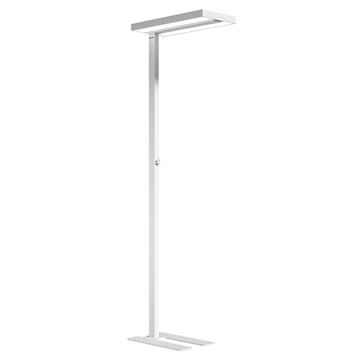


As winter's gentle rays give way to spring's intensifying daylight, remote workers face a unique opportunity to recalibrate their home office lighting. The spring equinox doesn't just mark longer days—it signals a fundamental shift in how natural light enters our workspaces, affecting everything from our circadian rhythms to our productivity levels.
Understanding Spring's Unique Light Characteristics
Spring presents distinctive lighting challenges that many remote workers overlook. Between March and May, natural light intensity increases by approximately 40% compared to winter months, with daylight extending roughly 2-3 hours longer by late spring. This dramatic shift can create glare on computer screens during mid-morning hours while leaving afternoon workspaces surprisingly dim as the sun's angle changes.
Research from leading universities suggests that inconsistent lighting conditions contribute significantly to eye strain and afternoon fatigue—issues that become particularly pronounced during seasonal transitions. The problem isn't just about having light; it's about having the right quality of light at the right time.
Why Spring Offers the Perfect Lighting Reset Opportunity
Spring cleaning traditionally focuses on decluttering physical spaces, but your lighting environment deserves equal attention. This season's gradual light changes provide an ideal testing ground for identifying gaps in your workspace illumination. You'll notice morning glare more acutely, observe how afternoon shadows creep across your desk earlier than winter, and experience how evening work sessions demand different lighting solutions.
This awareness makes spring the strategic moment to establish a lighting system that won't just serve you now, but will adapt seamlessly through summer's brightness, autumn's dimming, and winter's return. Rather than reacting to each seasonal shift, you're building a foundation that supports year-round visual comfort.
Natural Light vs. Stable Indoor Illumination: A Complementary Approach
While natural light provides essential benefits—supporting vitamin D synthesis and regulating our sleep-wake cycles—it's inherently unreliable for consistent work performance. Cloud cover can reduce available light by 50-80% within minutes. Window orientation means some home offices receive intense morning light but fall into shadow by 3 PM.
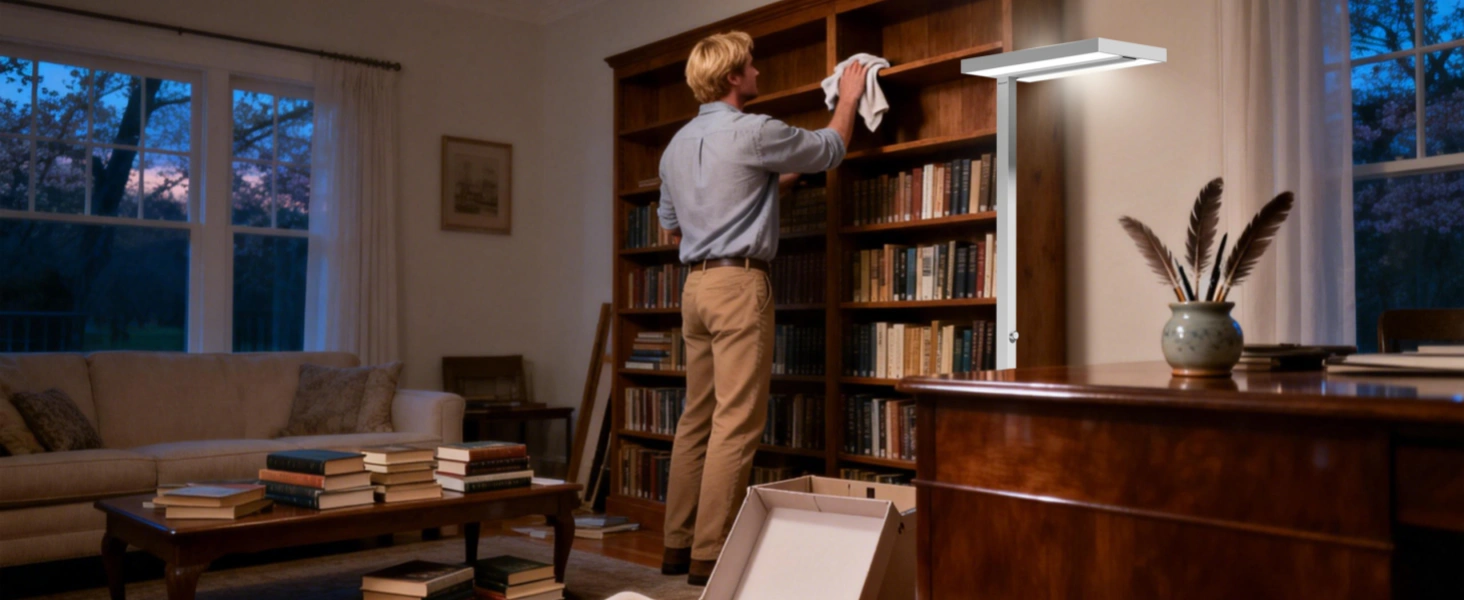
The solution isn't to block natural light or rely solely on artificial sources. Instead, successful home office lighting strategies layer stable, high-quality indoor lighting with natural daylight. Think of your indoor lighting as the reliable baseline that maintains consistent illumination regardless of weather, time of day, or season.
Products like the Honeywell 02E floor lamp exemplify this approach by providing steady, professionally calibrated illumination that complements rather than competes with natural light. Its consistent output creates a stable visual environment that reduces the constant adaptation your eyes must perform when relying solely on variable daylight.
Optimizing Light Through Your Workday
Morning Hours (6 AM - 10 AM): During spring, morning light can be deceptively harsh, creating screen glare and eye strain. Position your monitor perpendicular to windows and use your floor lamp to balance illumination across your workspace. This prevents the harsh contrast between bright window areas and darker corners that forces your pupils to constantly adjust.
Midday (10 AM - 3 PM): Spring's peak daylight hours often provide sufficient natural light, but inconsistency remains the enemy. A quality floor lamp positioned 3-4 feet from your desk and slightly behind your peripheral vision maintains consistent ambient lighting even as clouds pass or the sun's angle shifts. This stability is crucial for sustained focus during your most productive hours.
Afternoon to Evening (3 PM - 7 PM): As spring daylight begins its earlier fade compared to summer, your lighting strategy becomes critical. Rather than suddenly switching to full artificial light (which can feel jarring), maintain your floor lamp's consistent output throughout the day. This creates a seamless transition that doesn't disrupt your concentration or signal your body that the workday has ended prematurely.
Long-Term Lighting: Investing in Your Future Workspace
The minimalist approach to home office design isn't about owning less—it's about owning better. A single, well-designed floor lamp that delivers consistent, high-quality light for 5-10 years serves you better than cycling through multiple mediocre fixtures that fail to address fundamental lighting needs.
When evaluating long-term lighting solutions, consider:
Consistency over novelty: Trendy color-changing features may seem appealing, but research from major institutions indicates that stable, neutral lighting (around 4000K) supports sustained focus better than constantly shifting color temperatures. Your eyes and brain function optimally when they're not constantly recalibrating to new lighting conditions.
Build quality matters: A 34-pound floor lamp isn't just heavy—that weight indicates substantial components, quality materials, and stability that won't wobble or topple. These aren't glamorous features, but they're what separates a lighting tool that serves you for years from one that disappoints within months.
Adaptability without complexity: The best long-term lighting solutions work effectively in multiple contexts. Whether you're reading documents, participating in video calls, or working on detailed tasks, your lighting shouldn't require constant adjustment. Simplicity in design often translates to reliability in function.
Minimalist Design Philosophy Meets Functional Lighting
The intersection of minimalist aesthetics and functional lighting creates workspaces that feel both calming and energizing—a difficult balance to achieve. Minimalism in lighting doesn't mean dim or sparse; it means deliberate, purposeful illumination without visual clutter.
A single, well-positioned floor lamp in a clean-lined design complements minimal furniture and decor while providing comprehensive workspace illumination. This approach aligns with spring's natural tendency toward renewal and simplification—clearing away winter's accumulated heaviness in favor of lighter, more intentional living.
Spring's increased natural light also highlights how minimalist spaces benefit from quality artificial lighting. With fewer decorative elements competing for attention, the interplay between natural daylight streaming through uncluttered windows and a thoughtfully placed floor lamp becomes a design element itself.
Your Spring Lighting Action Plan
Assessment: Spend one full workday noting when you squint, adjust your screen brightness, or feel eye fatigue. These moments reveal gaps in your lighting strategy.
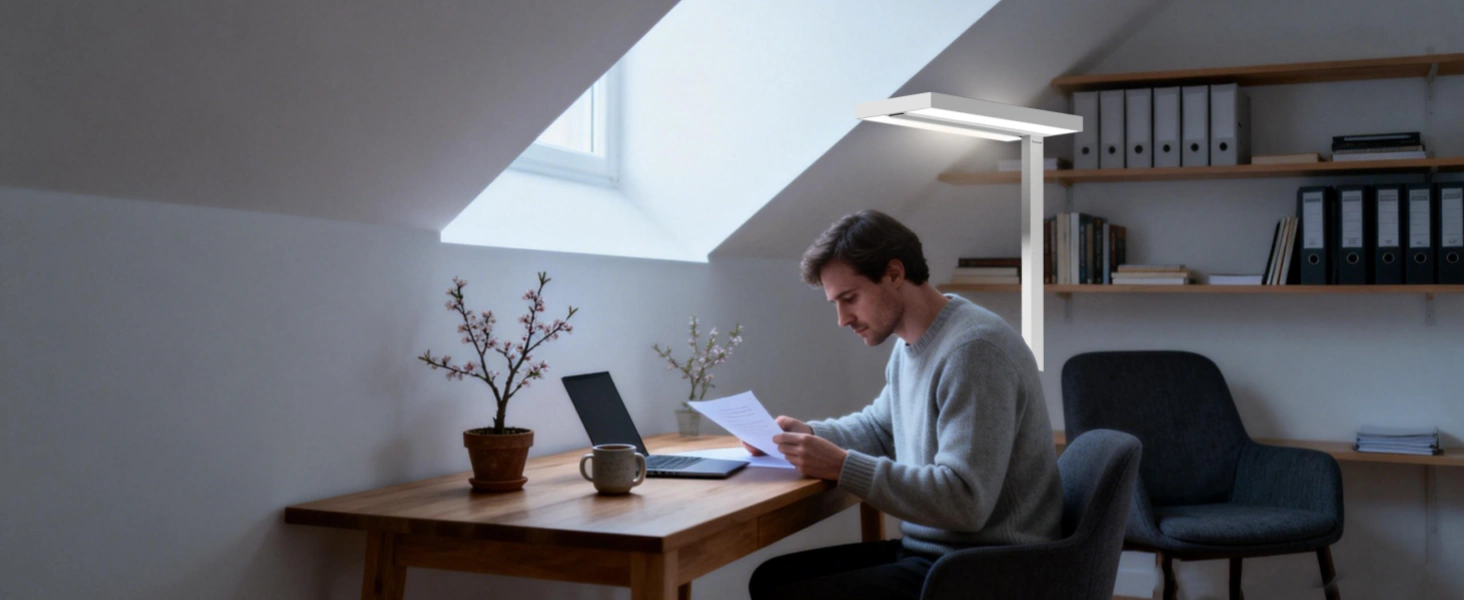
Positioning: Place your primary task light at a 45-degree angle from your dominant eye, approximately 3-4 feet away. This creates even illumination without glare or harsh shadows.
Testing: Work with your new lighting setup for two full weeks. Our eyes adapt gradually, and immediate impressions don't always reflect long-term comfort. Pay attention to end-of-day eye fatigue levels compared to your previous setup.
Adjustment: Fine-tune position and distance based on your specific tasks and workspace configuration. The goal is to forget about your lighting because it's working seamlessly.
Spring's arrival offers more than longer days and warmer weather—it presents a strategic opportunity to establish a lighting foundation that will serve your remote work needs throughout the year. By combining respect for natural light's rhythms with the stability of quality indoor illumination, you create a workspace that supports both immediate productivity and long-term visual health.
The question isn't whether to upgrade your workspace lighting, but whether you're ready to invest in a solution that grows more valuable with each season that passes.


