


As remote and hybrid work models continue to reshape how we approach productivity, one critical factor often gets overlooked during seasonal transitions: lighting. Spring's arrival brings dramatic shifts in natural daylight patterns that can unexpectedly disrupt your carefully optimized home office setup from winter months.
Spring Light Changes & Why Your Winter Setup No Longer Works
The transition from winter to spring introduces significant lighting challenges for remote workers across North America and Europe, where most regions observe daylight saving time by advancing clocks one hour. Beyond the clock change, daylight hours naturally increase as Earth's tilt shifts the Northern Hemisphere toward the sun, creating longer days and altered sun angles.
What worked perfectly in December becomes problematic by March. Many home offices only reveal their lighting deficiencies during spring and summer when excessive sunlight creates discomfort. Morning screen glare intensifies as sunrise arrives earlier, while late afternoon work sessions now battle with direct sunlight streaming through windows that seemed perfectly positioned during darker months.
How Daylight Shifts Affect Focus, Screen Comfort, and Eye Strain
Excessive sunlight and glare create distractions, make computer screens difficult to see clearly, and lead to eye strain that accumulates throughout the workday. The problem compounds as remote workers spend 8+ hours daily staring at monitors, with harsh artificial lighting or screen glare leading to digital eye strain, causing headaches and discomfort.
Research confirms that well-designed indoor lighting environments are essential for circadian entrainment and sleep regulation, with dynamic lighting systems mimicking natural photoperiods demonstrating positive effects on circadian alignment and cognitive performance. When your lighting fails to adapt to spring's changes, it disrupts these natural rhythms, affecting not just your workday but your sleep quality and overall health.
Task Lighting vs Ambient Lighting: Redefining Roles in Spring
The solution isn't simply adding more brightness—it's understanding the distinct roles of task and ambient lighting. Task lighting provides focused illumination for specific work areas, while ambient lighting creates overall room brightness and reduces harsh contrast.
For spring home office optimization, consider a dedicated desk lamp like the Honeywell H9 Smart Sensing Desk Lamp for your primary workspace. This professional-grade lamp features dual light heads covering desks up to 71 inches wide, delivering 1,000 lumens with adjustable color temperatures from 2,000K to 5,000K. Its RG0 blue light certification and CRI>91 rating ensure color accuracy and eye comfort during extended work sessions.
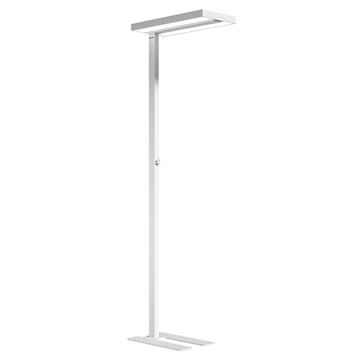
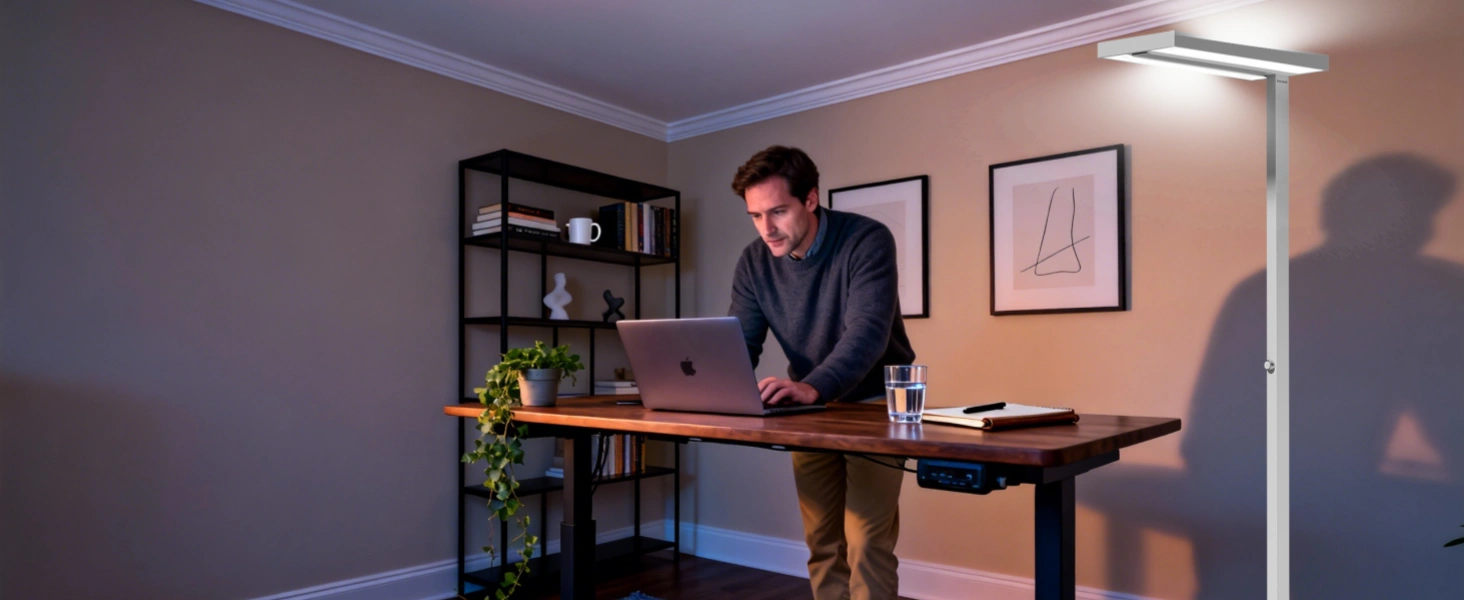
For ambient lighting, the Honeywell 02E Series Floor Lamp provides room-wide illumination through ceiling reflection. With outputs ranging from 8,000 to 16,000 lumens depending on model, these lamps utilize a dual-light design that casts direct downward light for workspace illumination while projecting upward light that bounces off ceilings, creating even, shadow-free ambient lighting across spaces up to 258 square feet.
Ideal Spring Home Office Setup for Remote & Hybrid Workers
A four-week field study of circadian-based lighting in real office conditions demonstrated that dynamic lighting aligned with natural daylight patterns improves sleep quality and circadian rhythm health. For spring, this translates to a layered lighting approach:
Morning (6 AM - 12 PM): Use cooler color temperatures (5,000K) from your task lamp to combat grogginess and enhance alertness. Blue-rich light suppresses melatonin production, signaling to your brain that it's daytime and promoting wakefulness. Position your desk perpendicular to windows to benefit from natural light without direct screen glare.
Afternoon (12 PM - 5 PM): This period offers the most natural light, but also the highest glare risk. Maintain your task lighting at moderate brightness (4,000K) while using window treatments to diffuse direct sunlight. Your floor lamp's ambient uplight becomes crucial here, compensating for contrast between bright windows and interior spaces.
Evening (5 PM - 9 PM): As daylight fades in spring evenings, transitioning to warmer color temperatures helps prepare your body for rest by reducing blue light exposure. Switch your task lamp to 2,700K and reduce overall brightness to 40-60% of daytime levels.
Common Lighting Mistakes During Seasonal Transitions
Many remote workers make these critical errors when spring arrives:
Over-reliance on ceiling fixtures: Standard ceiling lights create harsh shadows and uneven illumination. Studies show that employees in spaces with natural or high-quality lighting experience 10 to 25 percent better memory recollection and mental function, yet most ceiling fixtures can't replicate these benefits.
Ignoring glare control: Positioning desks to face windows directly or having windows behind monitors creates significant glare issues that worsen as spring daylight increases. The solution involves strategic desk placement and layered lighting that reduces contrast.
Static lighting schemes: Modern office environments that rely on static lighting schemes with high color temperatures fail to support biological clock alignment. Your lighting should shift throughout the day, just as natural sunlight does.

Building a Flexible Lighting Routine for Longer Days
Circadian lighting strategically designed to enhance peak performance periods while supporting recovery during natural low-energy times directly improves workplace productivity and employee wellbeing. Create a spring lighting routine that adapts to extended daylight:
6 AM - 9 AM: Begin with bright, cool-white task lighting (5,000K+) at 80-100% brightness. This mimics the energizing quality of morning sunlight and helps reset your circadian rhythm after the daylight saving time transition.
9 AM - 4 PM: Reduce task lighting to 60-80% as natural light peaks. Focus your floor lamp's ambient lighting on areas away from windows to balance room brightness and prevent the visual fatigue caused by extreme light-to-dark contrasts.
4 PM - 7 PM: As spring sun angles create late-afternoon glare, adjust window coverings and increase your task lamp to 4,000K at 70% brightness. Your floor lamp should remain at moderate levels to maintain consistent ambient light as daylight fades.
7 PM onward: Transition to warm lighting (2,700K) at 30-50% brightness for evening tasks. This signals your body to begin melatonin production, supporting better sleep quality despite longer daylight exposure earlier in the day.
The spring season offers remote workers an ideal opportunity to reassess and optimize their home office lighting. By understanding how seasonal light changes affect your work environment and implementing a strategic combination of task and ambient lighting, you can maintain productivity, reduce eye strain, and support your body's natural rhythms throughout the year's longest days.


