
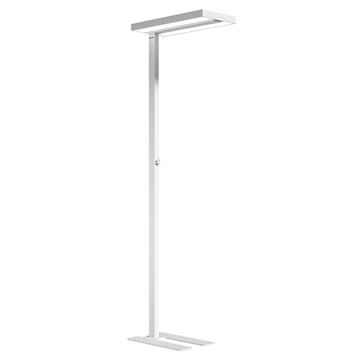


Spring brings renewal, longer days, and warmer weather—but for new parents, it often represents one of the most challenging seasons for managing infant sleep. As daylight extends into evening hours and natural rhythms shift, many families discover that their nursery lighting setup, designed for winter months, suddenly works against them. The overhead fixture that seemed fine in February now floods the room with harsh illumination during 7 PM bedtime routines, while the basic lamp provides inadequate support for 2 AM diaper changes.
For parents navigating their first spring with a newborn, understanding how seasonal light changes affect infant sleep patterns becomes essential. Research from the National Institutes of Health confirms that infants born in spring demonstrate different sleep architecture at 8 months compared to autumn-born babies, with variations in sleep stages directly linked to photoperiod exposure. This isn't merely about convenience—it's about supporting your baby's developing circadian rhythm during a critical developmental window.
How Spring Daylight Shifts Affect Infant Sleep Patterns
The transition from winter to spring brings dramatic changes in daylight exposure. In many U.S. regions, sunset times shift from around 5:30 PM in late winter to nearly 8:30 PM by late spring—a three-hour difference that directly impacts infant sleep biology. Unlike adults with established circadian rhythms, newborns spend their first three to four months synchronizing their internal clocks to environmental cues, with light serving as the primary zeitgeber, or time-giver.
Extended daylight during spring can make it significantly more difficult for babies to settle down and transition into sleep mode, as lingering sunlight interferes with natural cues signaling nighttime onset. The biological mechanism is straightforward: light exposure, particularly in the blue-white spectrum, suppresses melatonin production. Melatonin, often called the "sleep hormone," doesn't begin developing a consistent nighttime rhythm until approximately 9 weeks of age. During spring months, when evening sunlight extends well past typical infant bedtimes (6:30 to 8:00 PM for most babies under one year), this natural melatonin surge faces constant disruption.
Parents often report increased bedtime resistance during spring, attributing it to developmental phases or "sleep regressions." However, research suggests environmental factors play a significant role. But infants also experienced more difficulty initiating sleep, creating a paradox where babies eventually sleep well but struggle to wind down initially.
The spring time change compounds these challenges. According to the American Academy of Sleep Medicine, it typically takes about one week for infants to adjust to daylight saving time, during which parents manage cranky babies whose internal clocks remain set to the previous schedule. A 7:00 AM wake time feels like 6:00 AM to your baby's body, while the 7:00 PM bedtime you've carefully established suddenly arrives when your infant feels wide awake.
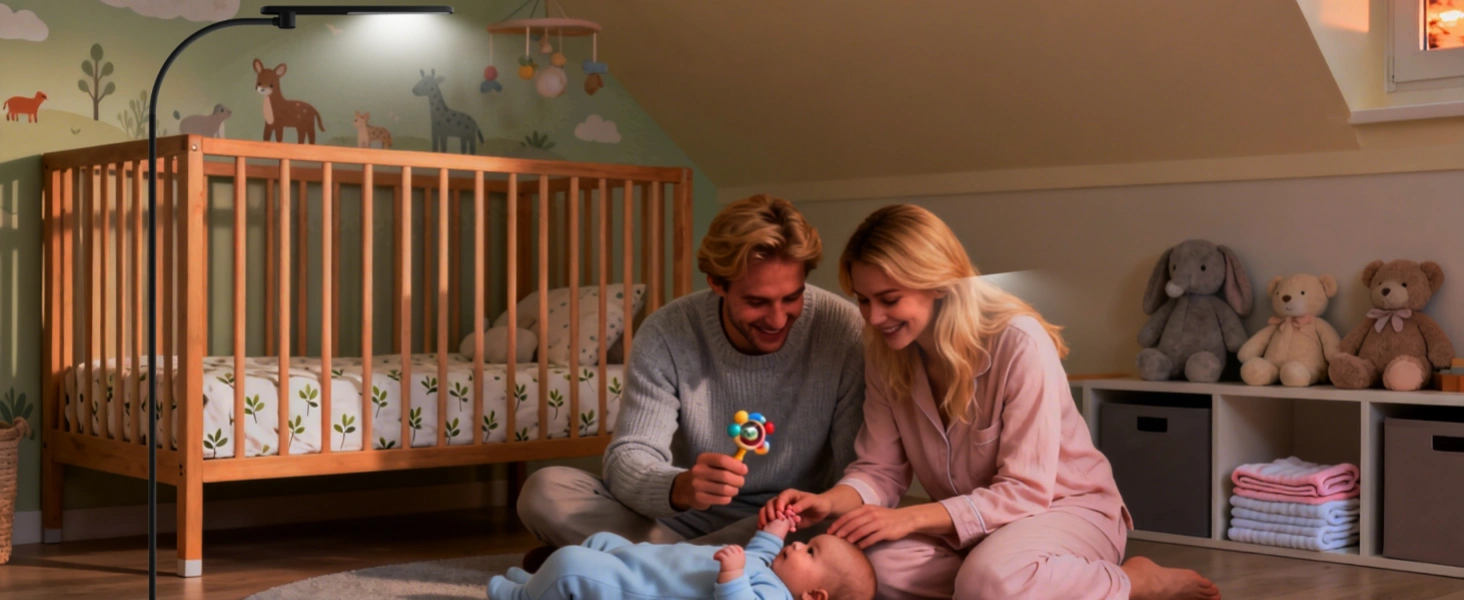
Why Harsh Lighting Disrupts Nighttime Care
Most nurseries contain overhead lighting designed for daytime visibility and safety—bright fixtures that illuminate cribs, changing tables, and reading corners. These lights typically produce 500 to 1,000 lux of illumination, comparable to a well-lit office. During daytime, this brightness supports healthy circadian development. At night, it becomes profoundly disruptive.
Research on preschool children demonstrates that bright electric light exposure in the evening suppresses melatonin production almost completely, with effects beginning within 10 minutes and continuing for an hour after lights are turned off. While this specific study examined older children, infant physiology responds similarly. Even brief exposure to bright light during a 2 AM feeding can reset your baby's circadian clock, essentially telling their brain "it's daytime—time to be alert."
The color temperature matters as much as brightness. White and blue-based light inhibits melatonin secretion by tricking the brain into believing it's still daylight, regardless of intensity. Many well-intentioned parents install "soft" white or cool blue nightlights, drawn to their calming appearance, not realizing these wavelengths actively work against sleep biology. Standard LED bulbs and many nursery lamps emit significant blue spectrum light, even when dimmed to seemingly low levels.
For parents, the consequences extend beyond infant sleep disruption. When you illuminate a nursery with bright overhead lights for a midnight diaper change, you're suppressing your own melatonin production too. This makes it significantly harder to fall back asleep after tending to your baby, contributing to the crushing fatigue that characterizes new parenthood. Sleep researchers estimate that even a 5-minute exposure to bright lighting can produce alerting effects lasting up to 90 minutes—meaning that quick diaper change could cost you an hour and a half of potential sleep.
The solution isn't complete darkness during nighttime care, which would be impractical and unsafe. Instead, families need strategic lighting that provides adequate visibility for essential tasks while preserving both parent and infant melatonin production. This is where thoughtful lighting design becomes crucial.
The Role of Gentle Ambient Light in Nurseries
Not all light disrupts sleep equally. While blue-white spectrum lighting actively suppresses melatonin, longer wavelengths like red and amber have minimal impact on circadian biology. Research demonstrates that even very bright amber light at 800 lux produces almost no effect on melatonin production, essentially acting as virtual darkness for circadian purposes. This principle creates opportunities for nursery lighting that serves parents' practical needs without compromising infant sleep.
Gentle ambient lighting should accomplish several objectives simultaneously. First, it must provide enough illumination for safe navigation and care tasks—you need to see where you're stepping and what you're doing when changing a diaper at 3 AM. Second, it should maintain melatonin production for both parent and baby. Third, it needs to be easily adjustable, allowing you to increase light for active tasks like checking for fever symptoms, then dim it back down for soothing and feeding.
The Honeywell SmartLighting F4 Flexible Neck Floor Lamp exemplifies this thoughtful approach to nursery lighting. Standing at 77.56 inches (nearly 6.5 feet), the lamp provides elevated illumination that reduces direct eye contact with the light source while maintaining excellent coverage. The flexible gooseneck design allows parents to direct light precisely where needed—onto a changing table for diaper changes, toward a nursing chair for feeding visibility, or angled toward the ceiling for gentle room-wide ambient glow.
With 96 high-brightness LED lights arranged in a curved arc pattern, the F4 delivers 700 lumens of illumination while consuming just 12 watts of power—roughly equivalent to a traditional 100-watt bulb's output at a fraction of the energy cost. More importantly for spring nursery use, it offers continuously adjustable color temperature from 3000K (warm amber) to 5000K (cool daylight), with brightness control from 10% to 100% intensity.
This adjustability proves essential for spring lighting challenges. During evening routines when natural daylight still fills the room, parents can use cooler 5000K settings at moderate brightness to maintain alertness for bath time and play. As bedtime approaches, gradually shifting to warmer 3000K tones at lower intensity helps signal nighttime to your baby's developing circadian system. For middle-of-the-night care, the 3000K setting at 10-20% brightness provides amber-toned illumination that preserves melatonin production while offering adequate visibility.
The lamp's CRI (Color Rendering Index) rating of ≥97 ensures accurate color perception even at warm color temperatures—important for assessing infant health cues like skin color or checking diaper contents. The flicker-free, RG0 blue light certified design protects developing eyes from potentially harmful light exposure, addressing a concern many parents have about LED lighting in nurseries.
Creating a Spring-Friendly Nighttime Routine
Establishing a consistent nighttime routine helps infants develop strong sleep associations, signaling their bodies that bedtime approaches. During spring months, when environmental cues send conflicting messages, routine becomes even more critical. Your lighting strategy should support this routine progression from active evening hours through bedtime and overnight care.
Begin your wind-down routine approximately 30-45 minutes before target bedtime. If your nursery has windows receiving late-day sun, use blackout curtains to create an artificially darkened environment. Sleep consultants recommend using blackout window covers to create a dark and calming sleep environment, particularly during spring when daylight extends into evening hours. This step proves especially important for families in northern latitudes where summer solstice brings 15-plus hours of daylight.
As you begin the bedtime routine—typically including bath time, final feeding, and calm interaction—transition your lighting to support each phase. A floor lamp like the Honeywell F4 makes this simple: position it to provide task lighting for bathing (medium brightness, neutral 4000K temperature), then dial down to warm 3000K at 30-40% brightness for feeding and storytime. The elevated placement ensures light doesn't shine directly into your baby's eyes during these close-contact activities, while the flexible neck allows you to fine-tune the angle as needed.
For the actual moment of sleep, most infants benefit from near-darkness. The room shouldn't be pitch black—you need some visibility to check on your baby safely—but illumination should be minimal. Set your ambient light to its lowest setting with the warmest color temperature, or turn it off completely if you're comfortable navigating by hallway light. If your baby startles easily or shows signs of darkness-related fussiness (though true fear of the dark doesn't typically develop until after age two), a very dim amber-toned nightlight can provide reassurance without disrupting sleep biology.
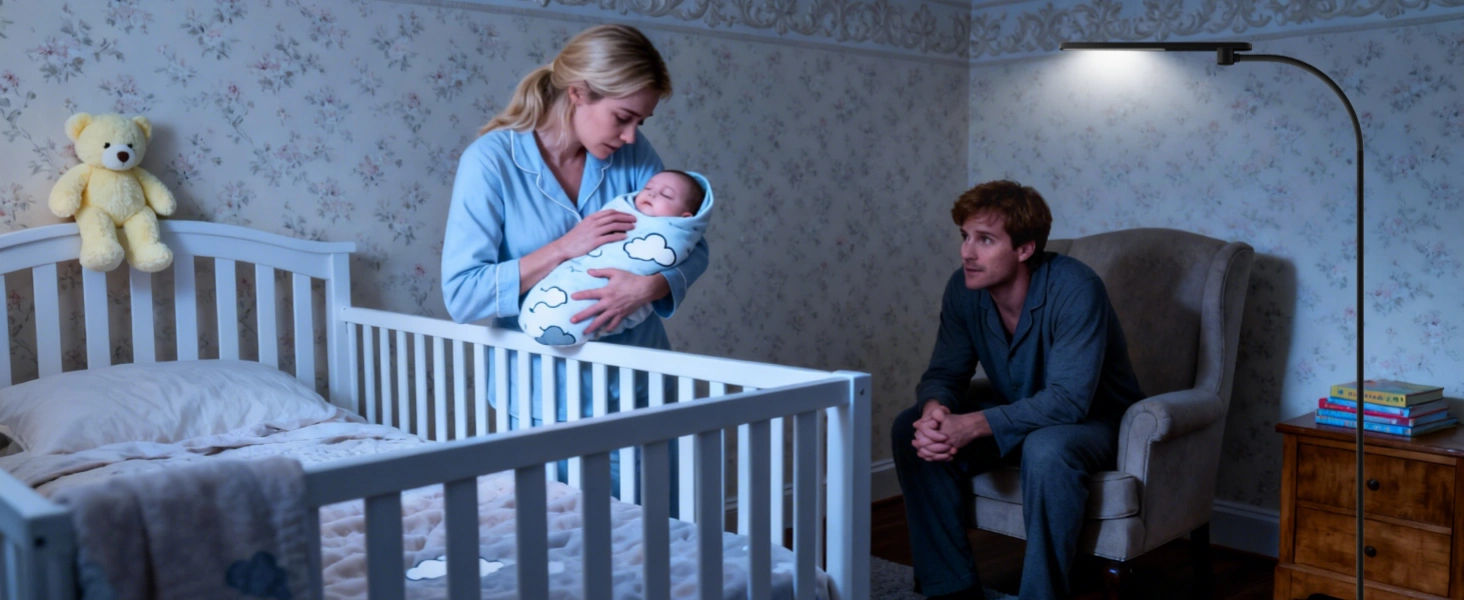
During overnight wakings for feeding or comfort, resist the urge to turn on bright lights. Keep your floor lamp at its nighttime setting—10-20% brightness at 3000K—throughout the entire interaction. Sleep coaches recommend keeping lights very dim during nighttime care to avoid causing major disruption in baby's sleep. This minimal lighting proves sufficient for diaper changes and safety checks while allowing both you and your baby to return to sleep more easily afterward.
Morning routine requires the opposite approach. When your baby wakes for the day (ideally not before 6:00 AM, though many spring-born babies become early risers thanks to increased morning light), immediately expose them to bright, blue-white spectrum light. This reinforces daytime circadian signals, helping establish the wake-sleep boundary. During spring months, natural daylight serves this purpose excellently—open curtains, take your baby near windows, or step outside briefly during morning feeding.
Supporting Parents' Rest Through Smarter Lighting
New parents' sleep deprivation is well-documented, but lighting choices can either exacerbate or alleviate this challenge. When you wake to tend to your infant at night, your goal should be to complete necessary care tasks while minimizing your own circadian disruption. This allows you to fall back asleep quickly once your baby settles.
Traditional nursery lighting fails parents in this regard. Switching on an overhead fixture for a diaper change floods your retinas with blue-white light, suppressing your melatonin production and triggering cortisol release—essentially telling your body "morning has arrived." Even if you return to bed within 15 minutes, you may lie awake for an hour or more as your circadian system slowly ramps back down.
Strategic lighting placement makes a substantial difference. A floor lamp positioned near your changing table or nursing chair provides localized illumination exactly where you need it, without filling the entire room with light. The Honeywell F4's 6.5-foot height allows it to illuminate work surfaces from above, mimicking natural overhead light patterns but at significantly lower intensity than ceiling fixtures. The flexible neck enables you to angle light away from your line of sight toward the ceiling or wall, using reflected illumination that feels gentler on sleepy eyes.
Color temperature selection matters tremendously for parental sleep preservation. Pediatricians recommend dim, warm light sources for nurseries to protect both mother and baby's melatonin production and to avoid awakening or alerting the baby during nighttime feedings. When you use warm 3000K amber-toned light instead of cool white illumination, you maintain melatonin levels in your own system, making it easier to transition back to sleep after care tasks.
Consider creating multiple light "presets" for different situations. Keep your floor lamp at minimal brightness (10-15%) and warm color temperature (3000K) as your default nighttime setting. This handles routine checks and basic diaper changes. For situations requiring more visibility—checking for rashes, administering medicine, or dealing with unexpected messes—you can temporarily increase brightness to 40-50% without changing color temperature. Complete the task, then immediately return to the minimal setting. The quick adjustment process prevents prolonged bright light exposure while ensuring you can see clearly when necessary.
For parents who bottle-feed or pump at night, proper lighting becomes even more important. You need sufficient illumination to measure formula, see volume markings, and ensure proper attachment, but not so much light that you fully wake yourself. Position your floor lamp so its primary illumination falls on your work surface rather than in your eyes, and use moderate settings—around 30-40% brightness at 3000K provides a good balance for most parents.
Designing a Calm Nursery Environment Year-Round
While spring presents specific lighting challenges, the principles of thoughtful nursery illumination apply throughout the year. Your goal is creating a space that supports healthy circadian rhythm development for your growing infant while remaining practical for daily care needs. This requires thinking beyond single-purpose lighting to develop a flexible system that adapts to different times of day, seasons, and your child's developmental stages.
Layered lighting provides the foundation for this approach. Rather than relying solely on a single overhead fixture, combine multiple light sources that serve different functions. Your primary daytime lighting might include natural window light supplemented by a ceiling fixture or bright lamp for visibility during play and interaction. For transitional periods—mornings, late afternoons, and evening routines—medium-intensity adjustable lighting offers the flexibility to match activity levels to appropriate illumination. Finally, your nighttime layer consists of minimal ambient lighting optimized for sleep preservation.
The Honeywell SmartLighting F4 floor lamp serves effectively in both transitional and nighttime roles. During daytime hours, it can provide task lighting for reading, tummy time supervision, or crafts without the harshness of overhead fluorescent lights. Its full-spectrum LED design with ≥97 CRI rating ensures natural color rendering, making it easier to monitor your baby's appearance and respond to health cues. The energy-efficient design means you can leave it on for extended periods without worry about electricity costs—at 12 watts, running the lamp for 10 hours daily costs approximately $0.15 per day at average U.S. electricity rates.
As your baby grows, lighting needs evolve. Newborns have limited vision and don't register color or detail clearly, making precise lighting less critical during the first 8-12 weeks. By three to four months, when circadian rhythms begin consolidating, thoughtful lighting becomes increasingly important. Around six months, most infants develop more predictable sleep patterns, and your lighting choices can either support or undermine this progress. Toddlers may develop nighttime fears or request dim lighting for comfort, requiring yet another adjustment to your setup.
A flexible lighting system grows with your child. The same floor lamp that provides gentle nighttime illumination during infancy can transition to a reading light for toddler story time, then eventually serve as task lighting for homework or hobbies as your child ages. This longevity justifies investing in quality lighting that offers true adjustability rather than purchasing multiple single-purpose items over the years.
Environmental considerations extend beyond your immediate nursery. Light spill from hallways, other rooms, or outdoor sources can undermine your carefully planned nursery lighting. Blackout curtains or cellular shades block external light effectively, though be aware that complete darkness isn't necessary—and can actually be counterproductive if it means fumbling dangerously during nighttime care. A small amount of ambient illumination from your chosen light source provides better functionality and safety than trying to navigate in pitch darkness.
Temperature management also connects to lighting decisions, particularly in spring when weather fluctuates unpredictably. LED lighting like that used in the Honeywell F4 generates minimal heat compared to traditional incandescent bulbs, avoiding the problem of nursery overheating. Given that infant safe sleep guidelines recommend room temperatures between 68-72°F (20-22°C), eliminating unnecessary heat sources helps maintain this target range without excessive air conditioning use.
Finally, think about your own aesthetic preferences and how they impact your emotional state. New parenthood brings enough stress without spending hours each day in a room you find visually unpleasant. Modern lighting designs like the F4's minimalist floor lamp aesthetic integrate cleanly into various décor styles—contemporary, traditional, or somewhere between—without compromising functionality for appearance.


