


Spring awakens the natural world with longer days and changing light patterns, but this seasonal transition also presents unique challenges for indoor lighting. As daylight hours extend and weather fluctuates between bright sunshine and overcast skies, understanding how to balance natural and artificial light becomes essential for maintaining visual comfort, circadian health, and overall wellbeing.
Spring's Unpredictable Natural Light Characteristics
Spring light differs dramatically from other seasons. While daylight duration increases by approximately 2-3 minutes daily in temperate regions, the quality and intensity of that light remains remarkably inconsistent. Cloud cover can reduce natural light levels by 80-90% compared to clear conditions, creating significant variations throughout the day.
The sun's angle changes rapidly during spring months, affecting how light enters our homes. Morning light streams through east-facing windows at increasingly steep angles, while afternoon sun penetrates deeper into south-facing rooms. This shifting pattern means spaces that received adequate natural illumination in winter may suddenly experience glare issues, while previously dim corners might now benefit from indirect daylight.
Research from leading universities has shown that these rapid transitions in natural light availability can disrupt our internal biological clocks if not properly managed. The human circadian system responds most sensitively to light between 4000-6500K—the color temperature range of natural daylight during mid-morning hours.
Daytime vs. Evening Light Strategies: Timing Matters
Understanding when different light qualities matter most transforms how we approach indoor illumination. Morning exposure to bright, cool-toned light helps regulate cortisol levels and establishes alertness for the day ahead. Studies conducted by sleep research institutes indicate that receiving appropriate light signals within the first hour after waking significantly impacts nighttime sleep quality.
During daytime hours (roughly 8 AM to 6 PM), prioritizing natural light access remains ideal. Position workstations within 10-15 feet of windows when possible, as natural light intensity decreases dramatically beyond this distance. However, on overcast days or in north-facing rooms, supplemental lighting becomes necessary to maintain adequate illumination levels for visual tasks.
Evening lighting requires a fundamentally different approach. As sunset approaches, transitioning to warmer, dimmer artificial sources helps signal the body's natural wind-down process. This doesn't mean working in near-darkness, but rather choosing light sources that provide sufficient task illumination without the alerting blue-spectrum wavelengths present in bright daylight.
Common Indoor Lighting Misconceptions: Brightness vs. Quality
One of the most persistent myths about indoor lighting involves equating brightness with quality. Many homeowners believe that maximizing lumens solves all lighting challenges, but this approach often creates more problems than it solves. Excessive brightness causes glare, eye strain, and can actually reduce visual performance for detailed tasks.
The concept of "right light" centers on three factors: intensity, color temperature, and distribution. A reading lamp providing 500 lumens at the correct distance and angle outperforms a ceiling fixture delivering 2000 lumens but positioned poorly. Similarly, a light source matching natural daylight's spectral composition supports visual acuity better than a brighter but poorly-balanced alternative.
Color rendering also plays a crucial role often overlooked in residential settings. Light sources with high Color Rendering Index (CRI) values above 90 reveal colors accurately, reducing eye strain and creating more comfortable visual environments. This becomes particularly important for activities like reading, crafting, or any task requiring color discrimination.
Spring's variable light conditions make supplemental lighting essential, but the goal isn't replacing natural light—it's complementing it. On bright days, minimal artificial light suffices. During overcast periods or evening hours, quality artificial sources bridge the gap, maintaining consistent visual conditions regardless of outdoor weather.
Selecting Multi-Functional Home Lighting Solutions
The ideal residential lighting combines flexibility, quality output, and energy efficiency. For spring lighting strategies, adjustable fixtures that adapt to changing needs throughout the day offer the most value. Floor lamps provide particular advantages: they're repositionable, offer direct task lighting, and can supplement ambient illumination without requiring installation.
When evaluating lighting options for home environments, consider these essential features:
Light Quality: Look for fixtures delivering consistent, flicker-free illumination with color temperatures between 3000-5000K. The 4000K range closely mimics natural mid-morning sunlight, providing alerting properties without harshness.
Adjustability: Directional control allows positioning light exactly where needed. Height-adjustable features accommodate different tasks and room configurations.
Energy Efficiency: LED technology now dominates residential lighting, offering 80-90% energy savings compared to traditional incandescent bulbs while lasting 15-25 times longer.
Build Quality: Well-constructed fixtures from established manufacturers ensure consistent performance over years of use. Stable bases prevent tipping, while quality materials resist wear from regular adjustment.
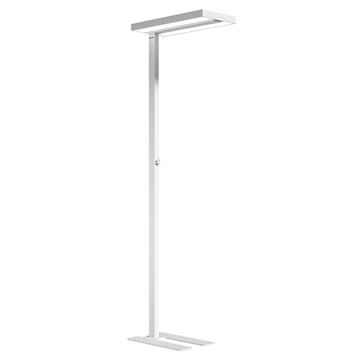
The Honeywell 02E Natural Light Floor Lamp exemplifies these principles through its focused design approach. Rather than offering adjustable color temperatures that might encourage inappropriate lighting choices, it delivers a consistent 4000K output—the color temperature of natural sunlight at 10 AM in Greenwich. This specification isn't arbitrary; research has demonstrated that mid-morning light quality provides optimal alertness and visual performance without disrupting evening melatonin production when discontinued before sunset.
The fixture incorporates Sunturalux patented chip technology designed specifically to replicate natural daylight's spectral characteristics. This creates what researchers describe as "indoor sunbathing"—the experience of working or reading under light quality that closely approximates being outdoors on a clear spring morning, without the variables of weather, glare, or UV exposure.
Practical Lighting Applications for Spring Home Activities
Different activities demand different lighting approaches. Understanding these requirements allows creating optimized environments for work, leisure, and relaxation.
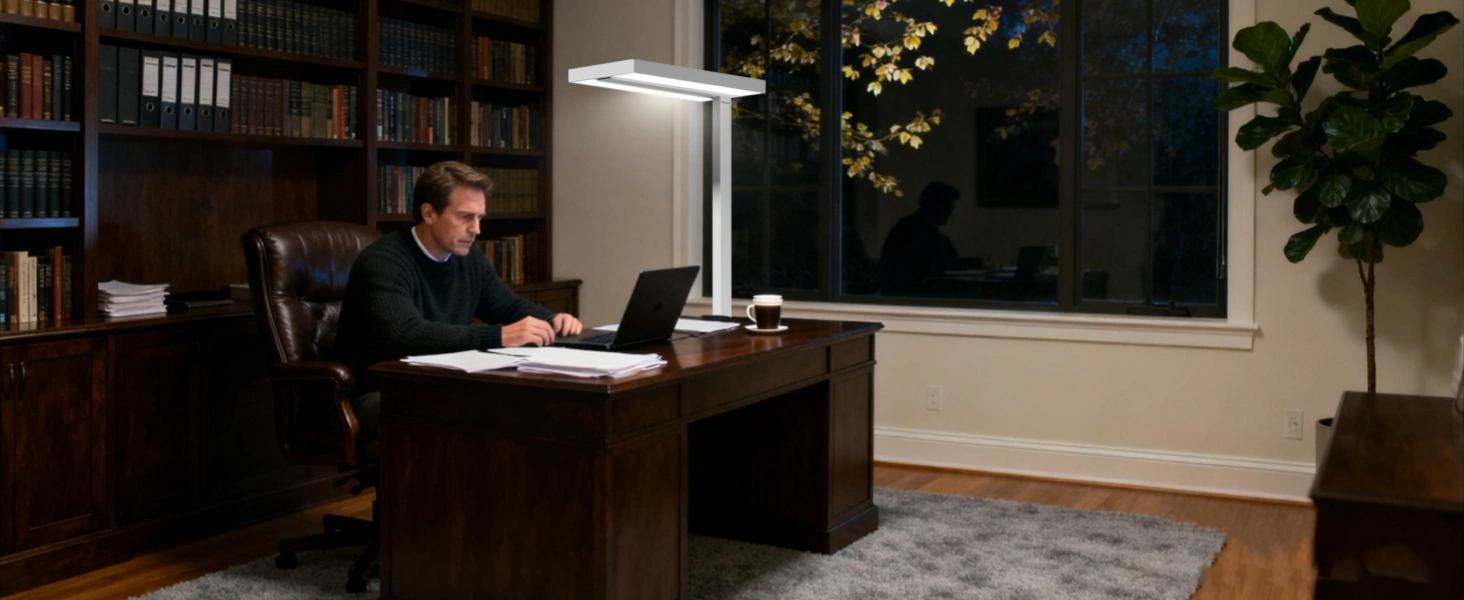
Home Office Setup: Position your desk perpendicular to windows to minimize screen glare while maximizing natural light access. Place a task light on the opposite side of your writing hand to prevent shadows across work surfaces. For video calls, front-facing supplemental light eliminates unflattering shadows and ensures professional appearance. The 4000K output provides excellent color rendering for video conferences while maintaining alertness during long work sessions.
Reading Comfort: Reading requires approximately 300-500 lumens focused on the page or screen. Position your light source slightly behind and to the side of your shoulder, angling it toward the reading material at roughly 120-135 degrees. This placement prevents glare while providing even illumination across the entire reading area. The consistent color temperature reduces eye fatigue during extended reading sessions, particularly important for transitioning between natural and artificial light sources.
Evening Relaxation: As daylight fades, shift your primary lighting away from task-focused fixtures toward ambient sources positioned around the room's perimeter. If continuing activities requiring visual precision, maintain task lighting but consider reducing surrounding ambient levels. This creates visual hierarchy that supports focus while signaling the day's progression. When using alerting 4000K light in evening hours, position it for specific tasks rather than whole-room illumination, and discontinue use 2-3 hours before intended sleep time.
Seasonal Transitions: During spring's unpredictable weather patterns, flexibility becomes paramount. On brilliant sunny afternoons, you may need no artificial light until evening. On grey, rainy days, supplemental lighting may prove necessary even at midday. Having repositionable lighting solutions allows adapting quickly to these changing conditions without major adjustments to room arrangements.

The key principle underlying all these applications involves matching light quality and quantity to specific needs rather than attempting one-size-fits-all solutions. Spring's variable conditions make this adaptability especially valuable, as the same space might require dramatically different lighting support from one day to the next.
By understanding natural light's seasonal patterns and strategically supplementing with quality artificial sources, you create indoor environments that support visual comfort, biological rhythms, and daily activities regardless of outdoor conditions. This balanced approach to spring lighting transforms how you experience your home, making every space more functional and comfortable as the season progresses.


