


The holiday season brings joy, decorations, and festive lights into our homes. However, many parents overlook a crucial aspect when decorating their children's study spaces: maintaining optimal lighting conditions for eye health and learning efficiency. While twinkling Christmas lights create a magical atmosphere, they can potentially interfere with the quality lighting needed for homework, reading, and concentration.
Why Holiday Study Environments Demand Extra Attention to Lighting Quality
During the Christmas season, children's study areas face unique lighting challenges that can impact their visual comfort and academic performance.
Multiple Light Sources Create Color Interference
According to the American Academy of Ophthalmology, inconsistent lighting conditions can cause eye strain, particularly in developing eyes. When colorful Christmas lights mix with desk lighting, they create competing color temperatures that force young eyes to constantly adjust. This color interference can lead to faster visual fatigue during homework sessions that typically extend 1-2 hours per evening for elementary and middle school students.
Extended Evening Study Hours
Winter months naturally mean earlier sunsets—by 5:00 PM in many parts of North America and Europe. The Lighting Research Center at Rensselaer Polytechnic Institute notes that children require approximately 500-750 lux of illumination for comfortable reading and writing tasks. With darkness falling earlier and holiday activities often pushing homework to later hours, proper artificial lighting becomes even more critical during December and January.
Child-Appropriate Christmas Study Area Lighting Principles
Creating a festive yet functional study environment requires balancing holiday cheer with scientific lighting principles.
Soft, Focused Illumination
Quality task lighting should provide even distribution across the workspace without creating harsh shadows or bright spots. The Illuminating Engineering Society recommends desk lamps with adjustable brightness for children's study areas, allowing customization based on task requirements—dimmer for computer work (around 300 lux) and brighter for reading printed materials (500-750 lux).
Minimizing Blue Light Interference
Research published in the Journal of Adolescent Health indicates that excessive blue light exposure in evening hours can disrupt children's circadian rhythms, affecting both sleep quality and concentration. During homework time, especially in the 2-3 hours before bedtime, warm white lighting (4000K color temperature) supports better focus without interfering with natural melatonin production. This becomes particularly important during the holiday season when sleep schedules may already be disrupted.
Creating a "Festive Atmosphere + Effective Learning" Desk Setup
Parents can successfully combine holiday spirit with optimal study conditions through strategic planning.
Strategic Christmas Decoration Placement
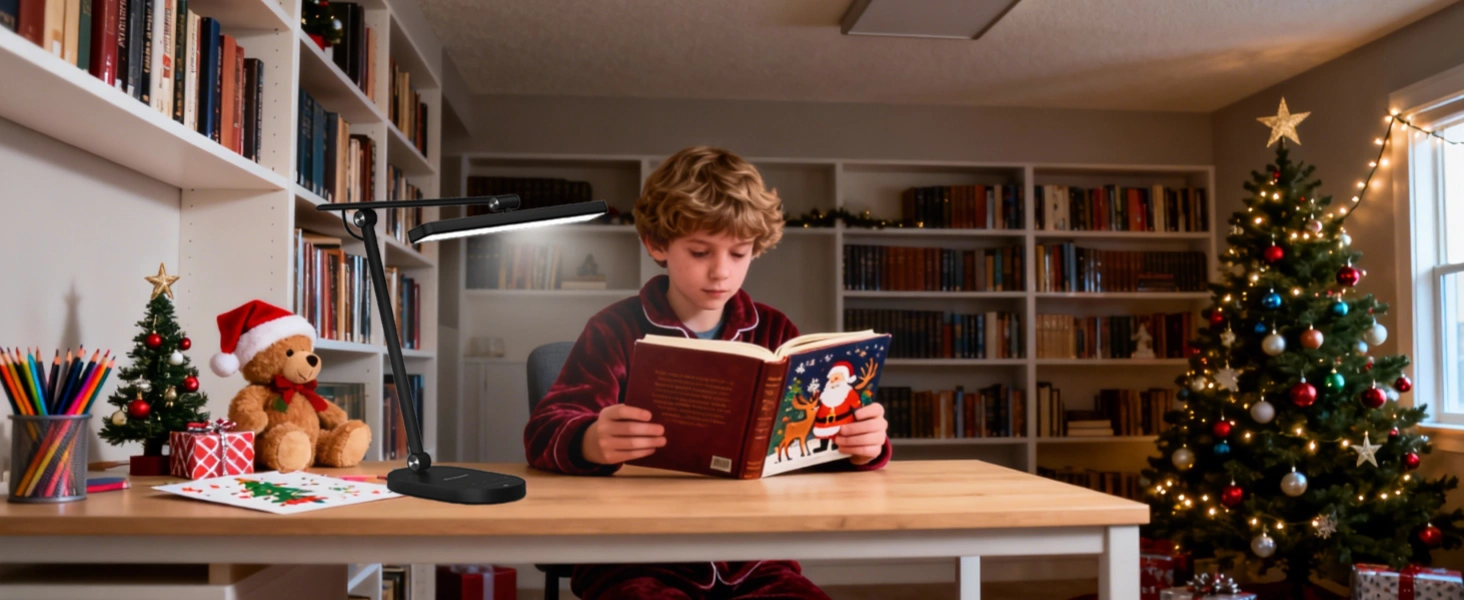
Position decorative lights at least 3 feet away from the primary study area to prevent direct glare. String lights work beautifully on bookshelves, window frames, or room perimeters—creating ambiance without compromising the task lighting zone. Avoid placing blinking or color-changing lights within the child's direct line of sight, as the movement can fragment attention during concentration-intensive tasks.
Maintaining Natural Light Color Temperature
The main desk lamp should provide neutral to warm white light that mimics natural daylight. According to lighting design standards, a Color Rendering Index (CRI) above 90 ensures that text, illustrations in textbooks, and art projects appear in their true colors—critical for homework accuracy and reduced eye strain.
Honeywell H4: Purpose-Built for Children's Learning
The Honeywell H4 lamp addresses these exact needs with features designed for young learners. Its high CRI lighting technology ensures colors appear natural and true-to-life, whether your child is reading a picture book, completing a science worksheet, or working on holiday craft projects at their desk.
The lamp's adjustable brightness settings accommodate different tasks throughout a study session—brighter for detailed homework, softer for bedtime reading. This flexibility proves particularly valuable during the holiday season when children might transition between various activities at their desks, from writing thank-you notes to reading new books received as gifts.
Coexisting with Holiday Decor
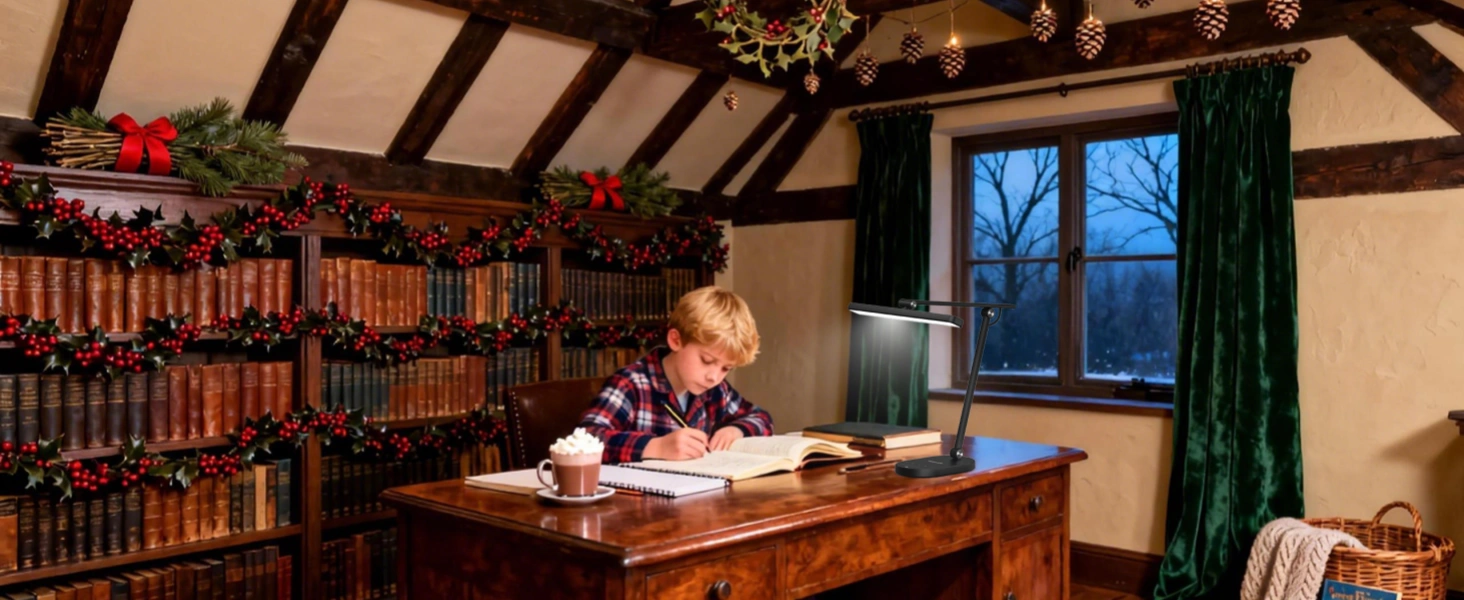
Unlike harsh overhead lighting, the H4's focused illumination works harmoniously with nearby Christmas decorations. Its stable, flicker-free light output provides reliable task lighting while allowing gentle ambient holiday lights to maintain the seasonal atmosphere. Parents appreciate this balance—children enjoy their decorated space while maintaining the visual comfort necessary for effective learning.
Post-Holiday Continuation: Long-Term Value
Smart lighting choices for the Christmas season deliver benefits far beyond December.
Consistent Eye Care for Long-Term Learning
Quality task lighting isn't just for the holidays—children need proper illumination throughout the school year. The Centers for Disease Control and Prevention emphasizes that proper lighting represents one modifiable environmental factor in preventing childhood myopia progression. By establishing good lighting habits during the decorating-intensive holiday season, families naturally extend these practices year-round.
Reducing Learning Interruptions from Equipment Changes
Investing in proper task lighting eliminates the need for frequent lamp replacements. Children benefit from consistent lighting conditions, which support steady study habits. The adjustment period when changing lighting can disrupt concentration and reduce homework efficiency—valuable time that families prefer to spend together, especially during busy school terms.
The intersection of holiday celebration and children's learning needs doesn't require compromise. With thoughtful planning and the right lighting tools, parents can create study spaces that sparkle with Christmas spirit while protecting young eyes and supporting academic success—from December festivities through June final exams.


