
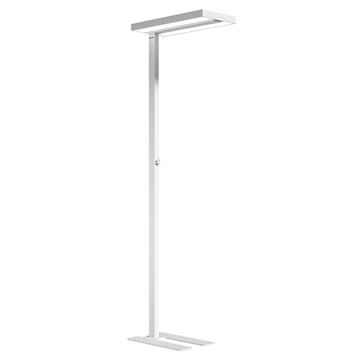


The holiday season brings out the creative spirit in millions of crafters across North America and Europe. Whether you're assembling delicate ornaments, hand-painting Christmas cards, or weaving intricate wreaths, one factor often determines the difference between a beautiful finished project and a frustrating experience: lighting quality.
According to a study published in the Journal of the Optical Society of America, poor lighting can distort color perception by up to 30%, leading crafters to make color choices they later regret under natural daylight conditions. This becomes especially problematic during winter months when natural daylight is limited to just 8-9 hours daily in many northern regions.
Why Holiday DIY Activities Demand Superior Lighting
Color Judgment Requires True-to-Life Illumination
When you're selecting ribbon colors, matching paint shades, or coordinating fabric patterns for holiday projects, accurate color rendering becomes critical. The Color Rendering Index (CRI) measures how faithfully a light source reveals true colors compared to natural sunlight. Standard household bulbs typically offer CRI ratings between 70-80, which can make reds appear orange and blues look washed out.
Research from the Illuminating Engineering Society demonstrates that CRI values above 90 are essential for tasks requiring precise color discrimination. For Christmas crafting—where red, green, gold, and silver combinations dominate—this specification isn't luxury; it's necessity.
Detail Work Needs Uniformly Distributed Light
Holiday crafts often involve intricate work: threading needles for embroidery, positioning tiny beads on ornaments, or cutting precise paper snowflake patterns. These tasks require shadow-free illumination across your entire workspace. Traditional single-point light sources create harsh shadows that obscure details and strain your eyes during extended crafting sessions.
According to ophthalmology research cited by the American Optometric Association, working under inadequate lighting can accelerate eye fatigue by 40% and reduce task accuracy by up to 25%.
Common Lighting Problems in DIY Spaces
Excessive Shadowing
Overhead ceiling fixtures, while providing general room illumination, cast shadows directly onto your work surface when you lean over your project. This forces crafters into awkward positions or constant repositioning—interrupting creative flow and causing neck strain.
Yellow-Tinted Light Causing Color Distortion
Many households still rely on warm-white bulbs (2700-3000K color temperature) that cast a distinctly yellow hue. While cozy for ambient lighting, this spectrum distorts how you perceive cooler colors. That "perfect silver" ribbon under warm light might appear distinctly gray under natural daylight—ruining the color scheme you carefully planned.
A comparative study in Lighting Research & Technology found that color temperature variations of just 1000K could shift perceived hue by 15-20% for metallic and pastel craft materials.
Selecting the Right Lamp Type for Handcraft Projects
Natural-Light Simulation Technology
The gold standard for crafting illumination mimics natural daylight's spectrum (4000K color temperature). Daylight-balanced lamps with high CRI ratings (97+) render colors as they would appear outdoors at noon, eliminating the guesswork from color coordination.
Modern LED technology now delivers this natural light quality without the heat output of traditional incandescent bulbs—a significant advantage when working with heat-sensitive materials like wax, certain glues, or delicate papers.
Adjustable Multi-Directional Lighting
Versatile positioning capabilities allow you to direct light precisely where needed. Look for lamps offering:
- Articulated arms for positioning flexibility
- Rotatable heads to adjust beam angle
- Stable bases that won't tip during adjustment
Dual-Direction Illumination for Workspace Harmony
Innovative lighting designs now incorporate upward and downward light emission. This approach serves dual purposes: the downward beam illuminates your immediate work surface, while the upward light bounces off ceilings to provide ambient fill light—reducing contrast and eliminating harsh shadows.
Practical Applications: Matching Lamps to Crafting Scenarios
Desktop Detail Work: Concentrated Illumination
For projects requiring intense focus on small areas—such as painting miniature ornaments, assembling jewelry components, or detailed paper cutting—a focused desk lamp proves ideal. The Honeywell H4 desk lamp exemplifies this category with its adjustable arm and concentrated beam pattern, delivering 700 lumens of 97+ CRI illumination directly to your work surface.
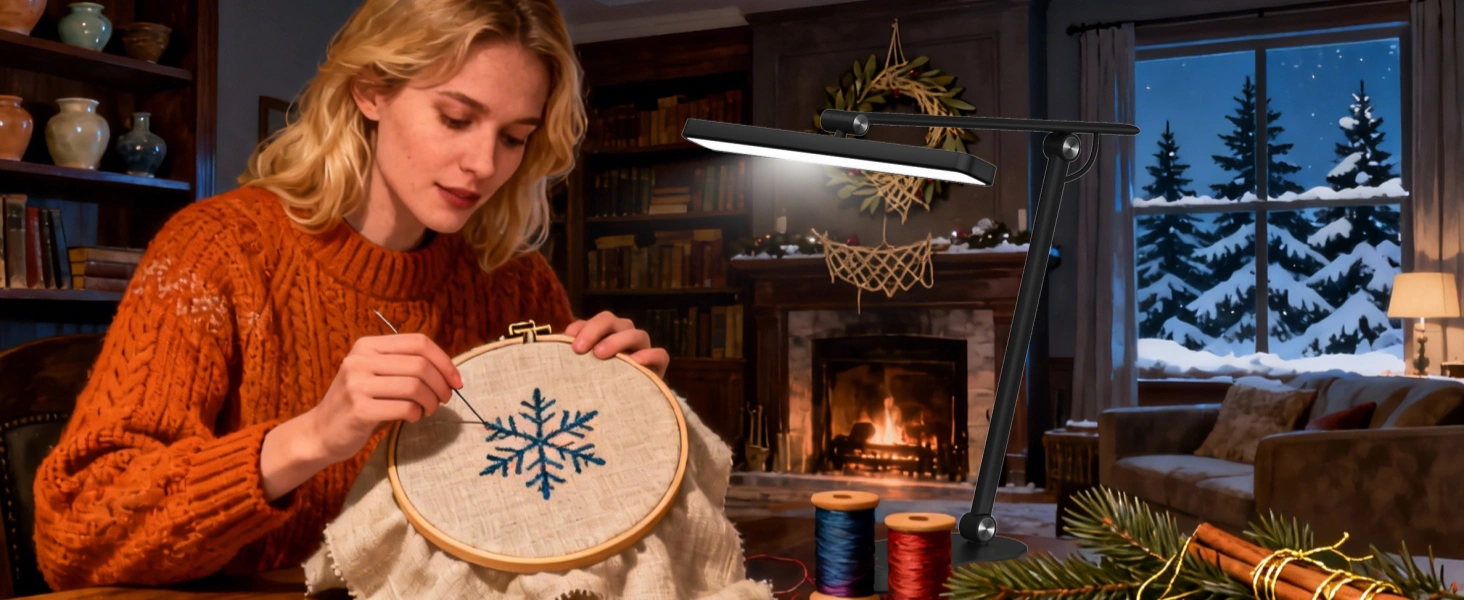
Its compact 6.7-inch diameter footprint occupies minimal desk space—leaving more room for craft supplies and project materials. The dimming capability (10%-100%) allows you to adjust intensity based on material reflectivity; highly reflective metallic papers might require lower settings to prevent glare, while dark fabrics benefit from maximum brightness.
Large Work Surface Coverage: Area Illumination
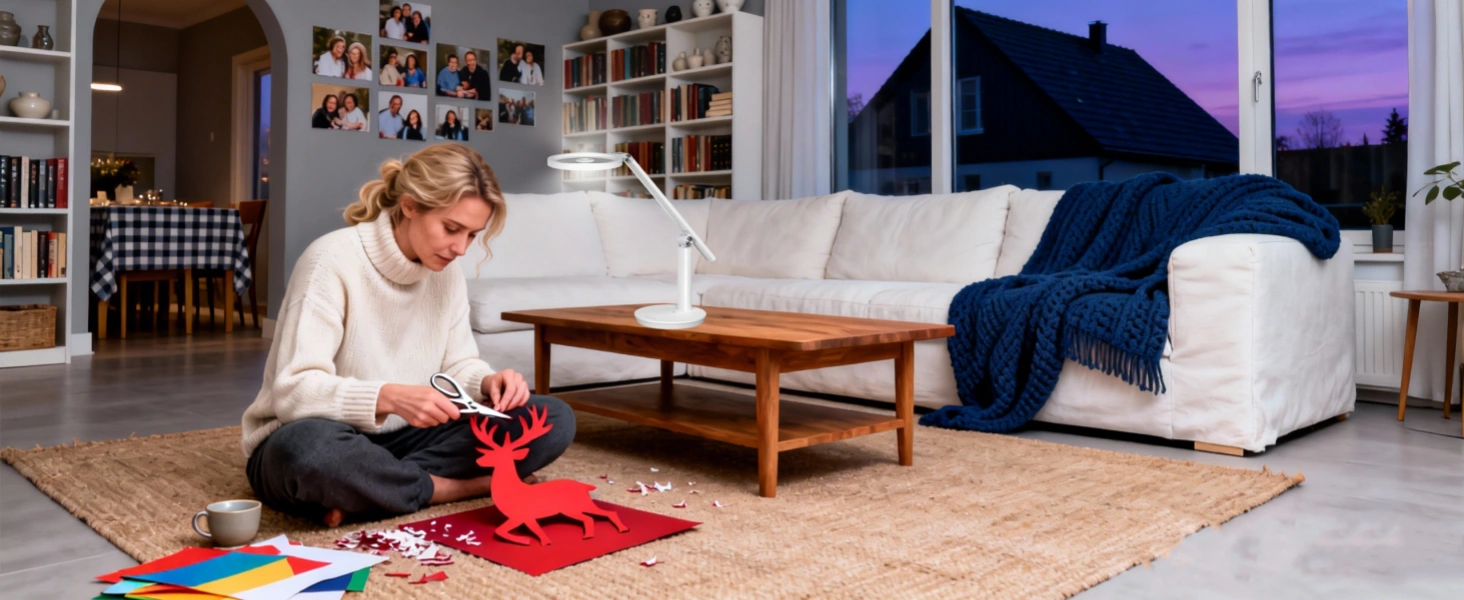
When your holiday project expands across a full crafting table—think large quilt assembly, wreath construction, or gift-wrapping stations—you need broader, more evenly distributed lighting. The Honeywell H6 lamp addresses this requirement through its distinctive dual-emission design.
With 800 lumens total output split between upward and downward channels, the H6 illuminates approximately 25-30 square feet of workspace uniformly. The 360-degree upward emission reflects off ceilings to fill in shadows, while the downward component provides direct task lighting. This combination reduces contrast ratios across your work surface—particularly valuable when coordinating multiple craft elements simultaneously.
Complementary Lighting Strategies
For optimal results in dedicated craft rooms, consider combining both approaches:
- Primary task lighting (H4-style) positioned 12-18 inches from your primary work point
- Secondary area lighting (H6-style) providing general workspace illumination
- Natural light supplementation through window positioning when available
This layered approach, recommended by lighting designers specializing in artist studios, creates depth perception cues while maintaining color accuracy throughout your space.
Creating Your Holiday Crafting Sanctuary
Workspace Configuration Fundamentals
Position your primary work surface perpendicular to windows rather than directly facing them—this avoids screen glare while allowing natural light to supplement artificial sources from the side. If working in windowless spaces or during evening hours, replicate this principle by positioning your main lamp to the side of your dominant hand (left side for right-handed crafters, right side for left-handed).
Maintain your task lamp approximately 15-20 inches above and slightly forward of your work surface. This angle minimizes hand shadows while providing adequate light intensity without excessive glare.
Angle Optimization and Environmental Support
Your ceiling height influences optimal lamp positioning for dual-emission fixtures. Standard 8-foot ceilings work efficiently with lamps placed directly on your work table, allowing upward light to reflect downward effectively. Higher ceilings (10+ feet) may require supplementary ambient lighting since reflected light dissipates over greater distances.
Consider your wall colors as part of your lighting system—lighter neutral tones (white, cream, light gray) reflect up to 80% of incident light, effectively amplifying your lamp's output. Dark accent walls, while stylish, can absorb 70% of light, requiring higher wattage compensation.
Temperature Considerations for Extended Sessions
LED lamps generate significantly less heat than traditional lighting—a meaningful advantage during multi-hour crafting sessions. However, your own comfort matters too. Position lamps to avoid direct heat on your hands when working with temperature-sensitive materials like chocolate molds, candle wax, or certain adhesives.
Conclusion
Choosing appropriate lighting for holiday DIY projects directly impacts both your crafting experience and final results. By prioritizing natural-light spectrum reproduction (4000K), high color accuracy (CRI 97+), and adaptable positioning, you create conditions where your creative vision translates accurately from conception to completion.
Whether you're assembling a single centerpiece or operating a full-scale holiday craft production, matching your lighting solution to your specific project requirements—focused illumination for detail work, broader coverage for large assemblies—ensures your handmade creations look exactly as intended under any lighting condition.
This holiday season, give yourself the gift of proper illumination. Your eyes will thank you, and your finished projects will showcase the true colors and fine details you worked so hard to achieve.


