
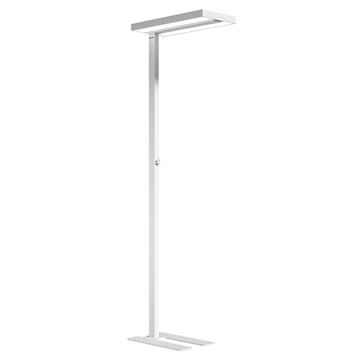


Opening: Common Misconceptions—"Brighter Is Always Better" and "Lamps Are Just Décor"
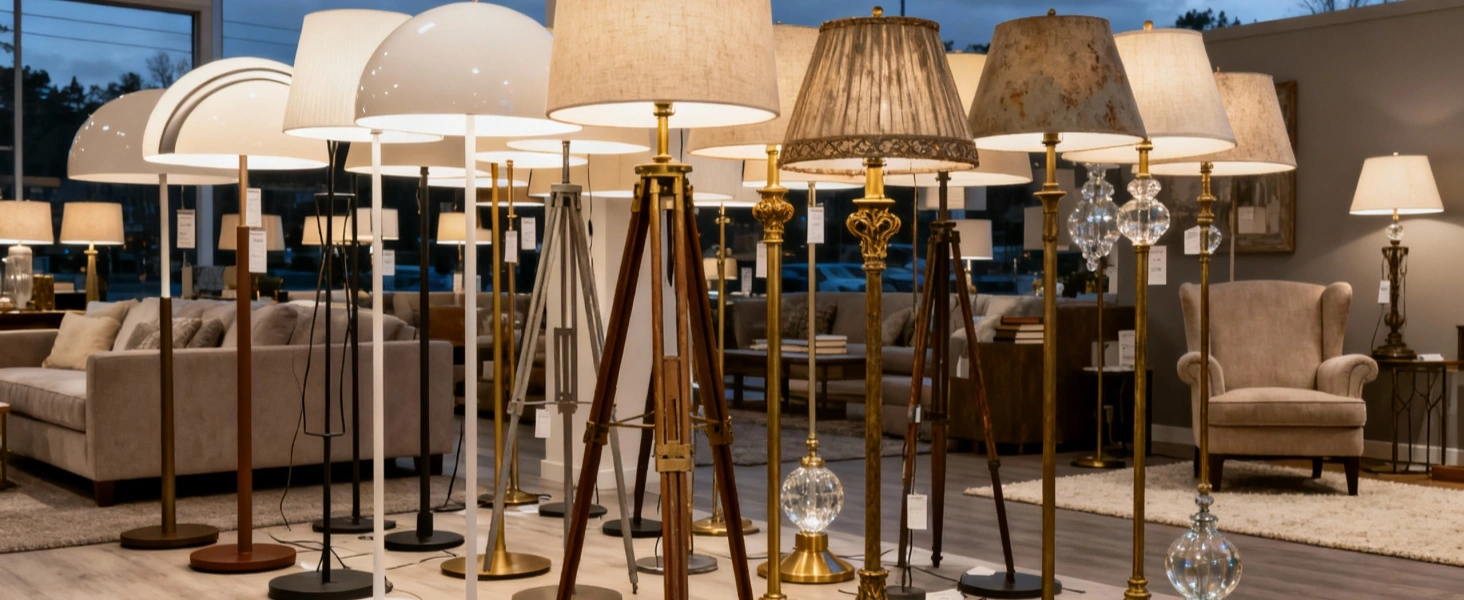
Walk into any home improvement store in North America or Europe, and you'll be greeted by rows of floor lamps marketed primarily for their aesthetic appeal. Sleek arc lamps, minimalist tripods, and vintage-inspired designs dominate showroom floors—but how many shoppers pause to consider what these fixtures actually do beyond looking good?
Two pervasive myths plague residential lighting decisions. The first: "the brighter, the better." Homeowners often assume that maximizing lumens solves all visibility problems, leading to over-lit spaces that cause glare and eye fatigue. The second misconception treats lamps as purely decorative elements—accent pieces that complement a sofa or fill an empty corner, with little thought given to their functional role.
The reality is more nuanced. Not all light serves the same purpose, and mistaking ambient lighting for task lighting can leave you squinting over crossword puzzles, mismatching embroidery thread colors, or experiencing neck strain from poor reading posture. Understanding the difference between task and ambient lighting isn't just technical jargon—it's the foundation of a well-lit, functional home.
Defining the Categories: Ambient vs. Task vs. Accent Lighting
Let's establish clear definitions. Ambient lighting provides overall illumination for a room, typically sourced from ceiling fixtures, chandeliers, or recessed lights. Its purpose is general visibility—allowing you to navigate safely and creating a baseline brightness level. Think of it as the "background" light that sets the mood but lacks focus.
Accent lighting serves aesthetic and architectural purposes: highlighting artwork, architectural features, or creating visual interest through wall sconces and uplights. It adds drama and dimension but contributes minimally to functional tasks.
Task lighting, by contrast, is purpose-built for specific activities requiring visual precision. Reading, crafting, detailed woodworking, applying makeup, or reviewing architectural blueprints all demand concentrated, high-quality light directed exactly where you need it. The Illuminating Engineering Society recommends task lighting deliver 30-50 foot-candles (300-500 lux) at the work surface—significantly higher than the 10-20 foot-candles typical of ambient lighting.
The confusion arises because many floor lamps blur these lines. A torchiere-style lamp bounces light off the ceiling for ambient effect, while a pharmacy-style reading lamp directs focused illumination downward. Recognizing which category your activities require prevents the costly mistake of buying beautiful fixtures that fail to serve your actual needs.
Five Technical Pillars of Effective Task Lighting
1. Illuminance (Measured in Foot-Candles or Lux)
The American National Standards Institute (ANSI) specifies that detailed tasks—such as reading fine print or working with low-contrast materials—require 50-75 foot-candles at the task surface. Ceiling fixtures rarely deliver this intensity to desk or tabletop level, creating a lighting "gap" that task lamps must fill.
2. Uniformity and Directionality
Shadows and hotspots compromise accuracy. Quality task lighting distributes light evenly across the work area without harsh edges. Adjustable heads or gooseneck designs allow users to fine-tune beam placement, eliminating shadows cast by hands or tools.
3. Color Rendering Index (CRI)
CRI measures a light source's ability to reveal true colors compared to natural daylight (CRI 100). For tasks like painting, quilting, or color-matching fabrics, a CRI above 95 is essential. Poor CRI can make navy appear black or cause you to select the wrong wood stain—mistakes that become apparent only in daylight.
4. Flicker-Free Operation
The IEEE (Institute of Electrical and Electronics Engineers) has documented that flicker rates below 100 Hz can trigger eye strain, headaches, and reduced concentration. Quality LED task lamps should operate flicker-free, verified through third-party testing to IEEE standards.
5. Adjustable Color Temperature and Dimming
Circadian rhythm research published in the Journal of Clinical Sleep Medicine indicates that cooler light (4000-5000K) enhances alertness for detail work, while warmer light (2700-3000K) reduces eye fatigue during extended reading sessions. Dimmability allows customization based on time of day and task demands.
How the Honeywell 02E Addresses Task Lighting Requirements
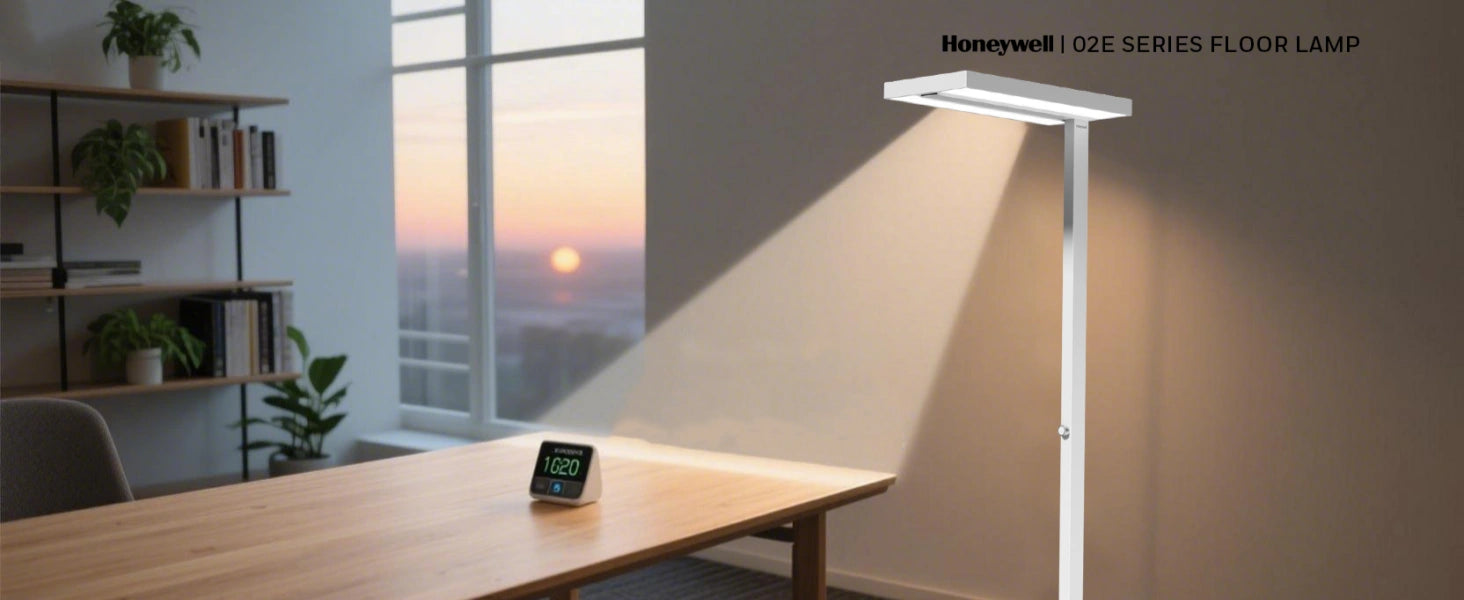
The Honeywell 02E Series Reading Floor Lamp (view on official site) exemplifies purpose-driven design for task lighting applications. Let's examine how it satisfies the five technical pillars:
Illuminance Delivery: The 02E provides adjustable brightness up to 16000 lumens.
Color Accuracy: With a CRI rating of 98, the 02E renders colors with near-perfect fidelity, making it particularly valuable for the best task lamp for crafting at home—whether you're cross-stitching intricate patterns, sorting beads by subtle hue variations, or painting miniatures.
Flicker Elimination: Certified flicker-free operation ensures comfortable extended use during multi-hour projects without the subliminal visual stress that cheaper LED fixtures impose.
Balancing Function and Aesthetics: Integrating Task Lighting Without Disrupting Interior Design
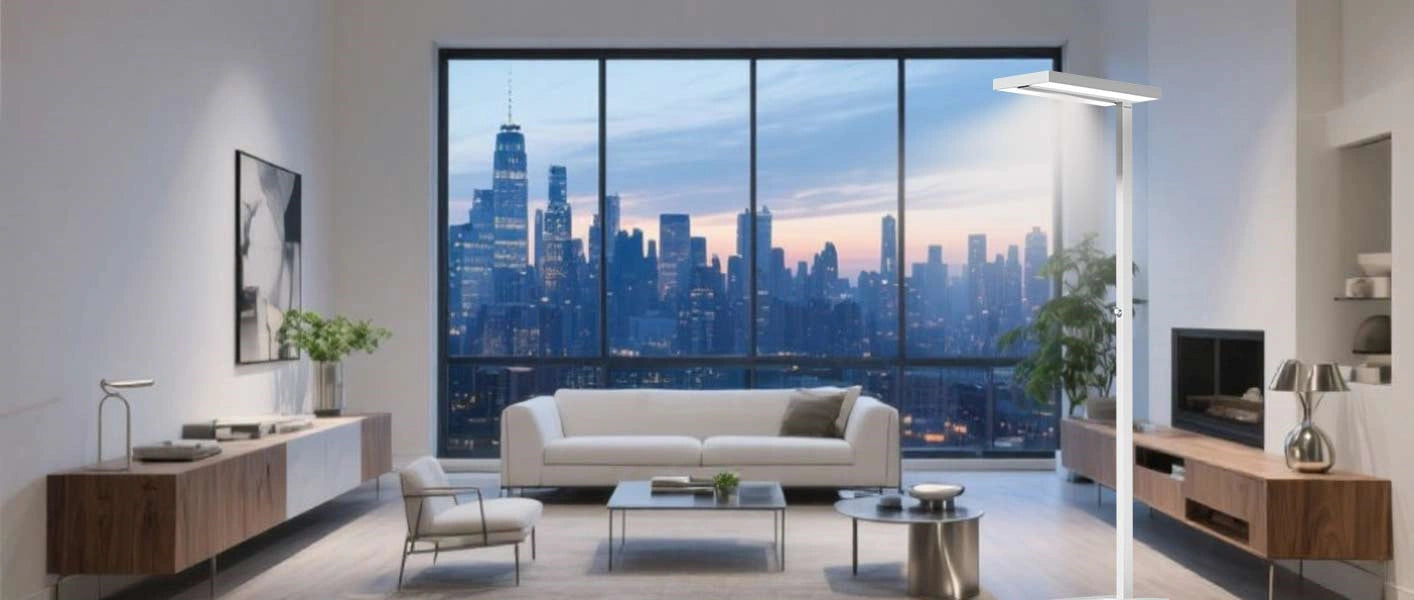
A common objection to task lighting is that industrial-looking fixtures clash with carefully curated décor. This concern is valid but surmountable. The key lies in understanding that task lamps don't need to be centerpiece statements—they're supporting actors that enable primary activities.
Zoning Strategy: Designate specific "activity zones" where function trumps form. A reading nook, craft corner, or home office can accommodate more utilitarian lighting without affecting the room's overall aesthetic.
Layering Approach: Use ambient lighting to establish mood and general visibility, then layer task lighting only where needed. A living room might feature a decorative pendant for ambiance, with a floor lamp beside the armchair providing reading light—each fixture serving its purpose without competing visually.
Camouflage Through Consistency: Match task lamp finishes to existing hardware (drawer pulls, curtain rods, picture frames) to create visual cohesion. The lamp becomes part of a larger metallic accent scheme rather than an isolated element
Buyer's Checklist: What to Look for When Shopping for Task Lighting
When evaluating task lamps—whether online or in showrooms—use this criteria-based approach:
| Feature | Minimum Standard | Why It Matters |
|---|---|---|
| Lumens Output | 6000-16000 (adjustable) | Ensures sufficient brightness for detailed work |
| CRI Rating | ≥98 | Accurate color perception for crafts, makeup, art |
| Color Temperature | 4000k | Natural for different tasks and times |
| Flicker Rate | IEEE certified flicker-free | Prevents eye strain during extended use |
| Control Type | Circle button | Easy adjustment without interrupting workflow |
| Height Range | 40-60 inches | Accommodates seated and standing work positions |
| Stability | Weighted base ≥20 lbs | Prevents tipping when adjusting arm position |
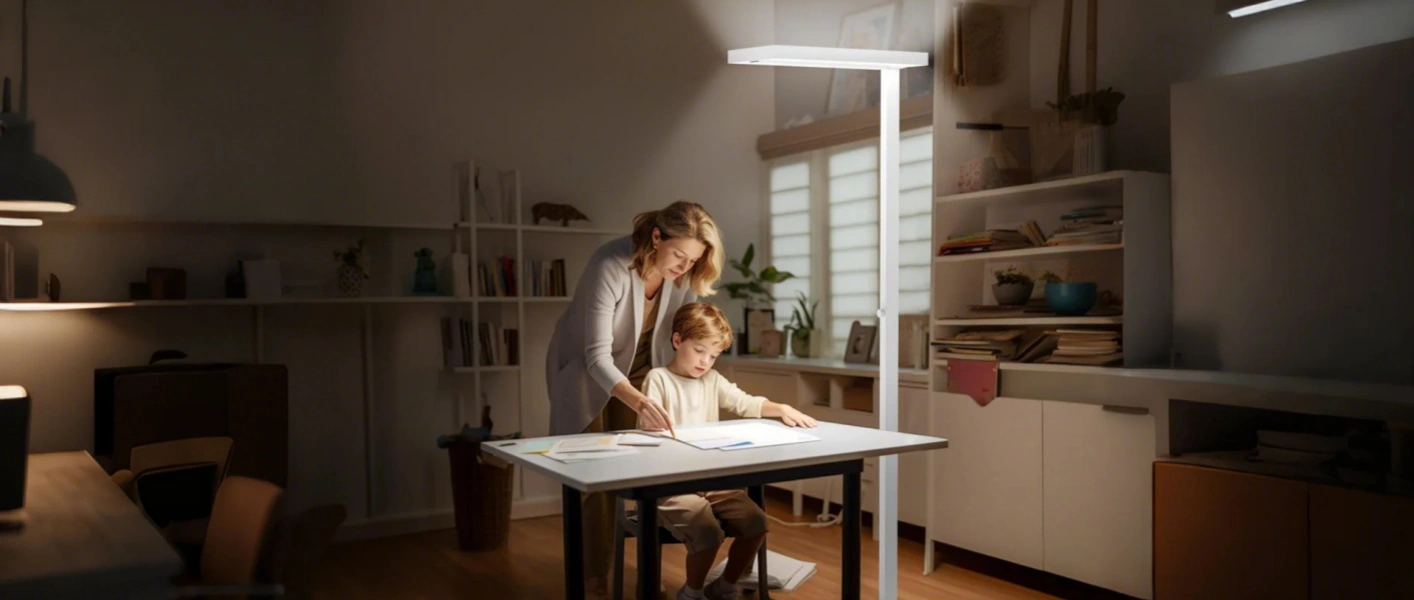
Conclusion: Making the Irreplaceable Choice
The difference between task and ambient lighting isn't merely technical—it's the difference between spaces that accommodate activities and spaces that enable them. Ambient lighting makes rooms visible; task lighting makes work possible.
As you plan your home's lighting ecosystem, resist the temptation to judge fixtures solely by their appearance or wattage ratings. Ask instead: What will I actually do in this space? If the answer includes reading fine print, crafting detailed projects, or any activity where precision matters, allocate budget and wall space for dedicated task lighting.
The Honeywell 02E represents this functional philosophy translated into accessible product form—not the only solution, but a benchmark demonstrating what serious task lighting should deliver. Whether you choose this specific model or another, prioritize the technical specifications that serve your actual needs over features that merely decorate.
Your eyes—and your finished projects—will thank you.


