


Spring represents more than a change in seasons—it's a psychological reset. As daylight extends and temperatures rise, many minimalist homeowners instinctively declutter their spaces, donate unused items, and simplify their routines. Yet amid this seasonal purge, one essential element often gets overlooked: lighting design. For those committed to minimalist living while maintaining quality of life, the equation isn't fewer lights—it's smarter, more intentional illumination where every fixture serves a clear purpose.
Spring Reset Meets Home Minimalism
The concept of spring cleaning runs deeper than physical organization. According to behavioral research from leading universities, seasonal transitions trigger what psychologists call "temporal landmarks"—moments when people feel motivated to establish new habits and reassess their environments. In minimalist households, this manifests as radical simplification: removing visual noise, streamlining possessions, and keeping only what serves a defined function.

However, minimalism doesn't mean deprivation. It means intentionality. When minimalist principles extend to lighting, the goal shifts from "how few lights can I have?" to "which lights truly support my daily life?" Spring's longer days—up to 14 hours of natural light in some regions by late May—create new opportunities to rethink how artificial light complements changing routines.
As spring activities increase—from early morning workouts to evening reading sessions—your lighting needs evolve. The challenge becomes selecting fixtures that adapt to multiple scenarios without cluttering your carefully curated space.
Why Minimalism ≠ Minimal Light
A common misconception equates minimalist design with dim, sparse lighting. Research in environmental psychology demonstrates that light quality significantly impacts mood regulation, circadian rhythm stability, and cognitive performance. A minimalist space with inadequate lighting can actually undermine the calm, functional atmosphere you're trying to create.
The distinction lies in light quality versus quantity. Rather than installing numerous small fixtures, minimalist homes benefit from strategically placed sources that deliver consistent, comfortable illumination. Studies on residential lighting suggest that stable color temperature and appropriate brightness levels (measured in lumens per square foot) contribute more to wellbeing than sheer number of light sources.
Spring presents unique lighting challenges. As natural daylight shifts throughout the season, indoor lighting must compensate for varying dusk times and support activities that migrate between indoor and outdoor spaces. A single well-designed fixture can often replace multiple smaller lights while maintaining the visual simplicity minimalists value.
Role Assignment: Every Light Needs a Job
In minimalist lighting design, each fixture should fulfill a specific function. Think of lighting as you would furniture—every piece justifies its presence through utility.
Primary Light: This anchors your main living activities. Whether you're preparing meals, doing yoga, or hosting conversations, your primary light source should provide broad, even coverage without harsh shadows. For multi-purpose rooms common in minimalist homes, this light becomes the foundation of your entire lighting strategy.
Ambient Light: While primary light handles tasks, ambient lighting shapes atmosphere. This softer, diffused light creates visual comfort during transitions between activities—when you're winding down from work mode or shifting from dinner to relaxation.
Task Light: Specific activities demand focused illumination. Reading, detailed crafts, or computer work require directional light that doesn't strain your eyes. In minimalist spaces where one room serves multiple functions, task lighting becomes crucial for defining different "zones" without physical barriers.
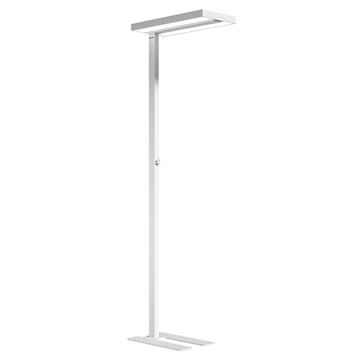
The Honeywell Natural Floor Lamp (02E) exemplifies this multi-role approach. Weighing 33.8 pounds with a stable base design, this fixture combines primary and task lighting functions in a single footprint. Its SunturalLux patented chip technology delivers 4000K color temperature—calibrated to mimic natural Greenwich Mean Time 10 AM sunlight—providing consistent illumination that supports circadian health without requiring multiple fixtures or complex installations.
One Lamp, Multiple Spring Scenarios
Minimalist living thrives on versatility. The fewer items you own, the more functional each must be. This principle applies directly to lighting strategy as spring routines diversify.
Morning Activation (6-9 AM): As spring sunrise occurs earlier, you might begin workouts or meditation before full daylight arrives. A floor lamp positioned near your activity space provides enough brightness to start your day without flooding the entire room—important when others in the household are still sleeping.
Midday Flexibility (9 AM-5 PM): During peak daylight hours, natural light dominates. However, north-facing rooms or overcast spring days still require supplemental lighting. A fixture with natural-spectrum characteristics bridges the gap between indoor and outdoor light quality, maintaining visual consistency as clouds pass or sun angles shift.
Evening Transition (5-9 PM): Spring evenings last longer, but as dusk approaches, your lighting needs change. The same lamp that supported morning activities now anchors evening routines—reading, conversation, or quiet hobbies. For minimalist homes with open floor plans, a strategically placed floor lamp can illuminate multiple functional zones depending on time of day.
Nighttime Wind-Down (9 PM-Midnight): Research from sleep science institutions indicates that maintaining consistent light exposure patterns supports healthy sleep-wake cycles. Rather than switching between multiple fixtures with varying color temperatures, using one reliable source helps establish routine—a cornerstone of minimalist living.
The key is selecting fixtures with enough range to serve these different contexts. Adjustable height, stable construction, and appropriate lumen output allow a single lamp to function across morning energy needs and evening calm without requiring a collection of specialized lights.
Practical Light Management for Minimalist Spring Living
Intentional lighting requires intentional habits. Here's how to align your illumination strategy with minimalist principles during spring:
Create a Lighting Schedule: Map your typical daily activities against natural light availability. Identify when and where you genuinely need artificial light versus when you're using it out of habit. Many people discover they over-light their spaces during spring's extended daylight periods.
Position for Purpose: In minimalist homes, furniture placement is deliberate—lighting should be too. Position your primary floor lamp where it serves the most activities. For many, this means near seating areas that function as reading nooks, conversation spaces, and work zones throughout the day.

Maintain Light Quality: Dust and debris accumulate on fixtures, reducing light output by up to 30% according to lighting maintenance studies. Schedule quarterly cleaning—align it with spring and fall equinoxes as natural reminders.
Adapt to Spring Rhythm: As daylight saving time shifts your schedule and outdoor activities increase, reassess when you actually use indoor lighting. You might find that your lamp's role changes from primary light source to occasional supplement as spring progresses toward summer.
Resist Lighting Clutter: As spring brings renewal impulses, you may feel tempted to add "just one more" accent light or decorative fixture. Before purchasing, ask: Does this serve a function I can't currently fulfill? Minimalism means resisting accumulation, even of beautiful objects.
The Spring Light Advantage
Spring's transformation from winter darkness to summer abundance makes it the ideal season to establish intentional lighting habits. The gradual increase in natural light allows you to systematically evaluate which artificial light sources truly matter. For minimalist homeowners, this seasonal shift offers clarity: fewer, better-chosen fixtures create more comfortable, functional spaces than collections of mediocre lights.
By treating lighting as purposefully as you treat every other element in your minimalist home, you transform illumination from background detail to active contributor to daily wellbeing. Spring's renewal energy doesn't require purchasing more—it requires choosing better, using intentionally, and letting quality light support the simplified life you're building.


