
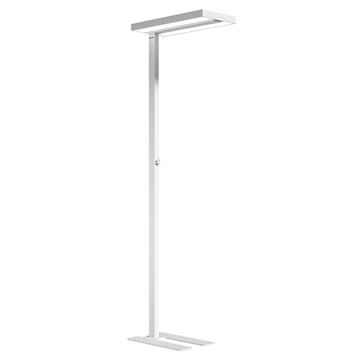


Spring is the season of new beginnings — longer daylight hours, fresh routines, and a renewed focus on your child's development. For parents of school-age children, it's also the time to take a critical look at the home learning environment. And one of the most overlooked — yet impactful — factors in that environment is lighting.
If your child spends 2 to 4 hours a night reading, writing, or working on a screen, the quality of light in that space matters far more than most parents realize. This guide helps you understand what to look for in a best floor lamp for kids' study, why eye health should be your top priority, and how to choose a fixture that genuinely grows with your family for years to come.
1. Spring and the Child Development Cycle
As days lengthen in spring, children's circadian rhythms — the internal biological clocks that regulate sleep, alertness, and mood — naturally recalibrate. Research published in pediatric chronobiology journals suggests that school-age children are particularly sensitive to light quality during evening study hours: exposure to harsh, flickering, or spectrally poor artificial light during homework time can interfere with both concentration and the body's preparation for sleep.
This means that spring isn't just a good time to redecorate — it's an ideal moment to audit your child's study lighting and make an upgrade that supports their health and academic performance simultaneously.
2. Eye Health First: Why Light Quality Beats Aesthetics
When parents shop for a floor lamp for children's rooms, the temptation is to focus on design — a fun shape, a trendy finish, something that fits the room's décor. But ophthalmologists and lighting researchers consistently emphasize three technical factors that actually determine whether a light source is healthy for young eyes:
Flicker: Invisible to the naked eye but registered by the visual cortex, high-frequency flicker in LED lights has been linked in multiple peer-reviewed studies (including those cited in engineering standards like IEEE PAR 1789) to eye fatigue, headaches, and reduced concentration over extended reading sessions. A zero-flicker lamp — one with a flicker depth of 0.00% — eliminates this risk entirely.
Glare: Direct glare forces the eye's pupils to constantly re-adjust, creating strain that accumulates over a homework session. A well-designed lamp uses diffusion technology to spread light evenly, so your child is never squinting at a hotspot.
Color Rendering: The Color Rendering Index (CRI) measures how accurately a light source reproduces the true colors of objects, compared to natural daylight. For reading — especially when distinguishing colors in textbooks, diagrams, or art assignments — a CRI above 95 is considered excellent. Below 80, colors appear washed out and the brain works harder to interpret visual information.
How the Honeywell SmartLighting 02E Addresses All Three
The Honeywell 02E is built around a proprietary SUNTURALUX™ chip, co-developed with Bridgelux, that delivers a full-spectrum light experience designed to replicate the quality of natural daylight indoors. Critically, it operates at a fixed 4000K color temperature — engineered to mirror the soft, balanced light of a Greenwich morning at 10:00 AM. This isn't a "cool white" office light or a "warm yellow" bedroom lamp; it occupies the sweet spot that research in environmental lighting identifies as optimal for sustained cognitive tasks.
The lamp achieves a CRI of 98 (measured against 8 reference colors per IEC standards) and a Color Fidelity Rf > 97 (measured across 99 color samples per the newer IES TM-30-15 standard). In practical terms: your child sees their textbook exactly as it was printed.
Most importantly for eye safety: the 02E carries RG0 (Risk Group 0) blue light certification under IEC/TR 62778 and IEC/EN 62471 — the lowest possible risk classification — and a flicker depth of 0.00%, certified under IEEE PAR 1789. These aren't marketing claims; they are independently verified certifications from TÜV Rheinland and multiple international bodies including UL, ETL, CE, and FCC.
The lamp's high-density micro-prism crystal panel uses physical light refraction principles to distribute illumination across a wide area — up to 258 square feet — reducing harsh shadows and contrast that strain young eyes during fine motor tasks like writing or drawing.
3. Replaceable vs. Integrated Design: The Long-Term Tradeoff
This is one of the most practical questions parents rarely ask before buying: What happens when the light source eventually degrades?
Many budget and mid-range floor lamps use fully integrated LED modules. When the LEDs dim after several years of use, the entire fixture becomes landfill. For a lamp purchased specifically for a child's study, this is a significant hidden cost — both financially and environmentally.
The Honeywell 02E Series takes a maintainable design approach. The diffusion panel is a replaceable component, and the modular architecture means that individual parts can be serviced rather than the whole unit discarded. This aligns with a growing movement in premium lighting toward longevity and repairability — a philosophy that matters when you're investing in a fixture intended to last through a child's entire school career.
Combined with a 2-year manufacturer's warranty and a support team accessible by phone and email, this is a lamp designed to be owned, not just purchased.
4. Choosing a Lamp That Grows With Your Child: 5 to 10 Years of Use
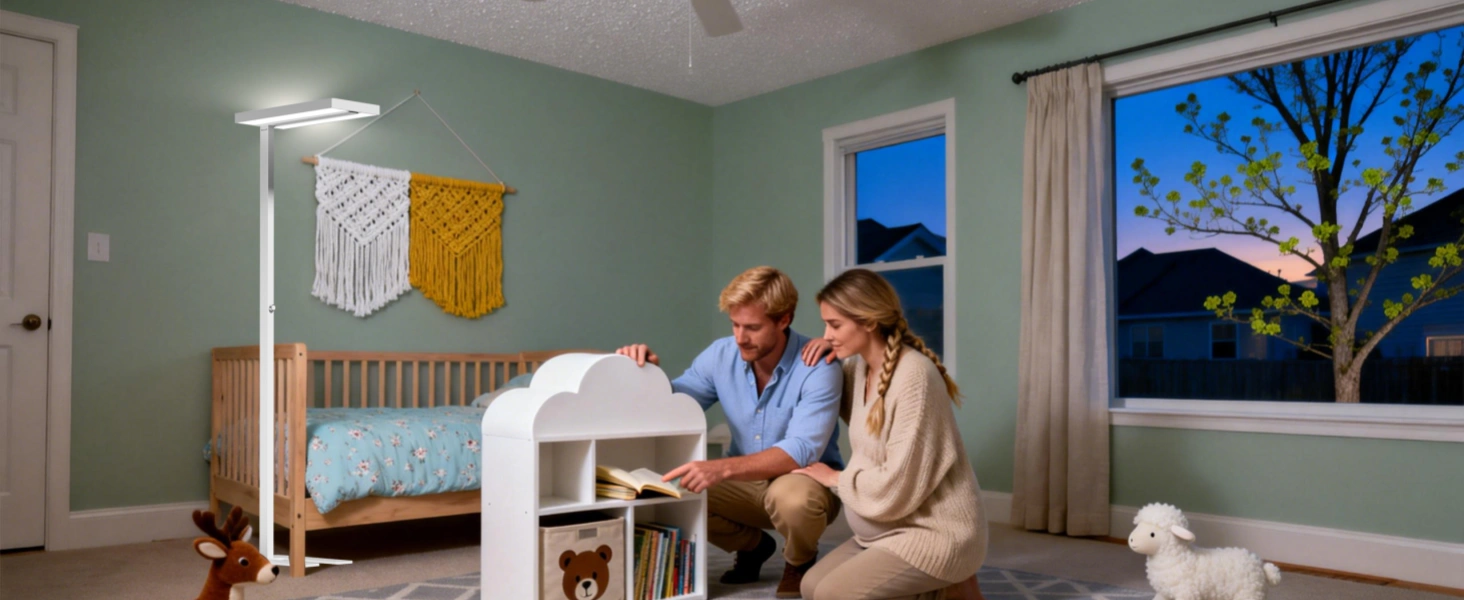
A child entering kindergarten today will be doing high school homework in a decade. The lighting fixture you choose now should be able to serve a 6-year-old doing tracing exercises and a 16-year-old writing college application essays with equal effectiveness.
The 02E Series is available in multiple output configurations — from 6,000 lumens (60W) for smaller rooms up to 16,000 lumens (155W) for large open spaces. A family starting with the 02E PRO (100W, 10,400 lumens) has a lamp that can illuminate an entire study area for one child or a shared family homework corner without creating uneven pools of light and shadow.
At 33.8 lbs, the lamp's aerospace-grade aluminum and steel construction gives it a physical stability that budget floor lamps simply cannot match — particularly important in homes with younger children who might bump or knock the fixture. The U-shaped anti-tip base is specifically engineered to prevent toppling, and the weight distribution is calculated to keep the lamp grounded even when the cord is pulled unexpectedly.
The minimalist rotary dimmer knob — with what engineers describe as "perfect damping" — allows children old enough to use it to adjust brightness independently, encouraging ownership of their study environment.
5. Real-World Usage Scenarios
The Reading Corner
For a dedicated reading nook — a chair, a small bookshelf, a rug — the 02E's downward illumination of 3,376 lumens (PRO model) delivers bright, even light across a 3-foot reading radius without any glare directly in the child's line of sight. The micro-prism diffuser ensures there are no harsh shadows from a child's hand or book spine obscuring the text below.
Because the 4000K color temperature is calibrated to feel natural rather than clinical, extended reading sessions feel less fatiguing than under a typical cool-white LED. This is particularly relevant for children with light sensitivity or those who wear corrective lenses.
The Homework and Study Area
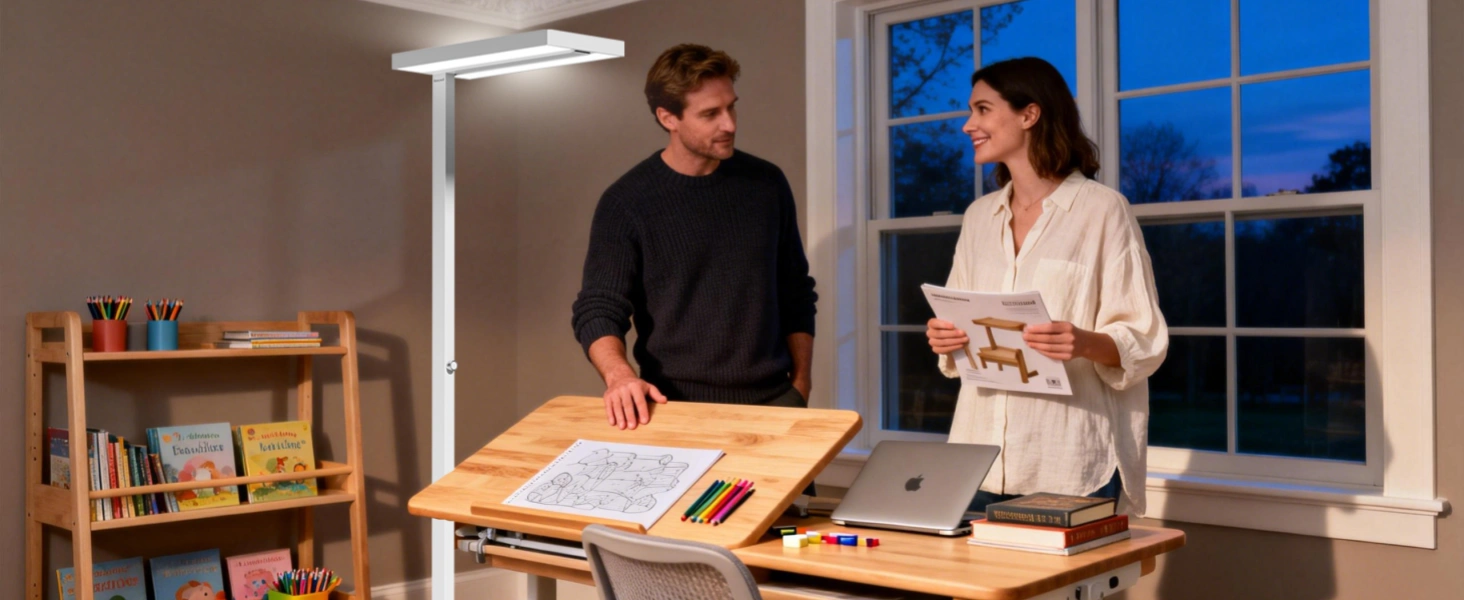
For a dedicated desk setup — whether a dedicated homework room or a corner of a shared living space — the 02E's dual up-and-down lighting system is especially effective. The upward emission (up to 12,624 lumens in the MAX model) bounces off the ceiling to create an ambient fill that eliminates the harsh contrast between a brightly lit desk and a dark surrounding room. Lighting researchers at several major universities have noted that this contrast reduction is one of the most underappreciated factors in reducing visual fatigue during screen-adjacent tasks.
The lamp is equally suited for family office setups where a parent and child work simultaneously — the wide coverage area means both can benefit without needing separate lamps.
6. How to Make the Right Choice as a Parent
The best floor lamp for kids' study isn't the most expensive one, nor the prettiest one. It's the one that protects your child's vision during thousands of hours of reading and homework, stays safe and stable in your home, and doesn't need to be replaced before your child graduates.
When evaluating any floor lamp for a child's study space, ask these four questions:
- Is it flicker-free? Look for IEEE PAR 1789 compliance and a published flicker depth percentage.
- Does it have low blue light certification? RG0 classification under IEC/EN 62471 is the standard to look for.
- What is the CRI? For reading and study, aim for CRI ≥ 95 and Rf ≥ 90.
- Is the design maintainable? A lamp you can service will outlast one you can't.
The Honeywell SmartLighting 02E answers all four questions definitively — and backs each answer with internationally recognized third-party certification. For parents building a learning environment meant to last, it represents a considered investment in their child's daily wellbeing.


