


1. Spring Renovation Season: When Minimalist Architects Rethink Their Spaces
Spring is more than a change in weather — for architects and interior designers who live by the philosophy of "less is more," it marks a natural reset. As longer daylight hours return and rooms feel more alive, this season triggers a familiar instinct: to re-evaluate every element in a space, especially the ones that carry the most visual weight.
Lighting sits at the heart of that conversation. Unlike paint colors or soft furnishings, a well-chosen floor lamp doesn't just illuminate a room — it anchors it. For minimalist architects, spring isn't about chasing the latest trend; it's about returning to enduring principles. And the question they always ask first is: does this piece justify its place in the room?
2. The Minimalist Design Principle: Structure Over Decoration
The minimalist approach to architecture is rooted in the idea that visual clarity communicates integrity. Ornamental excess is read as noise. Research published in environmental psychology journals — including work from several Scandinavian design universities — has consistently shown that cluttered visual environments increase cognitive load, while clean, well-structured spaces support focus and calm.
For this reason, the best floor lamp for minimalist interior design isn't necessarily the most eye-catching one. It's the one that earns its presence through structural logic: clean geometry, honest materials, and an absence of unnecessary detail. The lighting fixture, like the room itself, should feel resolved — not decorated.
Spring 2025's home lighting trends reflect this sentiment. Across major design publications and trade showcases, the recurring theme is restraint with purpose: fixtures that say something through form rather than flourish.
3. Why Architects Trust Honest Materials — and What the 02E Delivers
Architects speak of "honest materials" as a core value: the idea that what a surface looks like should reflect what it actually is. Aluminum should look like aluminum. Structure should feel structural. This principle extends directly to lighting hardware.
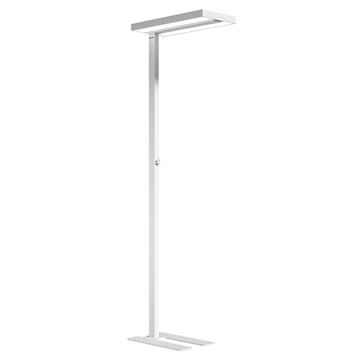
The Honeywell SmartLighting 02E floor lamp is built from aerospace-grade aluminum alloy and high-strength steel — materials chosen not for decoration, but for function and longevity. At 33.8 lbs, the lamp carries a physical solidity that communicates exactly what it is: a serious, well-engineered object. There's no false lightness, no concealed plastic. The weight is part of the experience.
Its diffusion panel — a high-density micro-prism crystal face — uses physical refraction to scatter light evenly, reducing harsh contrast and glare without dimming the room. This is not soft light achieved through cheap materials; it's soft light achieved through optical precision. The distinction matters to architects who read every detail.
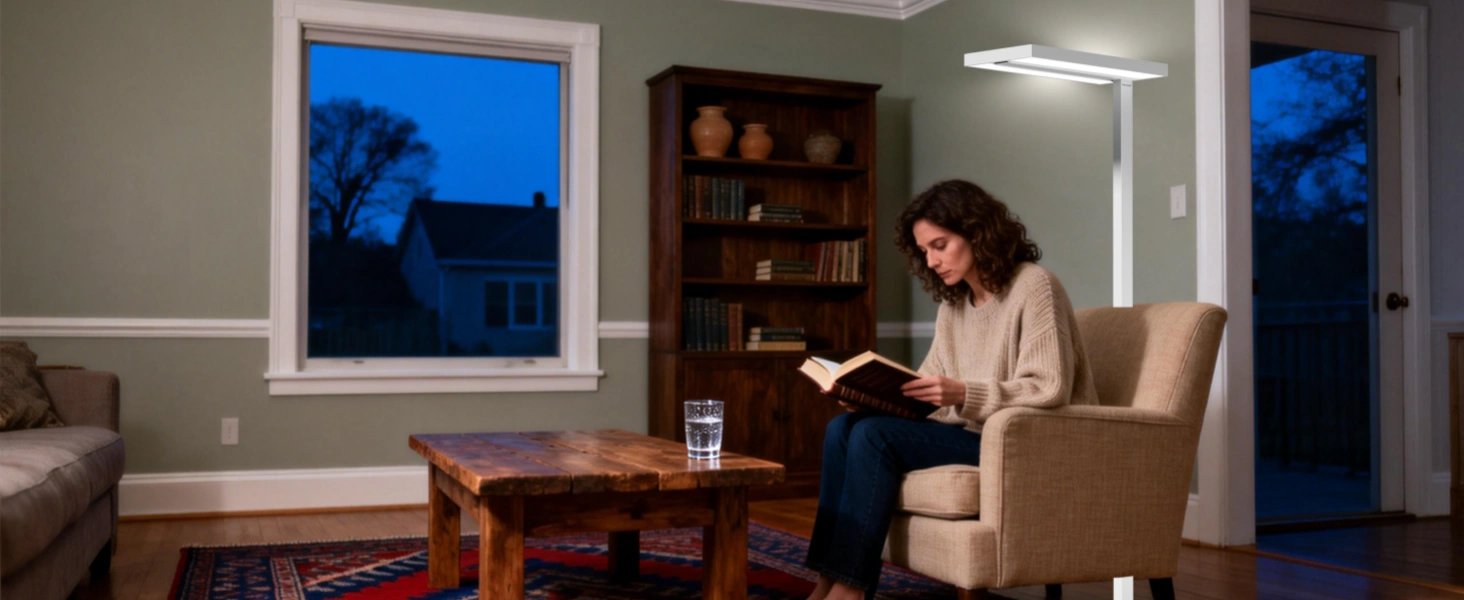
The result is a lamp that can sit in a minimalist living room, a studio, or a home office without demanding attention — yet visually holds the space with confidence.
4. Why Classic Design Outlasts Seasonal Trends
Minimalist design endures precisely because it resists obsolescence. A chair designed by Mies van der Rohe in 1929 still appears in design studios today — not because it was trendy, but because it was correct. The same logic applies to lighting.
The 02E's rectangular panel and straight-line silhouette avoid the kind of stylistic signatures that date a product. Its matte aluminum finish and neutral white palette allow it to recede or anchor depending on the room. Architects often describe this quality as "background presence" — the ability to be fully there without being in the way.
This is precisely what makes it a strong choice for spring home lighting trends: not because it responds to them, but because it transcends them.
5. How Function-First Thinking Shapes Lighting Decisions
When architect-approved home lighting is evaluated professionally, three criteria consistently rise to the top: light distribution quality, dimming stability, and spatial balance. The 02E addresses all three in ways that are measurable, not just aesthetic.
Its dual-direction output — upward to reflect off the ceiling and downward through the diffuser — creates a layered ambient environment that reduces the harsh contrast between lit and unlit zones. This mimics the way natural light behaves in open spaces. The coverage area of up to 258 sq ft means a single lamp can serve a meaningful portion of an open-plan room.
The lamp's OPTIKPROCESSOR™ system drives the SUNTURALUX™ chip with DC-based dimming, producing a flicker depth of 0.00% — a specification that exceeds industry standards set by IEEE PAR 1789 guidelines. For environments where sustained reading, design work, or close-detail tasks are performed, this is not a minor technical footnote. Eye fatigue caused by imperceptible flicker is a well-documented phenomenon, acknowledged in occupational health research from multiple European medical institutes.
The SUNTURALUX™ chip itself — co-developed with Bridgelux — delivers a CRI above 98 and an Rf color fidelity score above 97 across 99 color samples. For spaces where material finishes, textiles, and art are meant to be seen accurately, these numbers carry real weight.
6. Conclusion: A Lamp That Earns Its Place
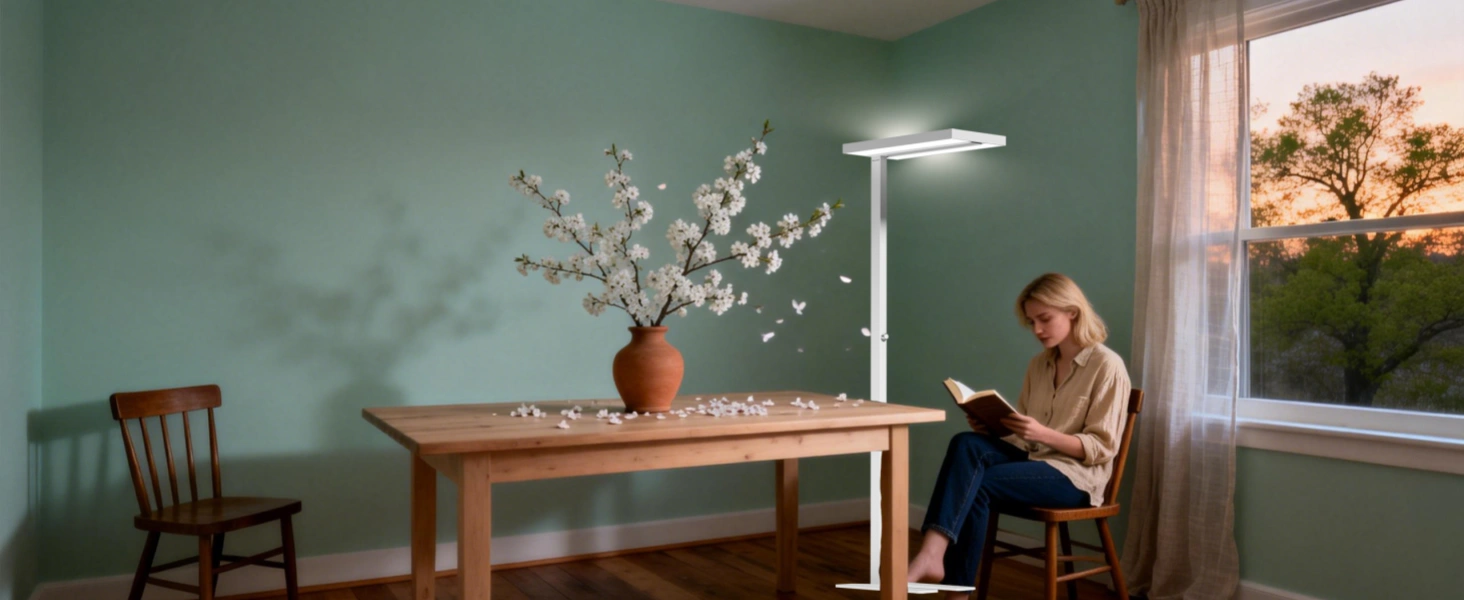
Spring renovations come and go, but the best design decisions outlast any single season. For minimalist architects and thoughtful homeowners who believe that every object in a space should earn its presence, the Honeywell SmartLighting 02E represents a rare convergence: a lamp that looks correct, performs seriously, and is built to last.
It doesn't ask for attention. It doesn't need to. Explore the full 02E series at honeywellsmartlighting.com.


