


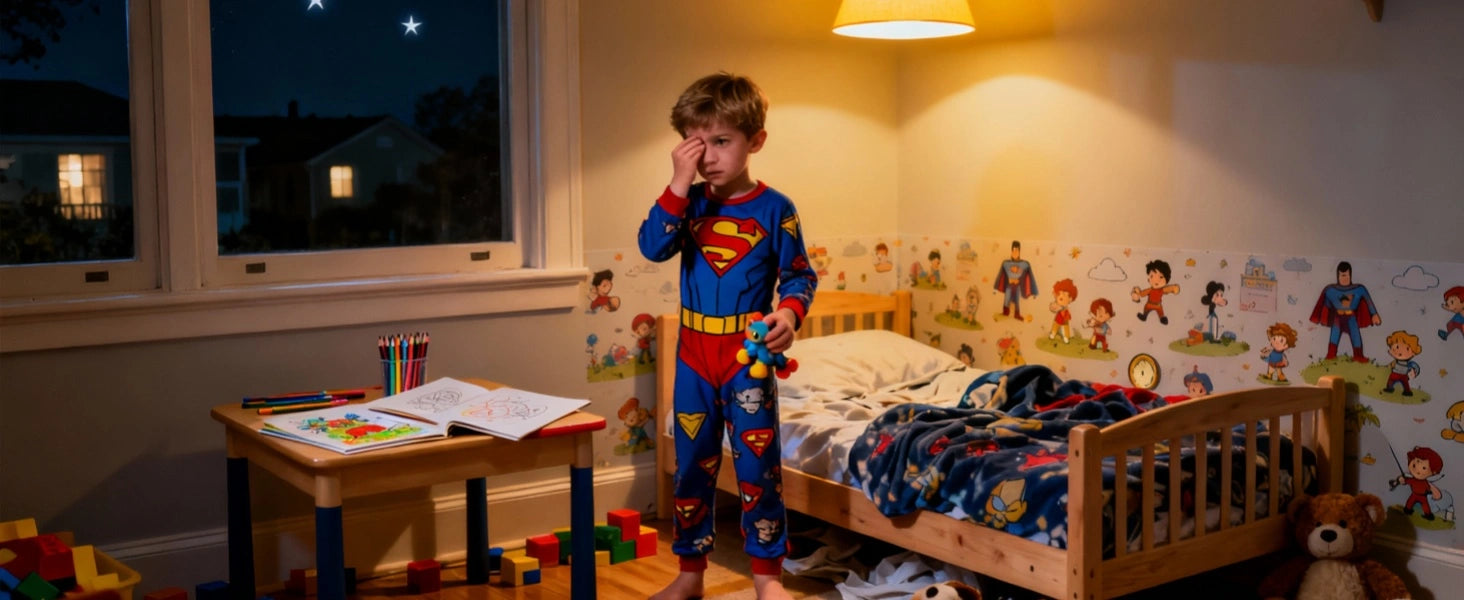
When daylight saving time ends and darkness arrives before dinner, families across North America and Europe face a quiet challenge: children spend significantly more hours reading, completing homework, and studying under artificial light. While most parents focus on whether the light is "bright enough," few recognize how evening light quality directly impacts their child's ability to fall asleep, retain information, and wake up refreshed for school the next day.
This winter reality deserves more attention than simply adding a desk lamp. The color temperature, beam direction, and spectral composition of evening light all send powerful signals to a child's developing circadian system—signals that can either support healthy sleep patterns or systematically undermine them night after night.
The Winter Reading Reality: More Hours Under Artificial Light Than You Think
Between November and February, children in northern latitudes experience up to 3.5 additional hours of artificial light exposure during study time compared to summer months. A 2023 survey by the National Sleep Foundation found that 68% of school-age children complete homework after 6 PM during winter, when natural daylight has completely disappeared. This extended exposure to indoor lighting occurs precisely when the body should be preparing for sleep, creating a biological mismatch that many families never connect to their child's difficulty settling down at bedtime.
The concern isn't just about reading in dim conditions—it's about reading under the wrong kind of light at the wrong biological time. When children study under harsh overhead lighting or blue-white task lamps in the evening hours, they're receiving the same alerting signal that morning sunlight would provide, effectively telling their brain to stay awake when they should be winding down.
How Evening Light Disrupts the Sleep-Learning Connection
Understanding the relationship between evening light and sleep quality doesn't require a medical degree. The human body relies on environmental light cues to regulate melatonin production—the hormone that signals bedtime readiness. Research published in the Journal of Clinical Sleep Medicine demonstrates that exposure to short-wavelength (blue-enriched) light between 7 PM and 9 PM can suppress melatonin production by up to 50% in children, delaying sleep onset by 30-60 minutes.
This delay creates a cascade effect: children who fall asleep later experience reduced deep sleep phases, which are critical for memory consolidation. The irony is profound—studying longer under poor lighting conditions may actually reduce how much information a child retains from that study session.
The practical implication for families is clear: the lighting used during evening homework directly influences both the efficiency of learning and the quality of sleep that follows. This makes the selection of reading lamps during winter months not merely a comfort decision, but a developmental one.
The Three Most Common Lighting Mistakes in Home Study Areas
Walking through typical family study spaces reveals three recurring problems that compromise both visual comfort and circadian health:
Overhead-Only Lighting: Many families rely solely on ceiling fixtures that cast shadows directly onto reading surfaces while simultaneously creating glare on glossy textbook pages. This forces children to crane their necks or shift positions repeatedly, leading to posture-related fatigue that's often misattributed to the homework itself.
Hard-Edged Light Pools: Standard desk lamps often create a bright circular spotlight surrounded by relative darkness, forcing the eye to constantly adjust between illuminated text and dim surroundings. This continuous pupil dilation and constriction accelerates eye fatigue, particularly during the 45-90 minute study sessions common for elementary and middle school students.
Blue-White Direct Eye Exposure: The cool-toned LED bulbs popular in many task lamps emit peak wavelengths between 450-480 nanometers—the exact spectrum most effective at suppressing melatonin. When positioned incorrectly, these lamps shine directly toward the child's face rather than illuminating the work surface from an oblique angle.
What Actually Matters: High CRI, Soft Beam Control, and Offset Light Paths
Three technical characteristics translate directly into real-world benefits for evening study sessions:
Color Rendering Index Above 90: High CRI lighting reproduces the full spectrum of colors as they would appear in natural daylight, reducing the subtle eye strain that occurs when the brain must "correct" distorted color information. For children reading illustrated textbooks or distinguishing between colored annotations, this isn't a luxury—it's the difference between comfortable 45-minute study sessions and sessions that leave eyes feeling tired after 20 minutes.
Graduated Light Distribution: Quality reading lamps create a gentle transition between illuminated and ambient areas rather than harsh boundaries. This allows the eye to maintain relatively consistent pupil size, reducing the muscular effort required for sustained reading.
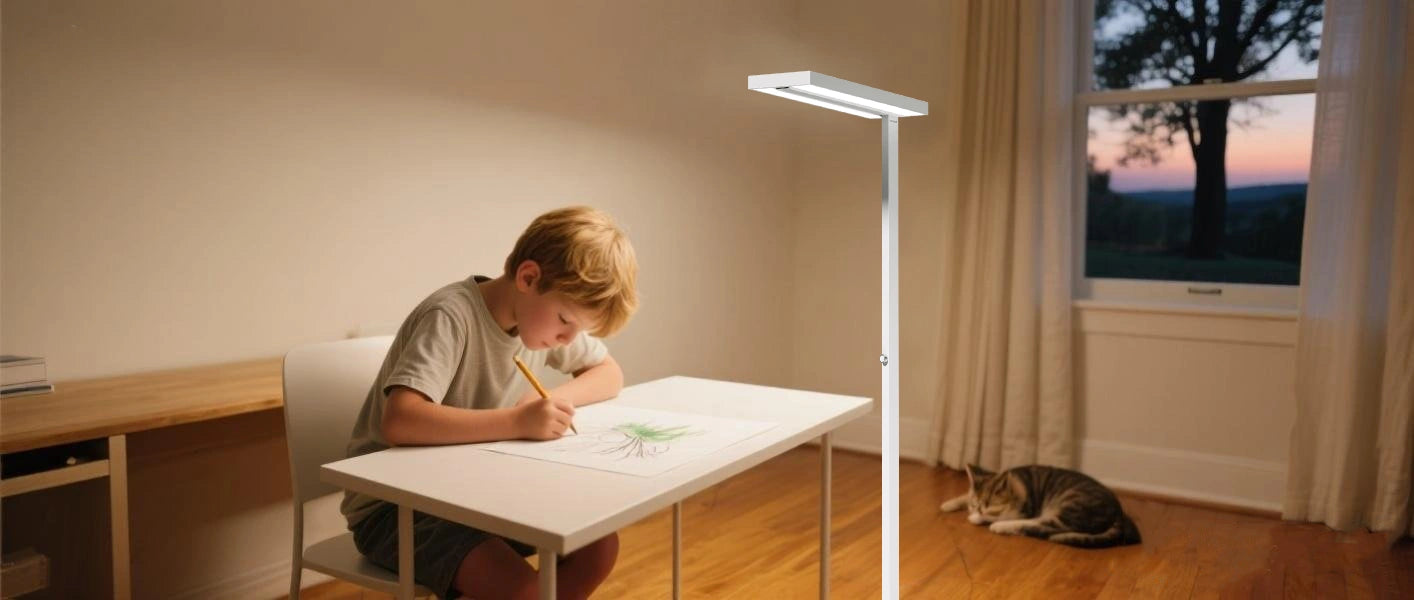
Off-Center Beam Projection: The most effective study lighting doesn't shine directly down onto the page from above the child's head. Instead, it approaches from a side-rear angle (typically 15-20 inches behind and 8-10 inches to the side of the reading material), eliminating shadows cast by the child's own head and hands while keeping direct light out of the peripheral vision field.
Actionable Lighting Setup Guide for Parents This Winter
Implementing effective evening study lighting requires no special expertise—only attention to a few spatial relationships:
Position First, Power Second: Before turning on any lamp, position it 15-20 inches behind your child's non-dominant shoulder (left shoulder for right-handed children, right shoulder for left-handed children) and 8-12 inches to the side. The light should cross the work surface at roughly 40-50 degrees, not 90 degrees straight down.
Use Layered Lighting After 7 PM: Rather than relying solely on a bright task lamp, combine moderate task lighting (200-300 lumens directly on the work surface) with warm ambient room lighting (2700K or lower color temperature). This prevents the isolated "spotlight in darkness" effect that accelerates eye fatigue.
Implement a Two-Hour Dim-Down Protocol: If your child typically goes to bed at 9 PM, begin reducing lighting intensity and color temperature at 7 PM. Manual adjustment every 30-45 minutes helps—reduce brightness by approximately 25% at 7:30 PM and another 25% at 8:15 PM.
Eliminate Direct Ceiling Light During Final Study Hour: In the 60 minutes before bedtime, rely exclusively on side-positioned task lighting and low-level ambient sources positioned below eye level. This allows melatonin production to begin while still providing adequate illumination for finishing homework.
Choosing Based on Experience, Not Just Specification Sheets
When evaluating reading lamps for winter study use, the most important criteria aren't the ones typically highlighted on product packaging:
Ask "Where Does the Light Go?" Not "How Bright Is It?": A lamp producing 800 lumens sounds impressive, but if that light creates a 12-inch diameter hotspot surrounded by darkness, it's poorly suited for sustained reading. Look for descriptions of "diffused beam patterns" or "graduated light distribution" rather than maximum lumens.
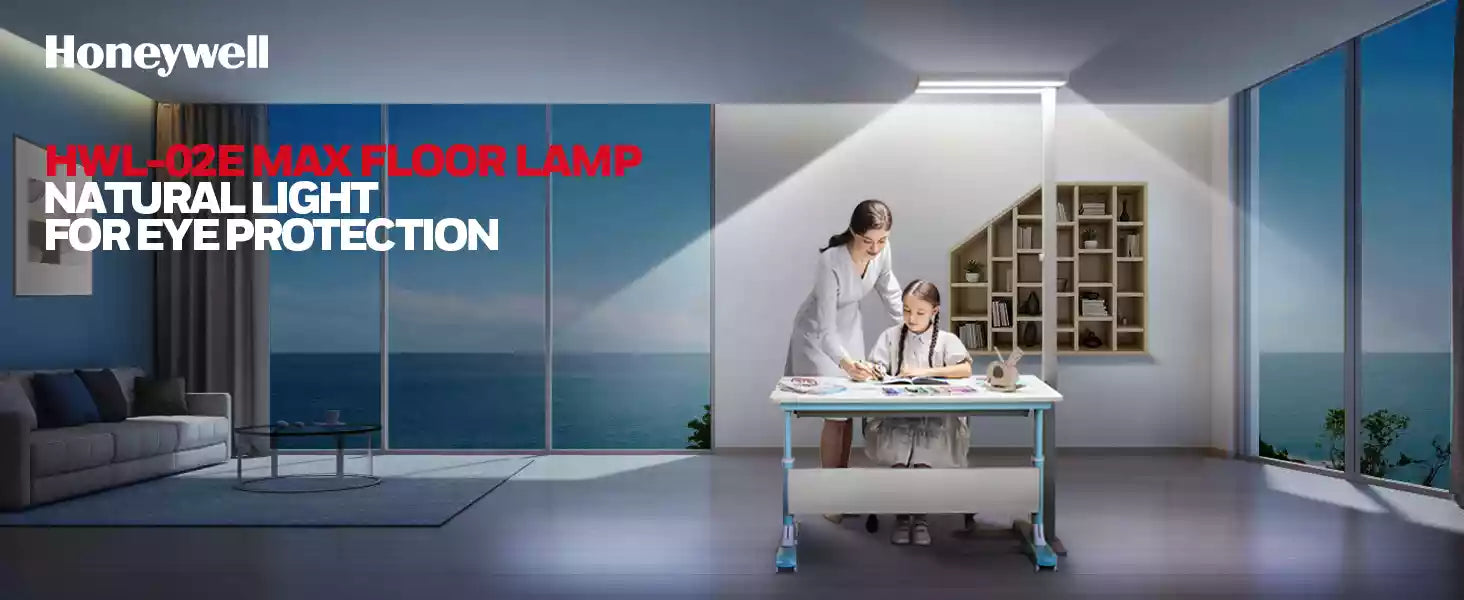
Test the Adjustment Range: Before purchasing, verify that the lamp can be positioned with its head 24-30 inches above the desk surface and angled to direct light from the side-rear rather than directly downward. Many decorative desk lamps lack this flexibility.
Verify Color Temperature Options: For evening use, the ability to shift from 3000K (neutral white) during early homework hours to 2700K or lower for later study sessions provides the circadian-supportive flexibility families actually need. Fixed 4000K or 5000K lamps, regardless of their other qualities, undermine sleep preparation.
The winter months demand more from family lighting than simply illuminating rooms. With children spending dramatically more time under artificial light during crucial evening hours, the quality, direction, and timing of that light becomes a meaningful factor in their academic performance, eye comfort, and sleep quality. Parents who understand these connections—and make modest adjustments to lamp positioning and evening lighting routines—give their children a genuine advantage during the challenging winter study season.


