
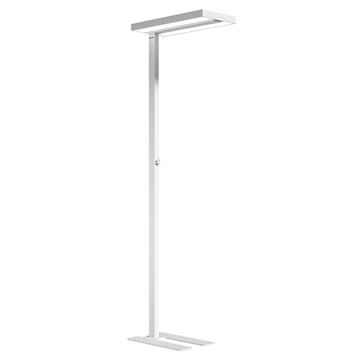


Q4 Booking Season: When Poor Lighting Becomes Your Hidden Rating Killer
Between October and December, Online hosts across North America and Europe face their most demanding season. Thanksgiving gatherings, Christmas breaks, and extended family trips drive occupancy rates to annual peaks—but with this surge comes a rarely discussed challenge: lighting quality directly impacts your review scores.
According to a 2023 analysis by AirDNA, properties with specific guest complaints about "dark spaces" or "inadequate reading areas" experienced an average rating drop of 0.3 stars—enough to push a 4.9-star listing below the Superhost threshold. The issue isn't decorative; it's functional. When business travelers cannot comfortably work at your desk or families struggle to read bedtime stories, they document these frustrations in reviews that future guests will scrutinize.
The Host's Dilemma: Nighttime Turnover Operations and Visual Fatigue
Beyond guest experience, Q4 intensifies operational demands on hosts themselves. With back-to-back bookings, many hosts perform turnover tasks—changing linens, deep cleaning bathrooms, restocking supplies—late at night to meet early check-in deadlines. Research published in the Journal of Occupational Health (2019) demonstrates that sustained tasks under inadequate lighting (below 300 lux for detailed work) accelerate eye strain and reduce accuracy in cleaning quality checks.
For hosts managing multiple properties or working alone, this pattern compounds over weeks. The American Optometric Association notes that symptoms of digital eye strain and task-related fatigue—including headaches, blurred vision, and difficulty focusing—worsen when ambient lighting forces the eye to constantly adjust between extreme contrasts. A dimly lit rental with only overhead fixtures creates exactly this problem: insufficient illumination for close-detail work and no targeted task lighting where it's needed.
Why Guest Reading Areas and Workspaces Demand Specific Lighting Solutions
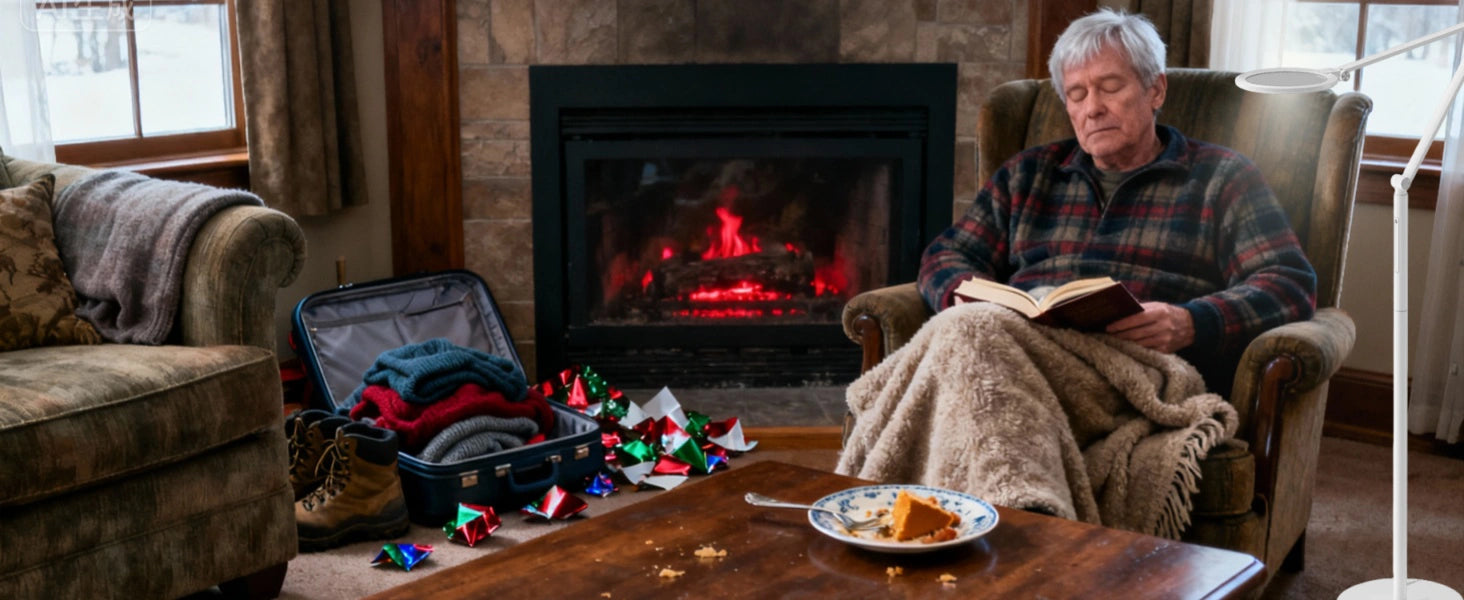
The modern short-term rental guest expects functional zones, not just sleeping quarters. A 2022 survey by Skift Research found that 68% of leisure travelers and 89% of business travelers consider "comfortable workspace lighting" a key booking factor—yet most properties still rely on single-source overhead lighting.
The distinction between ambient and task lighting matters considerably. Ambient lighting provides general illumination but typically delivers only 100-200 lux at reading height—well below the 500 lux recommended by the Illuminating Engineering Society for sustained reading or computer work. When guests attempt to read in bed or work at a desk under only ceiling fixtures, they unconsciously adopt poor postures (leaning toward light sources) and experience faster visual fatigue.
Reading floor lamps positioned beside seating areas or near beds address this precisely. They deliver focused, adjustable illumination at the task plane—the surface where eyes actually need light. For rental properties, this means a guest can read comfortably for 30 minutes without eyestrain, and business travelers can complete evening work without squinting at laptop screens.
The "One Living Room Spotlight" Trap: Why Generic Lighting Destroys Guest Experience
Many hosts make a critical error: assuming bright overhead lighting solves all illumination needs. This approach ignores how humans actually use space. A powerful ceiling spotlight may deliver 400 lux in the room center but only 80 lux in corners where guests naturally place luggage or sit to put on shoes. Worse, undiffused overhead lighting creates harsh shadows on faces during video calls—a significant irritant for remote workers.
Task lighting and ambient lighting serve fundamentally different purposes. Ambient light establishes overall visibility and mood; task lighting supports specific activities. A rental property without dedicated task lighting in reading nooks, beside beds, or at work desks will consistently underperform on guest comfort metrics, regardless of how "bright" the main fixtures appear.
Practical Solutions: Matching Lighting Tools to Host and Guest Needs
For Guest Reading Areas: The 02E Floor Lamp
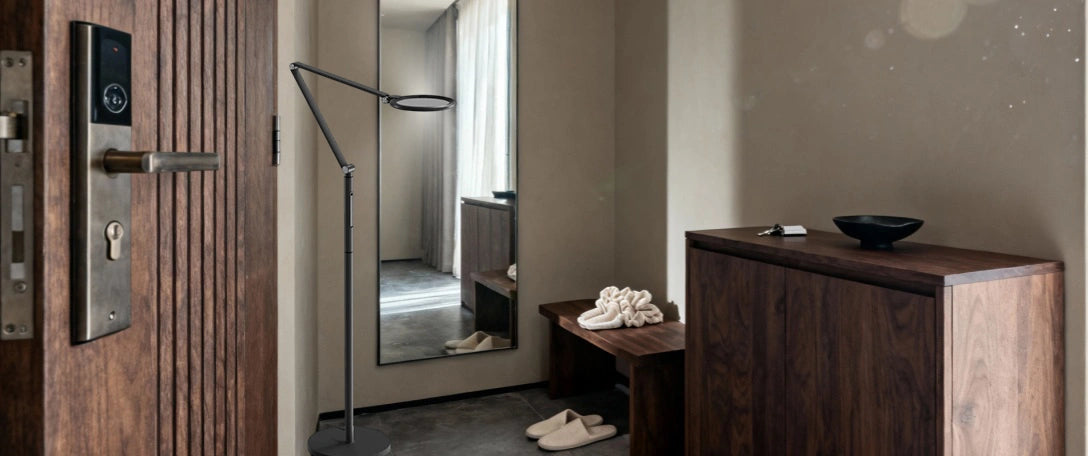
The Honeywell 02E addresses the reading area challenge directly. Delivering up to 8000 lumens, it provides sufficient task lighting for sustained reading without the glare or heat common in cheaper alternatives. Its 6.5-foot power cord allows flexible placement beside beds, armchairs, or window seats—the exact locations guests naturally choose for reading. For hosts concerned about durability across dozens of guest turnovers, the aluminum alloy construction withstands repeated repositioning far better than plastic-bodied alternatives.
For Remote Operation and Guest Preference Flexibility: The F01 Lamp
Peak season brings diverse guest demographics: elderly travelers preferring warm, dim lighting; families needing bright task light for children's homework; business guests requiring cooler tones for evening work. The Honeywell F01 eliminates the need for hosts to physically adjust lighting between bookings. Its remote control (operational up to 32 feet) allows guests to customize brightness and color temperature without leaving their seat—a feature particularly valued by mobility-limited guests. For hosts, this means one less maintenance touchpoint and fewer "the lamp is too bright/too dim" messages.
For Desktop Work Zones: The H4 Desk Lamp
Even studio rentals benefit from dedicated desk lighting. The Honeywell H4 provides 800 lumens of focused task lighting with stepless dimming, allowing guests to dial in their preferred intensity for laptop work, document review, or journaling. Its compact 18-inch height fits standard desk spaces without dominating visual space, and the touch-sensitive controls reduce mechanical wear from repeated use across guest stays.
Elevating Your Ratings Through Lighting Accuracy, Not Lighting Quantity
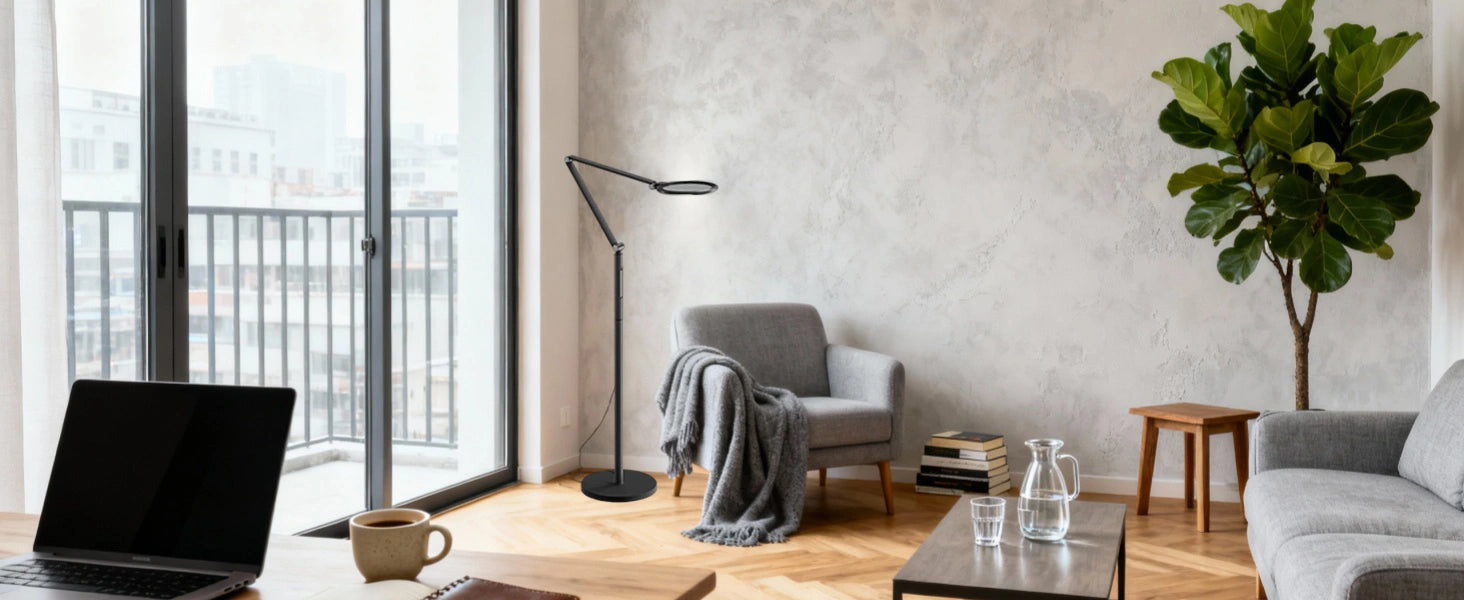
The Q4 booking surge will test your property's functional details. Guests compare dozens of listings—and increasingly, they look beyond decorative photos to reviews mentioning specific comfort factors. "Great reading lamp by the bed" or "desk light made working easy" are subtle differentiators that accumulate into rating advantages.
From an operational standpoint, proper task lighting in your turnover workflow reduces errors and fatigue. When you can clearly see dust on baseboards at 11 PM or accurately assess towel stains under adequate illumination, your cleaning quality improves and your eyes endure less strain across consecutive turnovers.
Lighting is not decorative filler—it's a quantifiable element of guest experience and host efficiency. As you prepare your property for the peak season ahead, consider where task-specific illumination could prevent the next complaint and support the activities your guests actually perform in your space.


