


As winter settles in and daylight dwindles to barely 8-9 hours in northern regions, many adult children notice a troubling pattern during visits home: their aging parents squinting at newspapers, hesitating before descending stairs, or complaining about tired eyes by early evening. The culprit often isn't failing eyesight alone—it's inadequate lighting that fails to meet the changing visual needs of older adults during the darkest months of the year.
Winter's Light Deficit and Its Impact on Senior Living Quality
When daylight hours shrink from November through February, elderly individuals spend significantly more time under artificial lighting. According to the American Academy of Ophthalmology, adults over 60 require approximately three times more ambient light than younger adults to perform the same visual tasks comfortably. This physiological reality stems from age-related changes: pupils constrict and dilate more slowly, lens yellowing reduces light transmission, and retinal cells become less sensitive to contrast.
For seniors living independently, winter means relying on indoor lighting for nearly every activity—reading prescription labels, threading needles for hobbies, preparing meals, or navigating hallways during frequent nighttime bathroom visits. When home lighting remains unchanged from their younger years, these daily tasks transform from routine to challenging, sometimes even hazardous.
The Twin Problems: Too Dim and Too Harsh
Many adult children discover their parents' homes suffer from one of two lighting extremes. Some rooms remain dimly lit, with 40-60 watt incandescent equivalents that create shadowy corners and make printed text blur together. Parents might hold reading materials at arm's length or abandon evening hobbies altogether, attributing difficulties to "getting old" rather than insufficient illumination.
Conversely, some households overcompensate with harsh overhead fixtures or bare LED bulbs that produce uncomfortable glare. Research published in the Journal of Environmental Psychology indicates that older adults experience increased sensitivity to glare, which can cause eye strain, tearing, and headaches. This glare sensitivity explains why elderly parents might complain that "new" LED bulbs hurt their eyes, despite providing adequate lumens.
The solution lies in what lighting designers call "soft brightness"—illumination that delivers sufficient light levels (300-500 lumens per square foot for task areas) while diffusing that light to eliminate harsh shadows and direct glare. Think of it as the difference between sunlight filtered through sheer curtains versus harsh midday sun reflecting off concrete.
Signs Your Parents' Lighting Needs an Update
Before winter fully sets in, observe these indicators during your next visit:
Uneven brightness distribution: Do certain areas remain shadowy while others are overlit? Seniors need consistent ambient lighting throughout living spaces to prevent dangerous dark-to-bright transitions that slow pupil adjustment.
Visible flicker or blue-tinted coldness: Inexpensive LED bulbs may flicker imperceptibly to younger eyes but cause discomfort for older adults. Similarly, cool-temperature lighting (5000K+) can feel clinical and disrupt circadian rhythms when used in evening hours.
Physical accommodation behaviors: Notice if your parents frequently reposition lamps, lean closer to light sources, or avoid certain rooms after sunset. These adaptations signal that existing lighting no longer serves their needs.
A Practical Framework for Choosing Senior-Friendly Lamps
When selecting lighting for elderly parents, prioritize these evidence-based features:
Diffused illumination without glare: Look for fixtures with fabric shades, frosted diffusers, or indirect lighting designs that bounce light off ceilings and walls. This approach provides adequate brightness—critical for reading 12-point text comfortably—while eliminating the harsh shadows that make depth perception difficult.
Adjustable brightness and color temperature: The Lighting Research Center recommends tunable lighting for older adults, with brighter, cooler light (4000K) for daytime tasks and warmer, dimmer settings (2700K) for evening relaxation to support healthy sleep patterns. A simple touch control or remote eliminates fumbling with tiny switches.
Stability and accessibility: Floor lamps need weighted bases to prevent tipping during vacuuming or when leaned upon for balance. Controls should be intuitive—ideally with memory functions that recall preferred settings without requiring fine motor precision or good vision to operate.
High Color Rendering Index (CRI): Choose fixtures rated CRI 90+ to ensure colors appear natural and true. This matters tremendously for medication management (distinguishing between similar pills) and meal preparation (assessing food freshness).
Applying These Principles: Real-World Solutions
Consider two common scenarios where thoughtful lamp selection makes measurable differences:
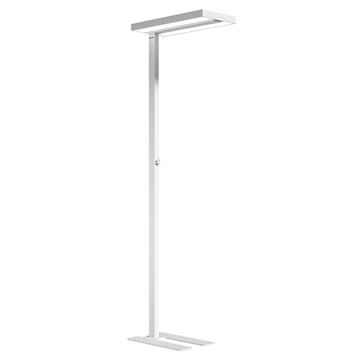
The reading corner: A quality floor lamp positioned beside a favorite armchair can transform evening reading from strain to pleasure. The Honeywell 02E Floor Lamp exemplifies this application—its upward and downward diffused light panels create an even 6-foot diameter illumination zone without hotspots or shadows. Standing approximately 5 feet tall with a 10-pound base, it provides stability while the touch-sensitive controls and four brightness levels accommodate changing needs throughout the day. The adjustable color temperature (3000K-5000K) allows parents to choose energizing light for morning crosswords and warmer tones for evening novels.
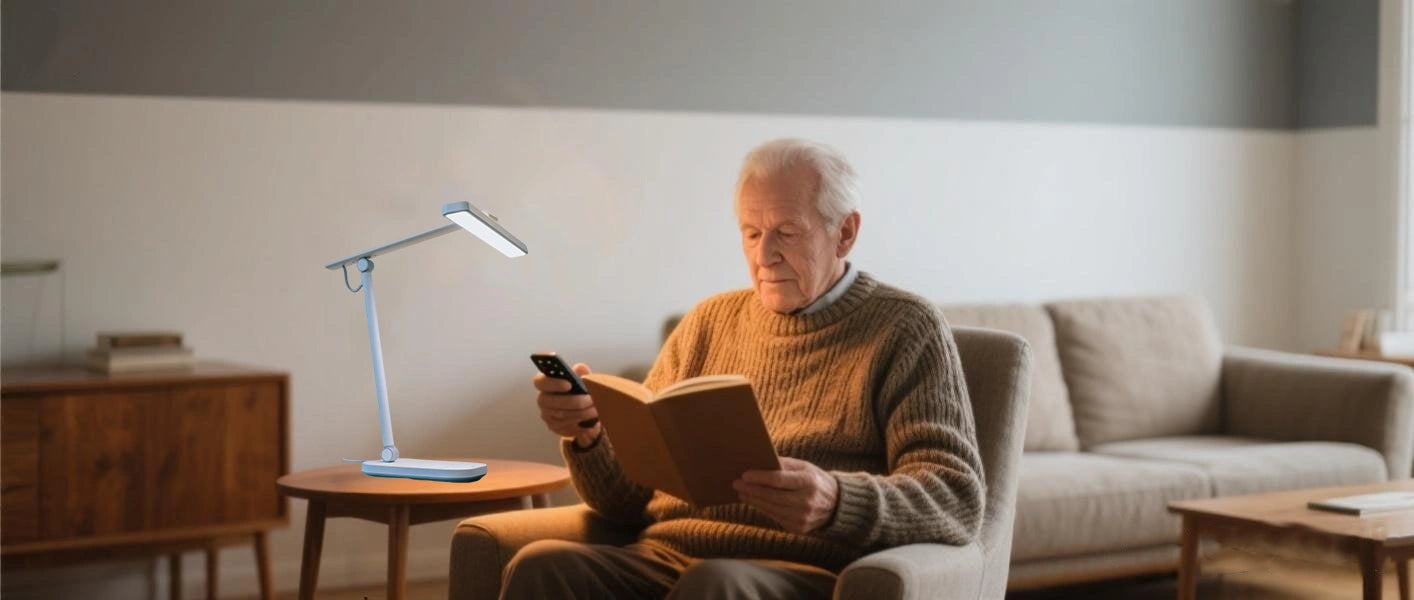
Bedside task lighting: Nighttime safety demands reliable, gentle illumination. A height-adjustable desk lamp on the nightstand serves multiple purposes—reading before sleep, nighttime medication routines, and safe navigation to the bathroom. The Honeywell H4 Desk Lamp addresses these needs with its flexible gooseneck design, allowing light direction without moving the entire fixture. Its memory function ensures parents aren't fumbling with settings at 2 AM, while the gradual dimming prevents the jarring contrast that can cause falls during night waking.

Beyond Illumination: Light as a Winter Gift
Upgrading your parents' lighting before winter's darkest months isn't merely about visibility—it's about preserving independence, reducing fall risk, and supporting the activities that give life meaning. When reading remains comfortable, when navigating the home feels safe, when hobbies can continue without eye strain, you've gifted more than lamps. You've extended quality evening hours and reduced the isolation that shorter days can bring.
As you plan winter visits or holiday gift-giving, consider that the most practical present might not be what gets wrapped in decorative paper. Sometimes the most caring gesture is simply ensuring that when darkness falls at 4:30 PM, the people you love can still clearly see the life they're living.


