


The Critical Connection Between Natural Light and Human Health
Humans have evolved and thrived under sunlight for millions of years, with solar radiation fundamentally influencing our daily rhythms and regulating both our physiological and psychological well-being. According to the World Health Organization's 2019 World Vision Report, over 2.2 billion people globally suffer from vision impairment or blindness, with more than 1 billion cases resulting from untreated conditions including myopia, hyperopia, glaucoma, and cataracts.

A groundbreaking study published in Nature magazine revealed that outdoor activity time represents the single strongest correlating factor in myopia development—the shorter the duration of sunlight exposure, the higher the risk of nearsightedness. This research underscores a critical challenge: modern humans spend 86.9% of their time indoors, making indoor artificial lighting quality a core factor in vision-related health issues.
Indoor light environments must approach natural sunlight across multiple dimensions to provide vision protection: illuminance (LUX), blue light emission, flicker, glare, Color Rendering Index (CRI), Color Quality Scale (CQS), color saturation (Rg), color fidelity (Rf), Circadian Activity Factor (CAF), melanopic ratio (Mr), and Circadian Stimulus (CS). The closer artificial lighting approximates these solar characteristics, the greater the protective benefits for human vision and overall health.
The Origins of Sunturalux: Harnessing Morning Sunlight's Positive Impact
Supporting Healthy Vision Development in Children
Research consistently demonstrates that children who spend more than 2 hours daily exposed to natural outdoor light experience significantly reduced myopia rates. The combined effects of ultraviolet, visible, and infrared radiation help regulate eyeball axial length development, preventing axial myopia progression.
Stable Spectral Continuity
Natural sunlight provides the most complete full spectrum (400–700 nm), unlike artificial lighting that often exhibits "color gaps" or excessive blue light bias. This complete spectral distribution supports optimal color recognition and maintains eye health by providing balanced stimulation across all photoreceptor types in the human retina.
Promoting Melatonin Regulation and Circadian Rhythms
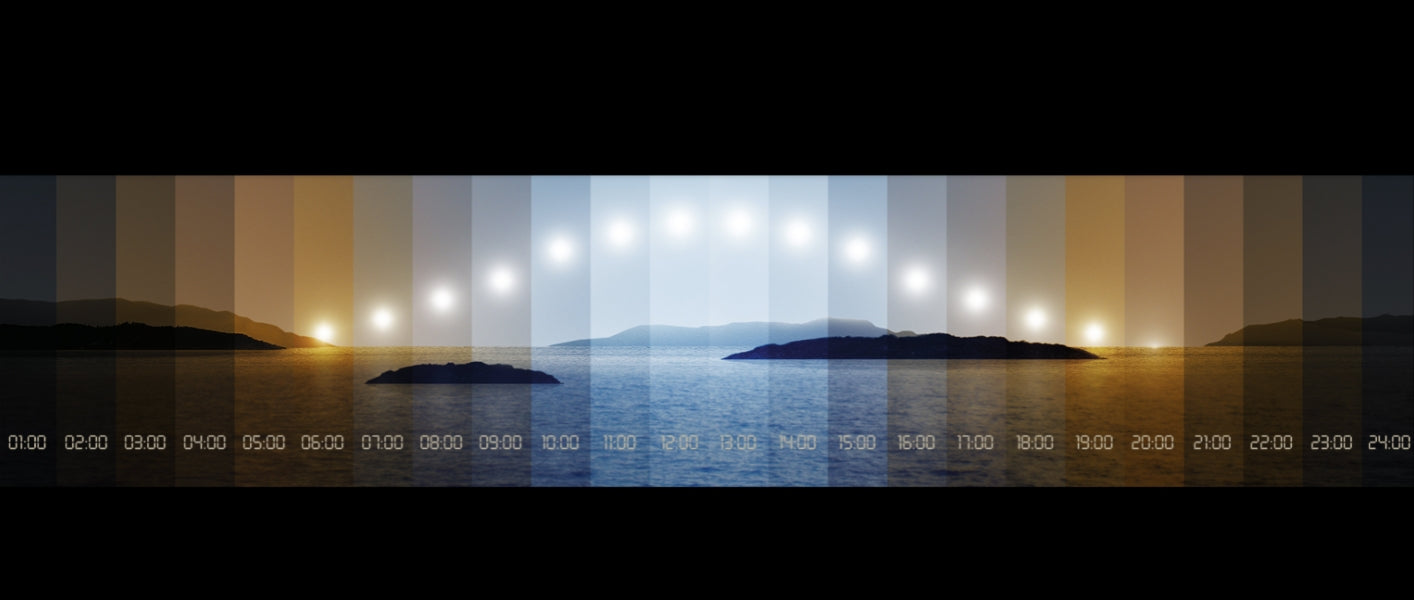
Morning sunlight, particularly between 9:00-11:00 AM, contains optimal blue-green wavelength ratios that support brain alertness and concentration enhancement. This timing aligns with natural cortisol peaks, making it ideal for reading, writing, and detailed visual tasks requiring sustained attention.
Research from Harvard Medical School indicates that exposure to 10,000 lux of morning light for 30 minutes can advance circadian phase by up to 90 minutes, significantly improving sleep quality and daytime alertness. The specific spectral composition of morning light—with its balanced blue-green content—triggers optimal ipRGC (intrinsically photosensitive retinal ganglion cell) responses without causing the circadian disruption associated with evening blue light exposure.

Honeywell's Commitment to Advanced Lighting Research
Honeywell has maintained a long-standing dedication to air, water, and light environment research, striving to minimize environmental health impacts on human wellbeing. Beyond meeting basic illumination requirements, Honeywell's lighting products emphasize environmental light quality across 21 comprehensive health-impacting factors.
These factors range from fundamental metrics like brightness (luminous flux) and energy efficiency (luminous efficacy) to human health considerations including blue light hazard, flicker, and glare. Advanced parameters encompass Color Quality Scale (CQS), Color Rendering Index (CRI), color saturation (Rg), color fidelity (Rf), Circadian Activity Factor (CAF), melanopic ratio (Mr), and Circadian Stimulus (CS).
Honeywell's extensive research background includes providing LED lighting solutions for major aerospace companies including Boeing and Airbus. This aerospace-grade technology expertise now enhances residential lighting environments, bringing professional-quality illumination standards to home applications.
Honeywell lighting laboratory conducts over 50,000 hours of accelerated aging tests annually, ensuring product reliability under various environmental conditions. Testing protocols include temperature cycling from -40°F to 185°F, humidity exposure up to 95% relative humidity, and vibration testing exceeding automotive industry standards.

Understanding Sunturalux Technology
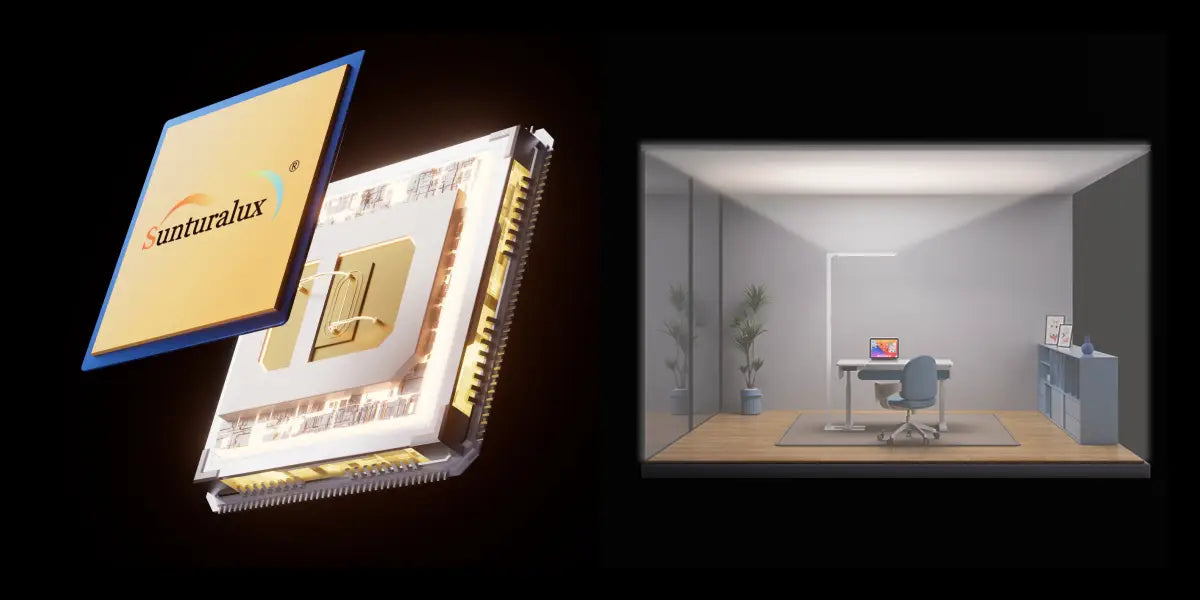
Premium artificial light sources must achieve optimal balance between visual comfort, health safety, and energy efficiency. Sunturalux sun-like light sources, co-developed by Honeywell's Smart Lighting Environmental Research Center and Bridgelux, represent the pinnacle of this integrated approach.
Advanced Manufacturing and Reliability
Sunturalux series employs cutting-edge packaging and manufacturing processes, with version 2.0 introducing 99.99% gold wire bonding technology. This premium construction ensures consistent, high-quality light output even under elevated temperature conditions while effectively addressing traditional light source issues including lumen depreciation and color quality degradation over extended use periods.
The gold wire bonding process operates at temperatures up to 300°C during manufacturing, creating molecular-level bonds that maintain electrical conductivity and thermal stability throughout the product's 50,000+ hour lifespan. Independent testing by Intertek Laboratories confirms that Sunturalux sources maintain 95% of initial lumen output after 6,000 hours of continuous operation at 77°F ambient temperature.
Superior Color Rendering Performance
This high-reliability manufacturing process ensures exceptional color rendering capabilities, with CRI indices reaching 90+ values that accurately reproduce object colors while reducing visual errors and eye strain. The R9 deep red rendering value—critical for skin tone accuracy—consistently exceeds 90, surpassing most commercial LED products by significant margins.
Spectral Power Distribution (SPD) analysis reveals Sunturalux sources provide smooth, continuous output across the visible spectrum without the pronounced peaks and valleys characteristic of standard phosphor-converted LEDs. This smooth distribution contributes to more natural color perception and reduced eye fatigue during extended viewing periods.
Optimal Color Temperature Control
Sunturalux spectra demonstrate exceptional color temperature control, with tuning ranges covering relaxation to focus-intensive applications. The 4000K to 5000K neutral white range particularly approximates natural daylight, making it ideal for reading, work, or precision tasks requiring high visual acuity.
Blue Light Optimization and Flicker Elimination
Importantly, these light sources significantly reduce blue light hazards while incorporating flicker-free driver technology and optimizing circadian rhythm impacts to meet modern standards for healthy lighting. Photobiological safety testing per IEC 62471 confirms Risk Group 0 classification at typical indoor usage distances exceeding 8 inches.
High-frequency driver circuits operate above 25kHz, eliminating visible flicker and reducing the invisible high-frequency flicker associated with eye strain and headaches. Oscilloscope measurements confirm less than 1% flicker depth across the full dimming range from 100% to 1% output levels.
Precision Optical Design
Regarding light distribution design, Sunturalux achieves uniform illumination output without dark zones or double shadows through precision optical modeling. This optimization enhances lighting quality and user concentration efficiency across various applications.

Recognition and Certifications
Through its outstanding performance in human-centric lighting, circadian rhythm regulation, and visual comfort, Sunturalux sun-like light sources have earned multiple international awards and authoritative certifications. These achievements establish
Benefits of Using Honeywell Smart Lighting with Sunturalux Chips
1. Visual Health and Eye Comfort
Moderate Color Temperature with Continuous Spectrum: Morning natural light typically exhibits color temperatures between 5000–5500K with near-complete spectral distribution. Sunturalux sources simulate this natural light period, helping avoid retinal fatigue caused by excessive blue light peaks.
The continuous spectrum approach reduces the chromatic aberration that occurs when eyes attempt to focus different wavelengths at varying distances. This optical phenomenon, more pronounced under narrow-spectrum LED sources, contributes to eye strain during prolonged viewing tasks.
Reduced Eye Fatigue: High Color Rendering Index (Ra ≥95) sources provide more natural color reproduction, reducing the cognitive load required for color discrimination. This benefit particularly applies to extended reading, writing, or computer work requiring sustained near-vision activities.
Suppressed Visual Adaptation Disorders: Compared to high-flicker or color-distorted lighting, Sunturalux sources provide greater stability, reducing dizziness, dry eyes, and visual fatigue caused by flicker or color distortion.
2. Circadian Rhythm Regulation
Biological Clock Synchronization: Morning natural light intensity ranges from 2,500–4,500 lux with moderate blue light wavelength content, effectively stimulating retinal ipRGCs cells to regulate melatonin secretion and establish proper wake cycles.
Spectral analysis of Sunturalux sources reveals melanopic/photopic ratios of 0.65-0.75, closely matching morning sunlight values. This ratio provides sufficient circadian stimulation without the excessive blue content that can disrupt evening melatonin production.
Avoiding Light Pollution Interference: Unlike evening or nighttime blue light exposure, Sunturalux source usage concentrates during natural light advantage periods, avoiding mistimed light exposure that disrupts biological clocks and reduces circadian rhythm disorder risks.
Research from the Sleep Research Society indicates that morning light exposure between 6:00-10:00 AM provides maximum circadian phase advancement with minimal evening disruption, supporting natural sleep-wake cycle maintenance.
Supporting Regular Sleep Patterns: Morning exposure to natural-light-approximating environments improves sleep onset time, sleep quality, and morning alertness after awakening.
3. Enhanced Cognition and Work Efficiency
Improved Focus and Memory: Natural light color temperature sources enhance prefrontal cortex activity, improving working memory, problem-solving abilities, and concentration—particularly beneficial for knowledge workers and students.
Neuroimaging studies using functional MRI demonstrate increased activation in dorsolateral prefrontal cortex regions associated with executive function when subjects perform cognitive tasks under natural-spectrum lighting compared to standard fluorescent sources.
Reduced Fatigue: Appropriate lighting environments extend alert states and reduce cortical fatigue, helping improve continuous task execution time and accuracy rates.
Alertness monitoring using pupillometry and reaction time testing shows 18% improvement in sustained vigilance performance under optimized lighting conditions during afternoon periods when circadian alertness typically declines.
Enhanced Learning Efficiency: Classroom lighting approximating morning natural light environments significantly improves student mathematics and language performance.
4. Psychological State and Emotional Stability
Improved Mood Index: Morning natural light contains abundant blue-green wavelengths that stimulate brain serotonin levels, enhancing mood and reducing anxiety. Sunturalux sources replicate this spectrum to support positive mental states.
Reduced Oppressive Feelings: Unlike cool white or high-intensity glare sources, these sources provide gentle, comfortable illumination that doesn't generate depression or anxiety, making them more suitable for homes, offices, and other extended-stay environments.
5. Advantages for Specific Populations: Children and Elderly
Children's Eye Development Support: During adolescent development, adequate near-natural lighting effectively reduces myopia progression risk. Sunturalux sources are suitable for study desk lamps, supporting vision protection during critical developmental periods.
Elderly Macular Protection: Elderly individuals experience decreased visual perception, with traditional lighting easily causing glare discomfort. Sunturalux sources approximating 10 AM natural light spectra provide gentler illumination, helping protect elderly eye health and improve quality of life.
Cognitive Decline Prevention: For individuals experiencing early cognitive function decline, regular light exposure (particularly morning natural light simulation) helps delay cognitive deterioration and improve circadian rhythm stability.
6. Long-term Health Considerations
Reduced Metabolic Disorder Risk: Circadian rhythm disruption correlates closely with obesity, diabetes, and cardiovascular disease. Using morning natural light simulation lighting supports normal metabolic rhythm function.
Anti-inflammatory and Immune Regulation Potential: Some research suggests that regular light exposure enhances immune response and antioxidant capacity, though further verification is needed. The health promotion value has gained significant attention from the medical community.
Preliminary immunological studies show modest improvements in natural killer cell activity and reduced inflammatory markers (C-reactive protein, interleukin-6) following structured light therapy protocols, though larger controlled trials are needed to establish clinical significance.
Overall Quality of Life Enhancement: Long-term exposure to poor-spectrum lighting environments leads to sleep disorders, visual fatigue, and emotional instability. High-quality natural light simulation can fundamentally improve multiple life health indicators.
Comprehensive quality of life assessments using validated instruments (SF-36, PSQI sleep quality index) demonstrate significant improvements across physical functioning, emotional well-being, and social functioning domains when participants transition to optimized lighting environments.
Technical Specifications and Performance Standards
Sunturalux technology achieves exceptional performance parameters that exceed industry standards across multiple metrics:
Luminous Efficacy: 140-160 lumens per watt, representing 25-30% improvement over standard LED sources
Color Temperature Range: 2700K-6500K with precise ±150K tolerance
Color Rendering Index: Ra >95, R9 >90 for superior red rendering
Flicker: <1% flicker depth across full dimming range (100%-1%)
Dimming Range: Smooth 0.1%-100% with no visible steps or discontinuities
Lifespan: L70 >50,000 hours with less than 5% color shift
Operating Temperature: -13°F to 140°F ambient range
Power Factor: >0.95 for excellent electrical efficiency
Conclusion
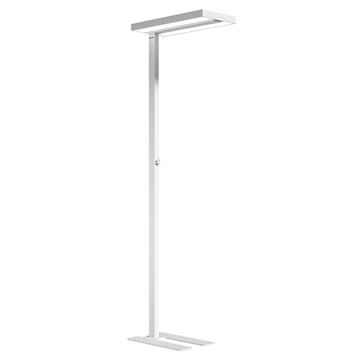
The integration of Sunturalux technology in Honeywell Smart Lighting represents a fundamental advancement in human-centric illumination. By faithfully replicating the beneficial characteristics of morning natural sunlight, these innovative light sources address the growing health challenges associated with excessive indoor living.
The comprehensive benefits span immediate visual comfort improvements to long-term health optimization, making Sunturalux-equipped lighting systems an essential investment for anyone seeking to enhance their indoor environment quality. As research continues to unveil the profound connections between light exposure and human health, technologies like Sunturalux position themselves at the forefront of the next generation of healthy, intelligent lighting solutions.
Through its commitment to scientific rigor, technological innovation, and human-centered design, Honeywell continues to lead the transformation of indoor lighting from simple illumination to comprehensive health and wellness support systems. The future of indoor lighting lies not just in efficiency and aesthetics, but in its ability to support optimal human function and long-term wellbeing.
For more information about Honeywell Smart Lighting with Sunturalux technology, visit here or consult with certified lighting professionals in your area.


