
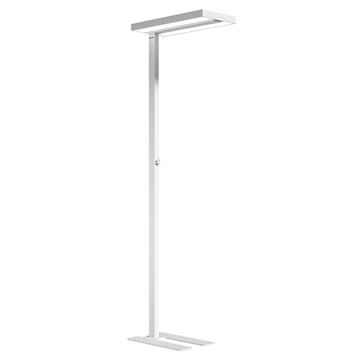


Academic environments demand precision. Whether you're analyzing complex research papers in a university library or conducting delicate experiments in a laboratory, proper lighting makes the difference between productive work and eye-straining frustration. The Honeywell H2 desk lamp emerges as an ideal solution for scholars and STEM professionals who need reliable, adjustable illumination for their most demanding tasks.
Common Lighting Challenges in Academic Environments
Libraries and laboratories present unique lighting challenges that standard overhead fixtures simply can't address effectively. General laboratory lighting should have an illumination level of 500 lux, which requires low-glare and shadow-free lighting conditions, yet many academic spaces fall short of these requirements.
Students and researchers frequently encounter several problematic scenarios:
Glare and reflection issues plague reading sessions when harsh overhead lights create uncomfortable reflections on paper surfaces and laptop screens. This forces users to awkwardly position materials or strain their necks to find comfortable viewing angles.
Insufficient task lighting becomes evident during detailed work. While ambient lighting might suffice for general movement, precision tasks like microscope work, technical drawing, or dense text analysis require focused illumination that reaches well beyond standard room lighting levels.
Eye fatigue accumulation represents perhaps the most serious concern. Poor lighting can cause your eyes to work harder to see clearly, leading to eye strain and fatigue. Extended study sessions under suboptimal lighting conditions contribute to decreased productivity and potential long-term visual discomfort.
Noise and disturbance considerations matter significantly in library environments where silence is paramount. Traditional adjustable lamps often create mechanical noise when repositioned, disrupting the quiet atmosphere essential for concentrated study.
H2 Core Advantages for Academic Use
The Honeywell H2 addresses these challenges through thoughtful engineering designed specifically for demanding work environments. Its features align perfectly with academic lighting requirements while maintaining the reliability expected in professional settings.
Flicker-Free LED Technology
The H2's LED light source eliminates the subtle flickering present in many fluorescent and lower-quality LED fixtures. This flicker-free operation reduces eye strain during extended reading sessions, allowing students to maintain focus for longer periods without experiencing the headaches and fatigue associated with poor-quality lighting.
Precision Adjustability with 305° Rotation
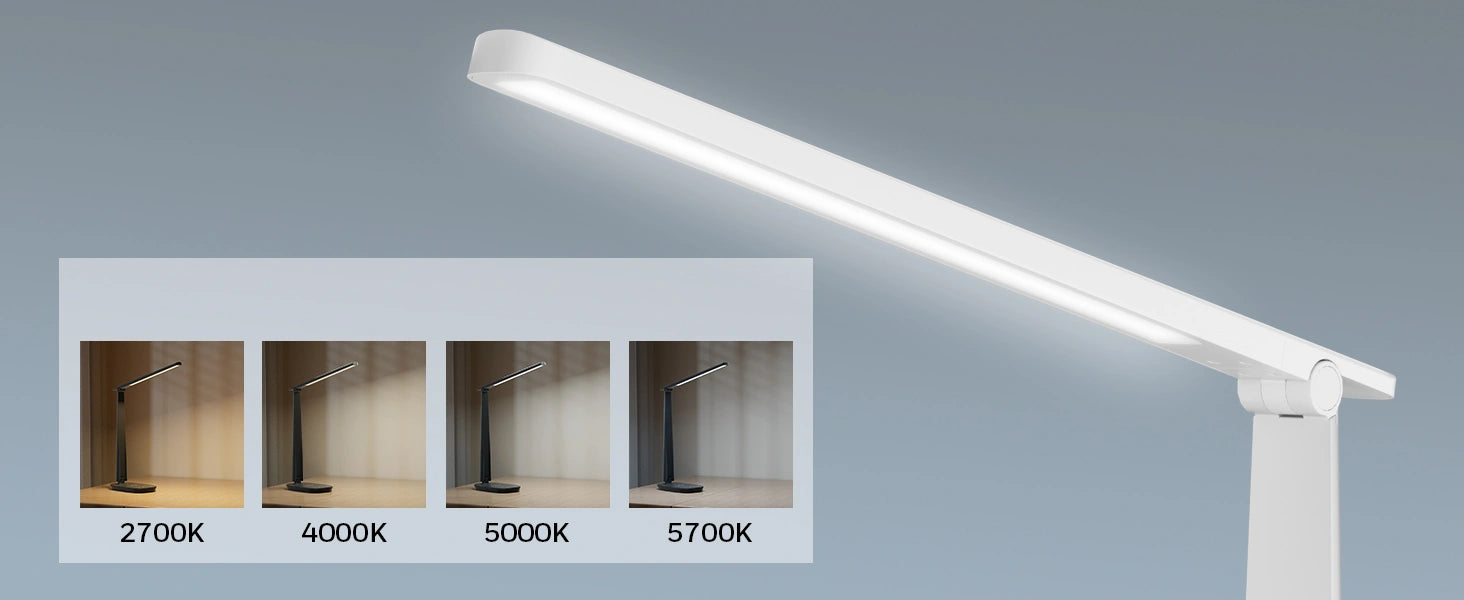
Perhaps the H2's most distinctive feature is its 305-degree rotating arm, providing unprecedented positioning flexibility. This extensive range allows users to direct light exactly where needed, whether illuminating a textbook positioned to the left, a laptop screen straight ahead, or laboratory equipment positioned at various angles around a workstation.
The smooth, precise adjustment mechanism operates quietly – a crucial consideration for library use where even minor sounds can disturb neighboring students. This silent operation maintains the peaceful environment essential for concentrated academic work.
Sturdy Construction for Laboratory Environments
Laboratory work demands equipment that can withstand the rigors of daily scientific activity. The H2's robust construction and stable base ensure it remains securely positioned even when users frequently adjust its angle throughout their work session. This stability proves essential when conducting precise measurements or detailed observations where consistent lighting positioning is crucial.
The lamp's durable materials resist the minor chemical exposures and frequent cleaning that characterize laboratory environments, making it suitable for long-term use in these demanding conditions.
Practical Applications in Academic Settings
Library and Study Applications
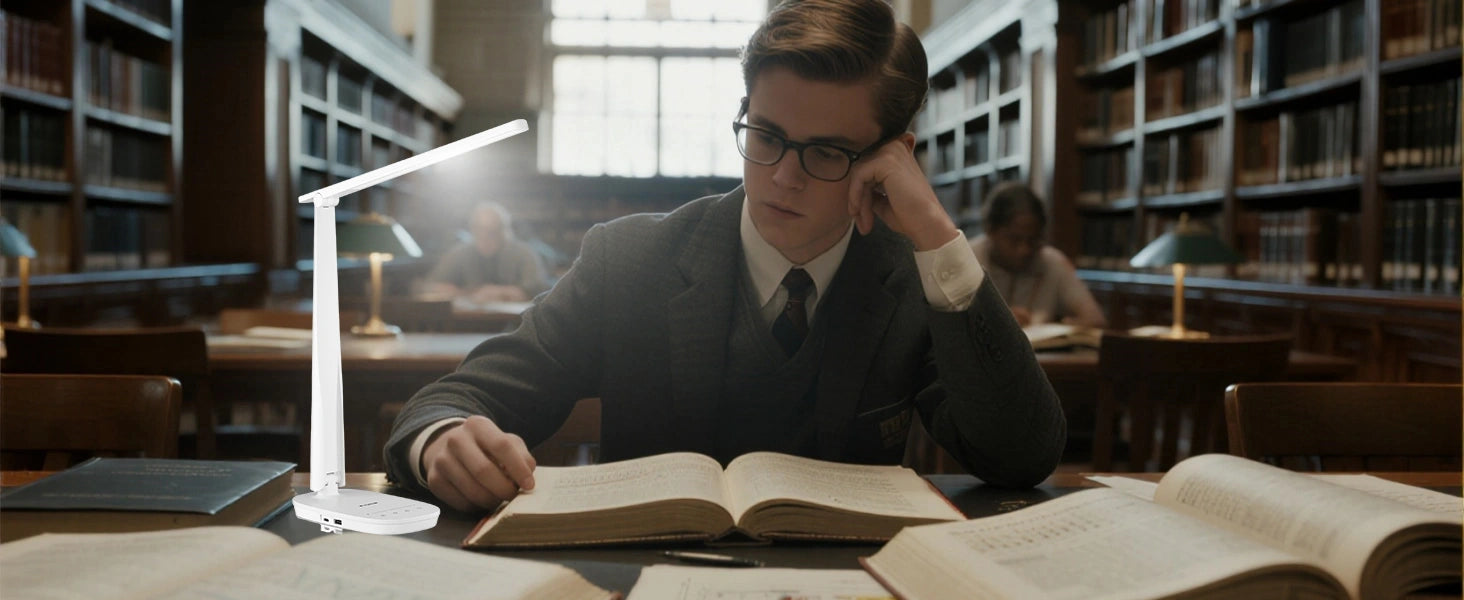
During intensive reading sessions, the H2 excels at providing targeted illumination without disturbing nearby students. Its focused beam eliminates the need to rely solely on harsh overhead lighting, creating a comfortable reading environment that reduces eye strain and improves comprehension.
For students working with both physical books and laptops simultaneously – a common scenario in research-intensive disciplines – the H2's adjustable arm allows seamless transitions between illuminating paper documents and providing anti-glare support for screen-based work.
Laboratory and Technical Work
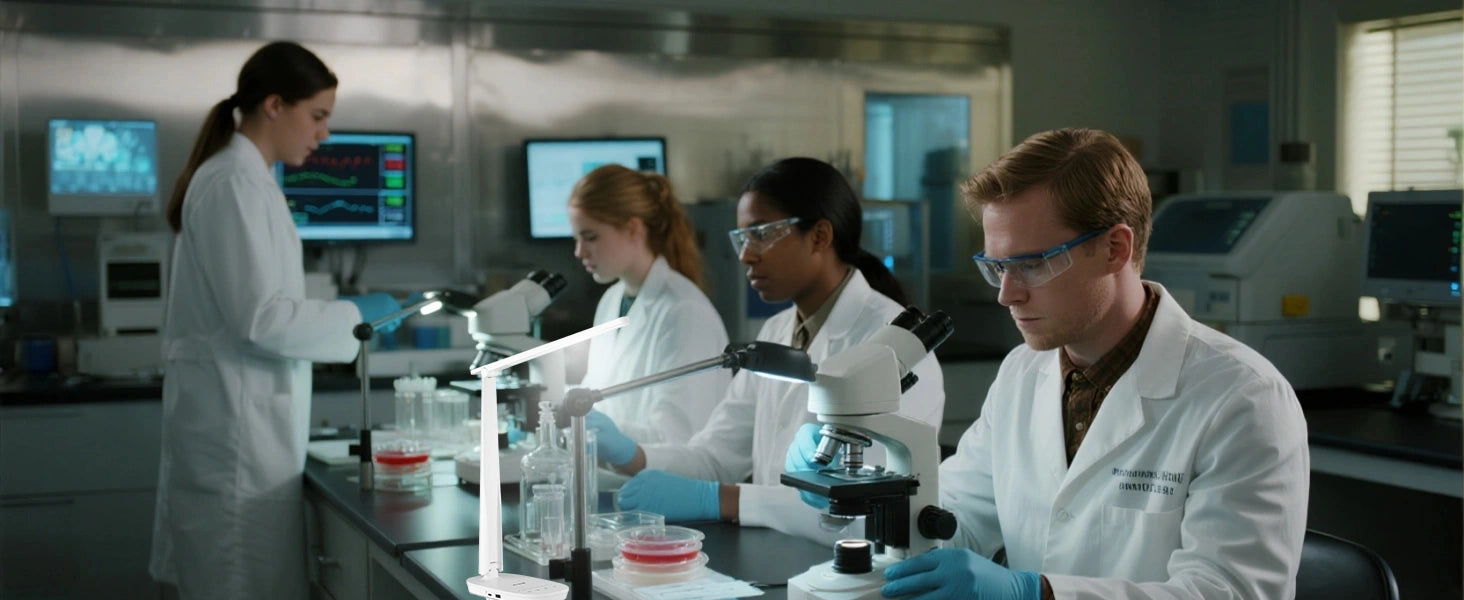
In laboratory settings, the H2 proves invaluable for detailed observation work. Lighting should be adequate for safe illumination of all work areas (100-200 lumens for laboratories), and the H2's focused output easily exceeds these safety requirements while providing the precision needed for technical tasks.
Microscopy work benefits significantly from the H2's ability to provide consistent, shadow-free illumination of specimen preparation areas. The stable positioning ensures that lighting conditions remain constant throughout extended observation sessions, critical for accurate scientific documentation.
Technical drawing and engineering calculations require precise visual conditions, and the H2's even light distribution eliminates the harsh shadows that can obscure fine details in technical diagrams and mathematical equations.
Comparing H2 with H4: Choosing the Right Model
While both the H2 and H4 serve academic environments well, they cater to different user preferences and requirements.
H2: Manual Control Advantages
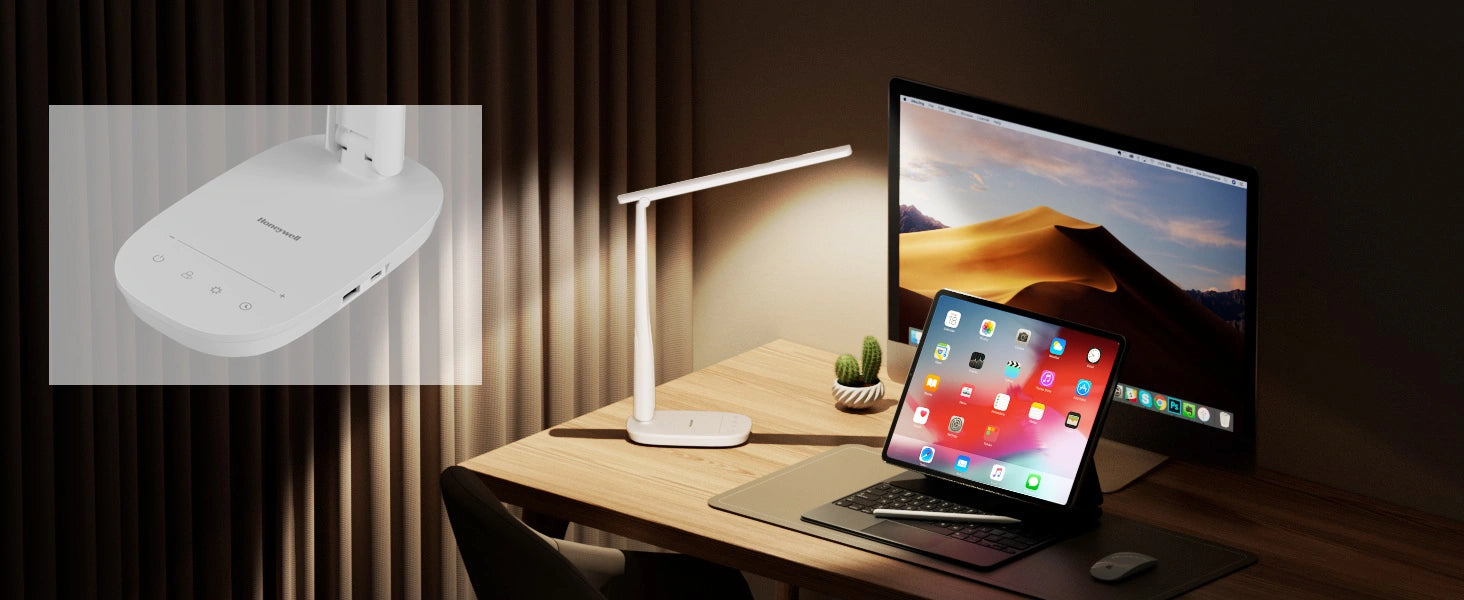
The H2's manual adjustment system offers several benefits for academic users. Physical controls provide immediate, precise adjustments without the delay sometimes associated with sensor-based systems. This instant responsiveness proves particularly valuable during dynamic work sessions where lighting needs change frequently.
Manual controls also eliminate the potential for sensor interference that can occur in complex laboratory environments where equipment and materials might block or confuse automated sensing systems. Users maintain complete control over their lighting conditions regardless of environmental variables.
H4: Smart Features for Tech-Forward Users
The H4's intelligent sensor technology automatically adjusts brightness based on ambient conditions, appealing to users who prefer hands-free operation. This automation works well in consistent environments where lighting needs remain relatively stable throughout work sessions.
However, the choice between manual and automatic control often comes down to personal preference and specific use cases. Researchers conducting varied experiments might prefer the H2's manual precision, while students engaged in consistent reading tasks might appreciate the H4's automated convenience.
Target User Groups
STEM Students and Researchers
Chemistry, biology, and engineering students find the H2 particularly suited to their varied academic activities. The lamp's robust construction withstands the demands of laboratory coursework, while its precise adjustability supports the detailed documentation and analysis required in scientific disciplines.
Graduate students and postdoctoral researchers appreciate the H2's professional-grade reliability, ensuring consistent performance throughout extended research projects that might span months or years.
Library and Institutional Procurement
Librarians and academic facility managers increasingly recognize the value of providing high-quality task lighting for student use. The H2's durable construction and quiet operation make it an excellent choice for institutional purchase, providing long-term value and user satisfaction.
The lamp's classic design integrates seamlessly with traditional academic aesthetics while providing modern LED efficiency and performance.
Optimal Setup and Usage Guidelines
Positioning for Maximum Effectiveness
Proper H2 positioning maximizes its effectiveness while minimizing potential issues. Position the lamp to illuminate your primary work area from a slight angle rather than directly overhead, reducing harsh shadows while maintaining even light distribution across your workspace.
For reading tasks, angle the light to strike the page surface at approximately 45 degrees, minimizing glare while ensuring adequate illumination for comfortable text recognition. When working with reflective surfaces like laptop screens, position the lamp slightly behind and to the side of the screen to reduce unwanted reflections.
Integration with Existing Lighting
The H2 works best as a complement to, rather than replacement for, ambient room lighting. Maintain some general illumination to prevent the high contrast between your brightly lit work area and surrounding darkness, which can contribute to eye strain over extended periods.
In laboratory settings, ensure the H2's focused illumination doesn't create conflicting shadows with existing task lighting, positioning it to fill in rather than compete with established lighting schemes.
Conclusion: Professional Illumination for Academic Excellence
The Honeywell H2 desk lamp represents a thoughtful solution to the specific lighting challenges faced in academic environments. Its combination of precise adjustability, flicker-free LED technology, and robust construction addresses the real-world needs of students and researchers who demand reliable, high-quality illumination for their most important work.
Whether supporting late-night library research sessions or providing the precise illumination needed for delicate laboratory procedures, the H2 proves that professional-grade lighting can significantly enhance academic productivity and comfort. For institutions and individuals serious about creating optimal learning and research environments, the H2 offers a compelling combination of functionality, durability, and user-focused design that supports academic excellence at every level.
The investment in quality task lighting pays dividends in reduced eye strain, improved work quality, and enhanced focus – essential elements for success in today's demanding academic landscape.


