


Why "Brighter Doesn't Always Mean Better" – Understanding Light Spectrum and Efficiency
When shopping for an energy efficient floor lamp, many consumers fall into the trap of assuming that higher wattage equals better illumination. This misconception often leads to purchasing decisions between "cheap but poor light quality" and "expensive but feature-heavy" options. However, the key to finding the best value daylight floor lamp for living room lies in understanding the relationship between brightness, power consumption, and light quality.
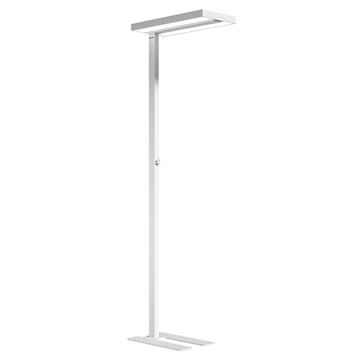
The evolution of LED technology has revolutionized how we measure lighting performance. Unlike traditional incandescent bulbs where wattage directly correlated with brightness, modern affordable daylight lamp options require a deeper understanding of lumens, efficacy, and color rendering. The Honeywell floor lamp series exemplifies this technological advancement, offering professional-grade lighting at consumer-friendly prices.
Key Performance Indicators: Understanding Lumens, Watts, and Efficiency Metrics
Lumens vs. Watts: The Foundation of Smart Lighting Choices
The most critical metric for any energy efficient floor lamp is luminous efficacy, measured in lumens per watt (lm/W). This ratio determines both the brightness output and energy consumption efficiency. For context, traditional incandescent bulbs typically achieve 15-20 lm/W, while high-quality LED floor lamps can reach 80-120 lm/W.
The Honeywell 02E 60W 6000 Lumen Eye Caring Natural Daylight Floor Lamp demonstrates exceptional efficiency with its 6000 lm ÷ 60 W = 100 lm/W ratio. This metric places it in the upper tier of residential lighting solutions, comparable to commercial-grade fixtures while maintaining affordability.
Color Temperature and Color Rendering: The Science of Eye Comfort
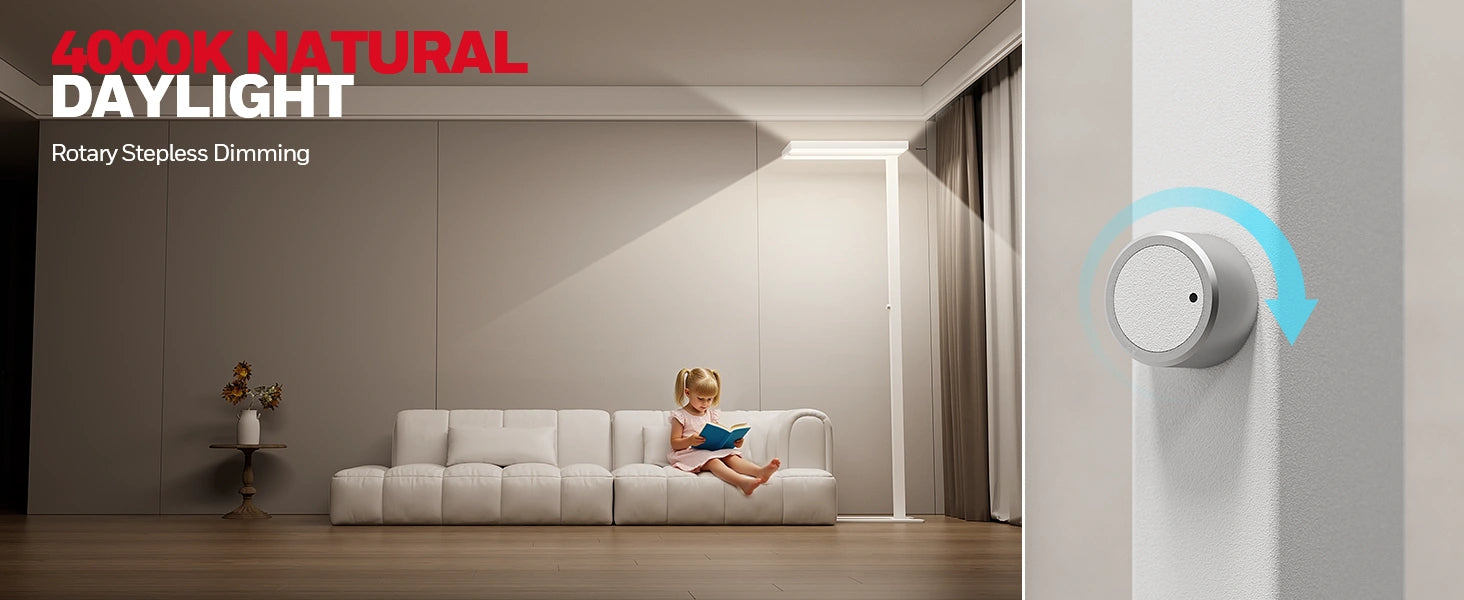
Color temperature, measured in Kelvin (K), significantly impacts both productivity and eye comfort. Daylight floor lamps typically operate between 4000K-5500K, mimicking natural sunlight. The Color Rendering Index (CRI) measures how accurately colors appear under artificial light, with values above 95 considered excellent for detailed work.
Research from the International Commission on Illumination (CIE) indicates that proper color rendering reduces eye strain during extended use periods. This makes CRI a crucial factor when selecting a value floor lamp for reading or detailed tasks.
Performance Analysis: The Honeywell 02E's Cost-Effectiveness Breakdown
Coverage Efficiency and Long-Term Operating Costs
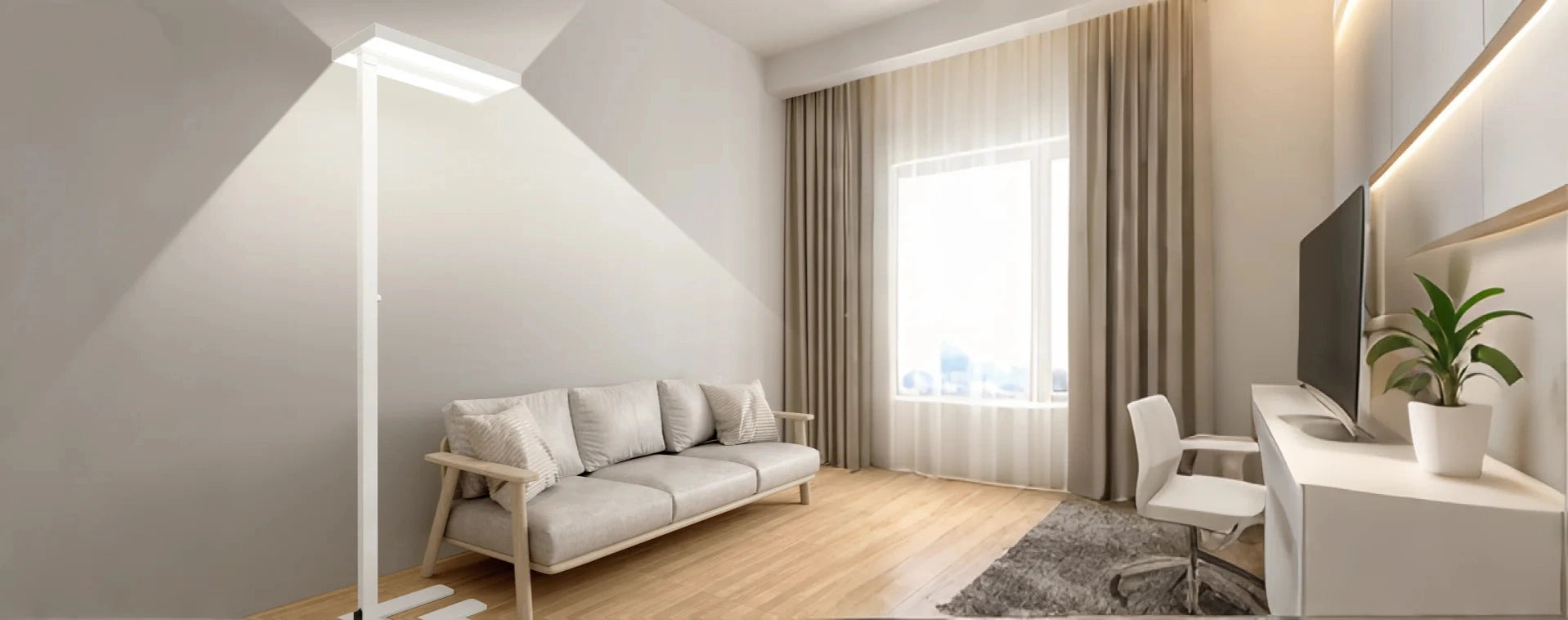
The Honeywell 02E delivers 6000 lumens across a wide beam angle, providing uniform illumination for spaces up to 400 square feet. With 60W power consumption, the annual electricity cost averages $8-12 (based on $0.13/kWh national average), making it one of the most economical energy efficient floor lamp options available.
The lamp's 100 lm/W efficiency translates to practical benefits:
- 50% lower energy consumption compared to 75W equivalent fluorescent fixtures
- Reduced heat generation, improving room comfort
- Extended LED lifespan (typically 25,000-50,000 hours) minimizing replacement costs
Build Quality and Durability Considerations
The Honeywell 02E features aluminum heat dissipation components and high-grade electronic drivers, ensuring consistent performance over its rated lifespan. The adjustable height mechanism (48-72 inches) accommodates various room configurations while maintaining structural stability.
Essential Purchasing Checklist: Beyond Basic Specifications
Anti-Glare and Flicker-Free Technology
Quality affordable daylight lamp designs incorporate diffusion panels and electronic ballasts to eliminate visible flicker. The IEEE 1789 standard recommends flicker rates below 0.4% for comfortable extended use.
Maintenance and Cleaning Considerations
Accessible LED modules simplify maintenance. Dust accumulation can reduce light output by 10-20% annually, making cleanability a crucial long-term factor.
Warranty and Customer Support
Reputable manufacturers like Honeywell typically offer 2 year warranties covering both electronic components and mechanical parts. This protection is essential given the higher upfront investment in quality fixtures.
Common Purchasing Mistakes: Avoiding Costly Misconceptions
The "Higher Wattage = Better" Fallacy
Many consumers still equate wattage with brightness, leading to unnecessarily high energy consumption. A 100 lm/W floor lamp at 60W provides superior illumination compared to an 80W lamp with 70 lm/W efficiency.
Focusing Solely on Bulb Type
While LED technology is generally superior, implementation quality varies significantly between manufacturers. Cheap LED fixtures may suffer from poor heat management, leading to premature failure and color shifting.
Ignoring Beam Pattern and Distribution
Point-source LED arrays can create harsh shadows and uneven illumination. Quality energy efficient floor lamp designs incorporate multiple LED elements or sophisticated optical systems to ensure uniform light distribution.
Conclusion and Shopping Recommendations
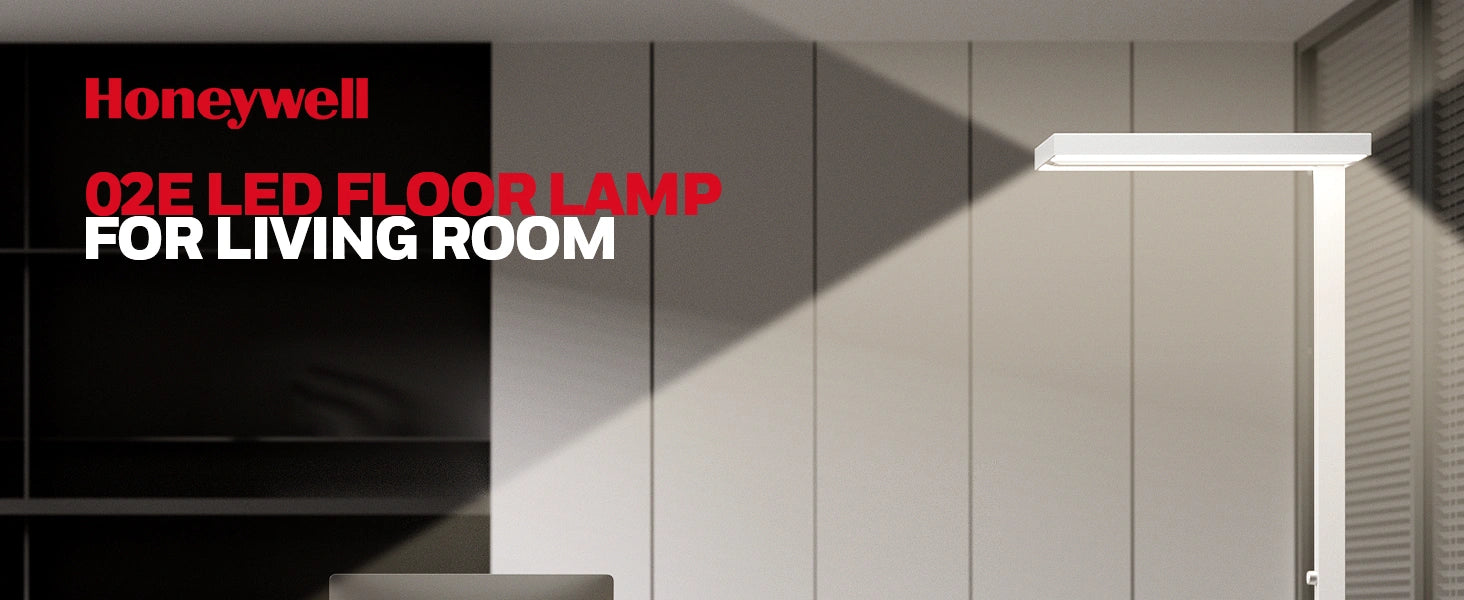
Selecting the ideal value floor lamp requires balancing immediate costs against long-term performance and energy savings. The Honeywell 02E (available direct from Honeywell) exemplifies this balance with its 100 lm/W efficiency and comprehensive feature set.
For most consumers, mid-range options like the 02E provide optimal value by delivering professional-grade performance without premium pricing. Consider your specific needs: ambient lighting for relaxation, task lighting for reading, or general illumination for active spaces.
The key is understanding that true value in lighting comes from efficiency metrics (lm/W), build quality, and feature appropriateness rather than simply seeking the lowest price point. By focusing on these fundamentals, you can confidently select an energy efficient floor lamp that provides years of reliable, comfortable illumination while minimizing operating costs.


