


As spring arrives and households across North America and Europe begin their annual home refresh, most homeowners instinctively reach for new throw pillows, artwork, or area rugs. Yet rational consumers are discovering that lighting—the most invisibly essential fixture in any home—delivers far greater returns on investment than decorative elements. While a decorative vase sits idle for 23 hours daily, your lighting system actively shapes every waking moment indoors, influencing everything from circadian rhythms to long-term eye health.
This article examines why premium lighting infrastructure represents the smartest long-term home investment, particularly for families entering settled living phases, and provides practical guidance for building durable, comfortable, and health-supporting indoor light environments.
Spring Refresh: Rethink Your Home Investments
Spring cleaning traditionally focuses on visible surfaces—swapping winter textiles for lighter fabrics, rotating artwork, or updating accent pieces. However, research from leading universities suggests that environmental factors like light quality impact daily wellbeing far more substantially than aesthetic choices. The core element most spring refreshes overlook is illumination itself.
Consider the spatial relationship between lighting and atmosphere. A $300 decorative mirror provides visual interest for perhaps 5 minutes daily when you consciously notice it. Meanwhile, overhead and task lighting operates 6-8 hours daily in living spaces, directly affecting cognitive performance, mood regulation, and visual comfort. Yet home improvement budgets disproportionately favor the former.
The disconnect stems from lighting's invisibility when functioning properly. Unlike a statement armchair that demands attention, quality illumination works quietly—you only notice its absence. This psychological blind spot leads homeowners to chronically underinvest in lighting infrastructure while overspending on decor that delivers diminishing emotional returns within weeks.

Usage Frequency: The Invisible Value of Lighting
Empirical usage data reveals lighting's outsized functional importance. In typical households, primary living area lights operate 2,190-2,920 hours annually—equivalent to running continuously for 91-122 days. By contrast, decorative objects function passively, providing aesthetic value only during conscious observation moments totaling perhaps 30-60 minutes weekly.
This usage disparity carries profound health implications. Studies from major research institutions demonstrate that sustained exposure to poor-quality illumination—characterized by flicker, color inconsistency, or inadequate intensity—correlates with measurable increases in eye strain, headaches, and disrupted sleep-wake cycles. The cumulative effect resembles nutritional deficiency: unnoticeable daily, but substantially impacting quality of life over months and years.
Lighting influences physiology through multiple pathways. Beyond enabling visual tasks, light exposure regulates melatonin production, core body temperature, and alertness patterns. A stable, appropriately-timed light source supports natural circadian alignment, while erratic or poorly-timed illumination creates physiological confusion equivalent to mild jet lag—sustained indefinitely.
Functionality vs Aesthetics
The core investment question hinges on comparing emotional value against functional utility. Decorative purchases provide immediate aesthetic satisfaction—what behavioral economists term "hedonic adaptation"—which typically decays within 3-6 weeks as the brain habituates to new visual stimuli. A new area rug excites initially, then becomes invisible cognitive wallpaper.
Premium lighting infrastructure operates inversely. Initial installation produces minimal emotional response, but functional benefits compound daily. Consistent, flicker-free illumination reduces eye fatigue accumulation. Stable color temperature supports focus during work tasks and relaxation during evening hours. These benefits intensify through sustained exposure rather than diminishing.
Balancing aesthetics with long-term utility requires reframing the investment calculus. Instead of asking "What makes this room look better?", prioritize "What environmental factors will I interact with most intensively?" For elements used constantly—lighting, seating, temperature control—invest in quality infrastructure that delivers compounding functional returns. Reserve aesthetic spending for accent pieces that genuinely spark lasting joy rather than transient novelty.
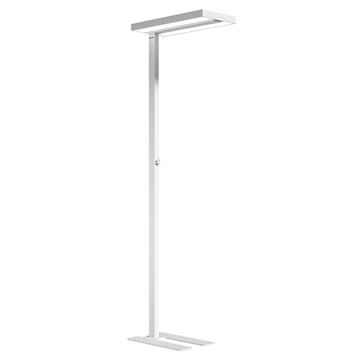
The Honeywell 02E Smart Lighting fixture exemplifies this functional-first philosophy. Weighing 33.8 pounds and featuring SunturaluxⓇ proprietary chip technology, this ceiling-mounted system delivers a fixed 4000K color temperature specifically calibrated to replicate Greenwich Mean Time 10 AM natural daylight. Rather than offering adjustable settings that complicate use, it provides consistent, biologically-optimized illumination—the lighting equivalent of a reliably comfortable mattress.
Long-Term Light Quality = Better Life Quality
Sustained exposure to stable, high-quality illumination produces measurable wellness benefits that extend far beyond simple task visibility. Research conducted at leading institutions indicates that consistent light exposure at 4000K—the color temperature of mid-morning natural light—supports optimal alertness without suppressing evening melatonin production when turned off at appropriate times.
Eye fatigue reduction represents the most immediately noticeable benefit. Flicker-free LED systems eliminate the micro-interruptions that force constant pupil readjustment, reducing the cumulative strain that manifests as headaches, blurred vision, and difficulty focusing after extended indoor periods. Over months, this translates to noticeably reduced eye discomfort during extended reading or screen work.
Spring's transitional daylight patterns make quality indoor lighting particularly valuable. As sunrise times shift and afternoon shadows change angle, stable indoor illumination provides physiological continuity. Rather than experiencing jarring transitions between variable natural light and inadequate artificial sources, consistent full-spectrum lighting maintains comfortable visual conditions regardless of outdoor weather or time shifts.
The 02E's fixed 4000K output addresses this directly. By replicating the specific correlated color temperature of mid-morning natural light—when human alertness peaks naturally—it provides indoor environments with biological alignment to optimal human performance states. This isn't adjustable mood lighting; it's engineered environmental consistency designed for long-term habitation rather than short-term aesthetic variety.
For families in long-term residences, this stability compounds into substantial quality-of-life improvements. Children benefit from consistent homework lighting that supports focus without overstimulation. Adults working from home experience reduced afternoon fatigue. Evening activities occur under illumination that permits natural melatonin rise when lights switch off, supporting healthy sleep onset.

Conclusion: Invest in What Truly Matters
The spring refresh instinct serves valuable psychological functions—seasonal renewal, environmental control, creative expression. However, the most impactful home investments target elements that shape daily experience through sustained functional benefit rather than transient aesthetic pleasure.
Premium lighting infrastructure represents the quintessential long-term home investment. Unlike decorative elements that provide diminishing emotional returns, quality illumination delivers compounding functional benefits: reduced eye strain, circadian rhythm support, consistent task performance, and improved overall wellbeing. These benefits intensify through sustained exposure, making lighting's value proposition strengthen rather than weaken over time.
When evaluating home improvement priorities, apply the usage frequency test: How many hours daily will I interact with this element? For lighting—operating 2,000+ hours annually in primary living spaces—even premium investments yield exceptional per-hour returns. A $500 lighting fixture operating 2,500 hours yearly costs $0.20 per hour in year one, declining to negligible amounts over its 15+ year functional lifespan.
The Honeywell 02E, it's not decorative lighting meant to impress visitors. It's environmental infrastructure designed to support human physiology through consistent, biologically-optimized illumination—the foundation for better daily life quality, compounding over years and decades of residence.
This spring, before purchasing another decorative accent, consider: Are you investing in what you'll see occasionally, or what you'll live with constantly?


